
I blocked social media for 30 days. Here's what actually happened.

 X
X LinkedIn
The rules
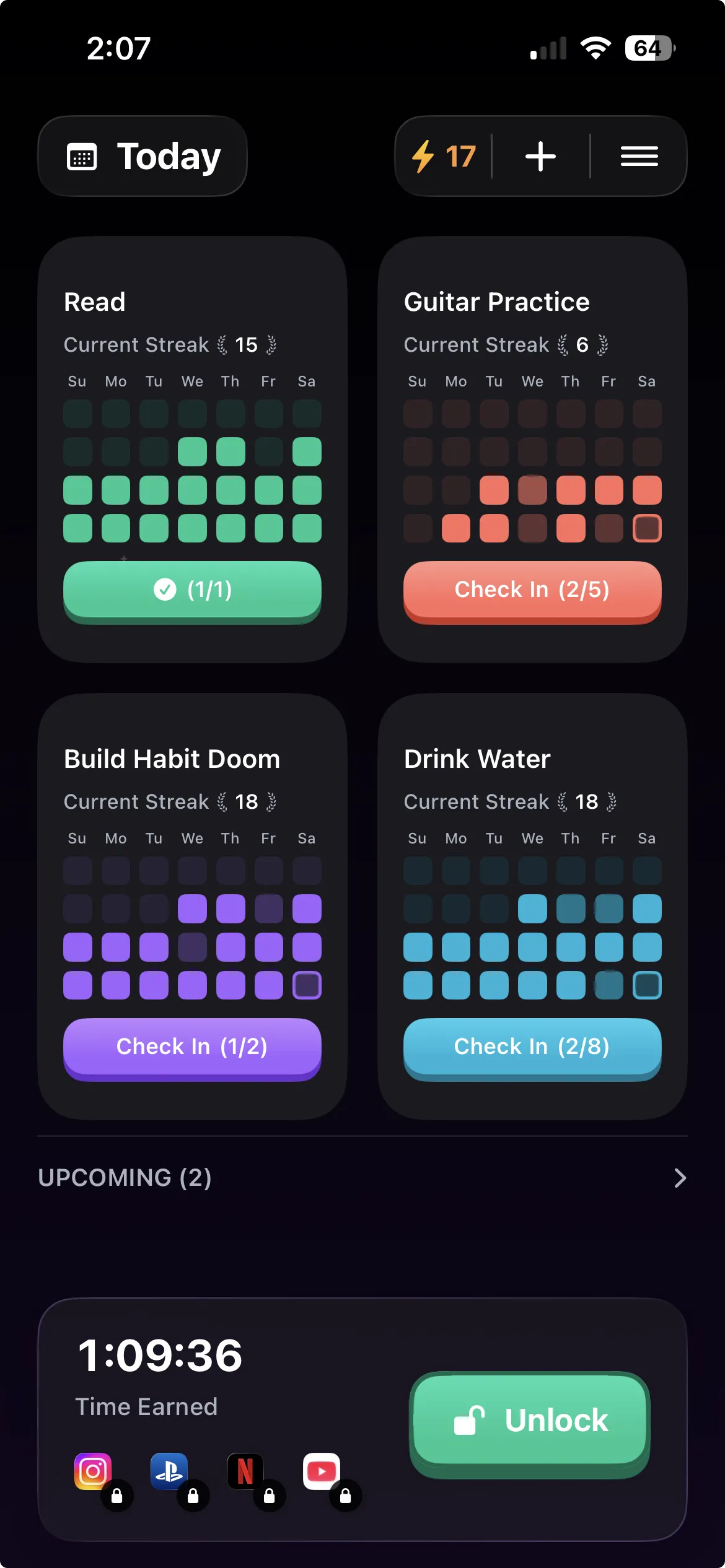
I did not go cold turkey. That felt extreme and unsustainable. Instead, I set up a system: my distracting apps — Instagram, YouTube, and everything else that tends to swallow my time — were blocked by default using Habit Doom. They unlocked only after I completed my daily habits: drinking water, reading, and working on my projects.
So I still used social media. I just had to earn it first.
The experiment ran for 30 days. Here is what actually happened — no exaggeration, no highlight reel, just the honest experience.
Week 1: the withdrawal is real
The first few days were uncomfortable. Not dramatically so — I did not have headaches or existential crises. But I noticed how often I reached for my phone without thinking. Waiting in line, sitting on the toilet, lying in bed before sleep — my hand would move toward the phone on autopilot, open an app, and find it locked.
That moment of finding the lock screen instead of a feed was jarring at first. There is a brief spike of frustration, then a choice: do my habits now, or put the phone down. Most of the time in week one, I did my habits quickly just to get access back. The motivation was not virtuous — I wanted my apps. But the habits got done.
By day four or five, the rhythm started to feel less forced. Wake up, drink water, check off habits, unlock apps. The muscle memory of reaching for the phone was still there, but the response changed.
Week 2: the quiet sets in
Something shifted around day eight. The constant low-level urge to check my phone started to fade. Not completely — it still surfaced when I was bored or anxious. But the baseline dropped. I was not thinking about Instagram when I was working. I was not reflexively opening YouTube during conversations.
This is when I started reading more. Not because I planned to, but because my apps were locked and I needed something to do. I picked up Dune by Frank Herbert and finished it in about a week. Before this experiment, I had not finished a book in months. The reading just happened naturally when the default option (scrolling) was removed.
My mornings got better. Before the experiment, I woke up to doomscrolling — lying in bed for 30 minutes consuming content that left me feeling sluggish and already behind. Now I was up, hydrated, and doing something productive before I even thought about social media. The difference in how I felt by 9am was significant.
Week 3: the anxiety conversation
Here is the part nobody talks about in "I quit social media" posts: the anxiety does not disappear. It changes shape.
When my earned screen time ran out and the apps locked again, I felt a pull to cheat — to find a workaround, to convince myself I deserved more time, to just unlock everything. That moment was a negotiation with myself. It was a test of honesty. Am I actually done, or am I just telling myself I am done because I want to scroll?
Most days I let the lock stand. Some days I sat with the discomfort for a while before it passed. A few days I genuinely struggled. The system held, but I would be lying if I said it was effortless.
The other thing I noticed: I felt more centered, but the world did not slow down with me. Things were still happening — news, discourse, drama. I was just consuming less of it. On one hand, this was clearly better for my mental state. On the other hand, there is something uncomfortable about feeling calm while the world feels like it is on fire. I am still processing that tension.
Week 4: the new normal
By the fourth week, the system was just how my phone worked. Apps locked in the morning, habits done by 10am, apps unlocked for the rest of the day. I was not fighting it anymore. It was routine.
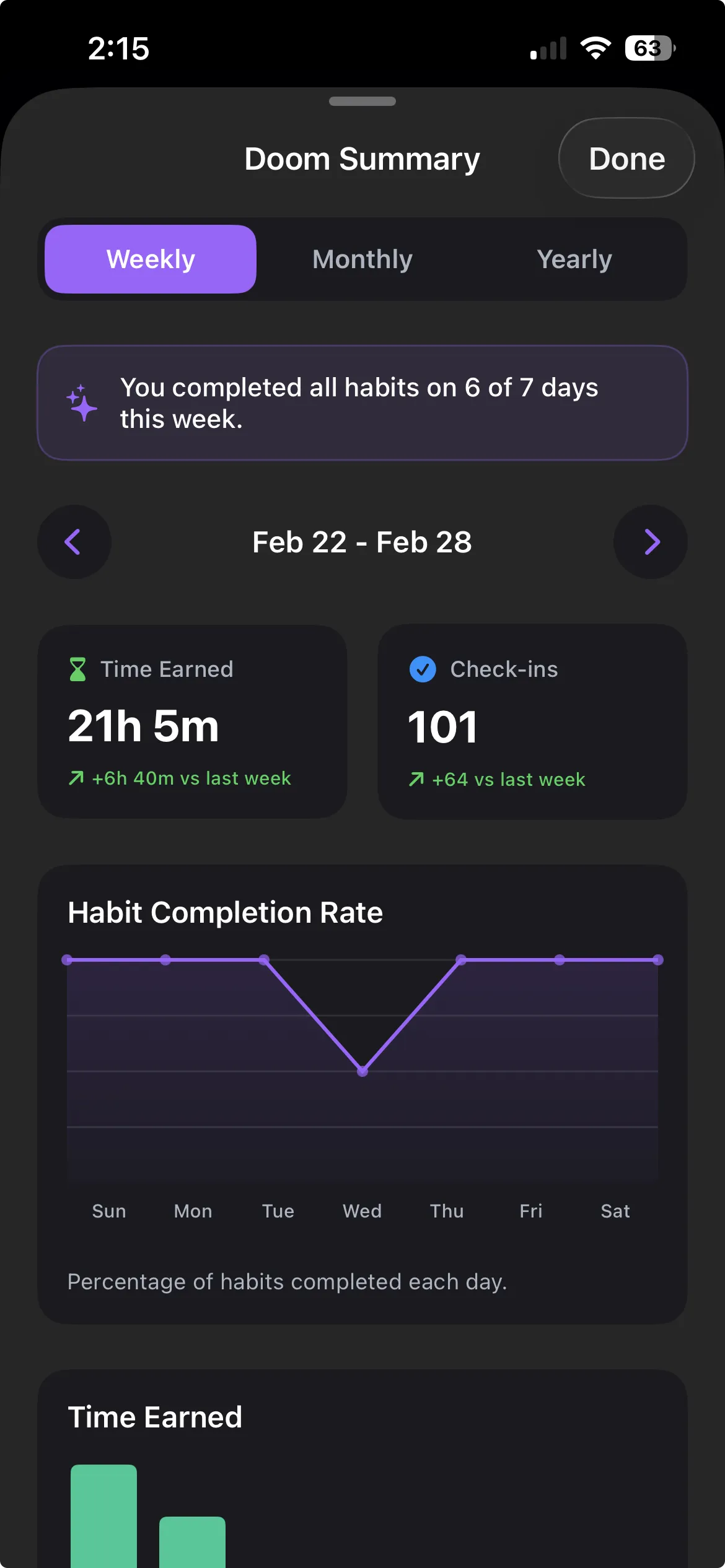
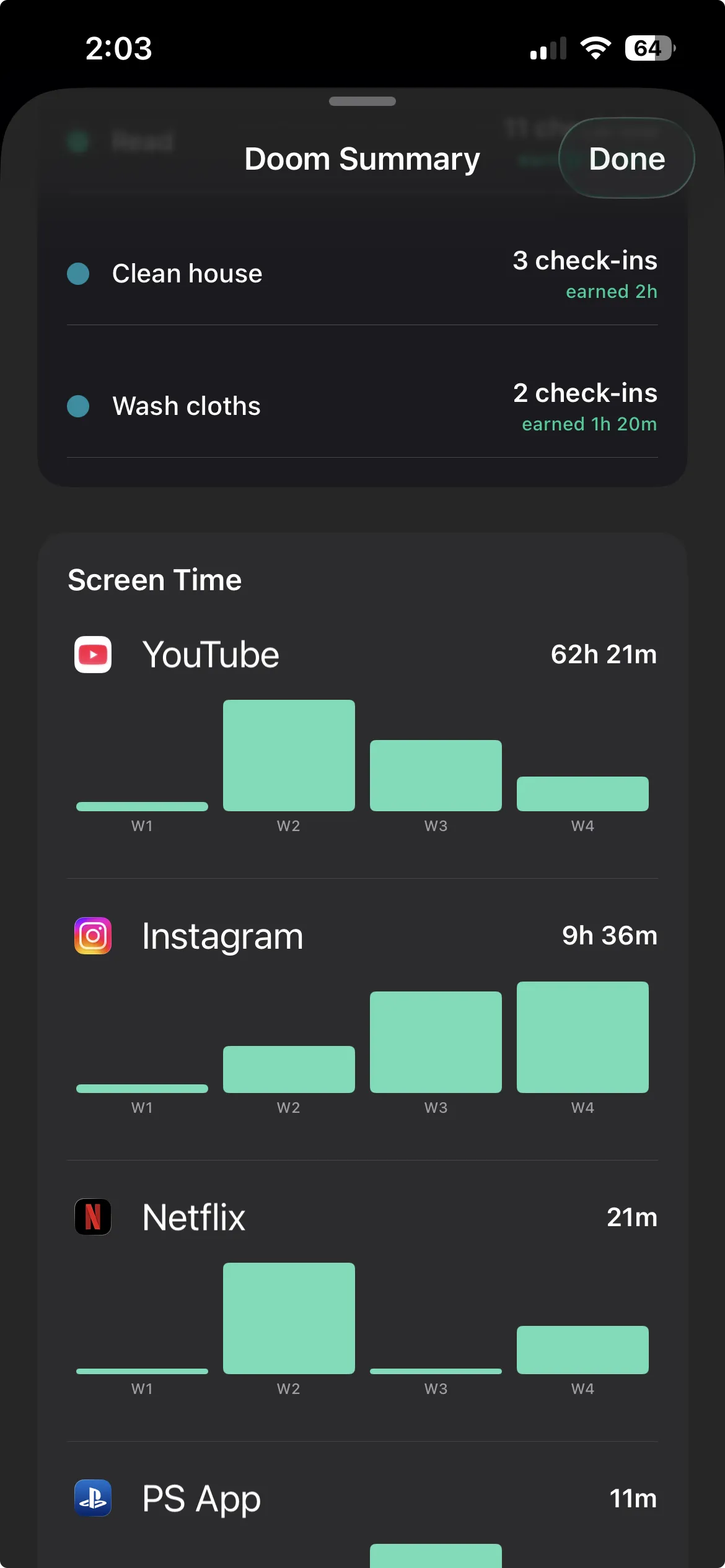
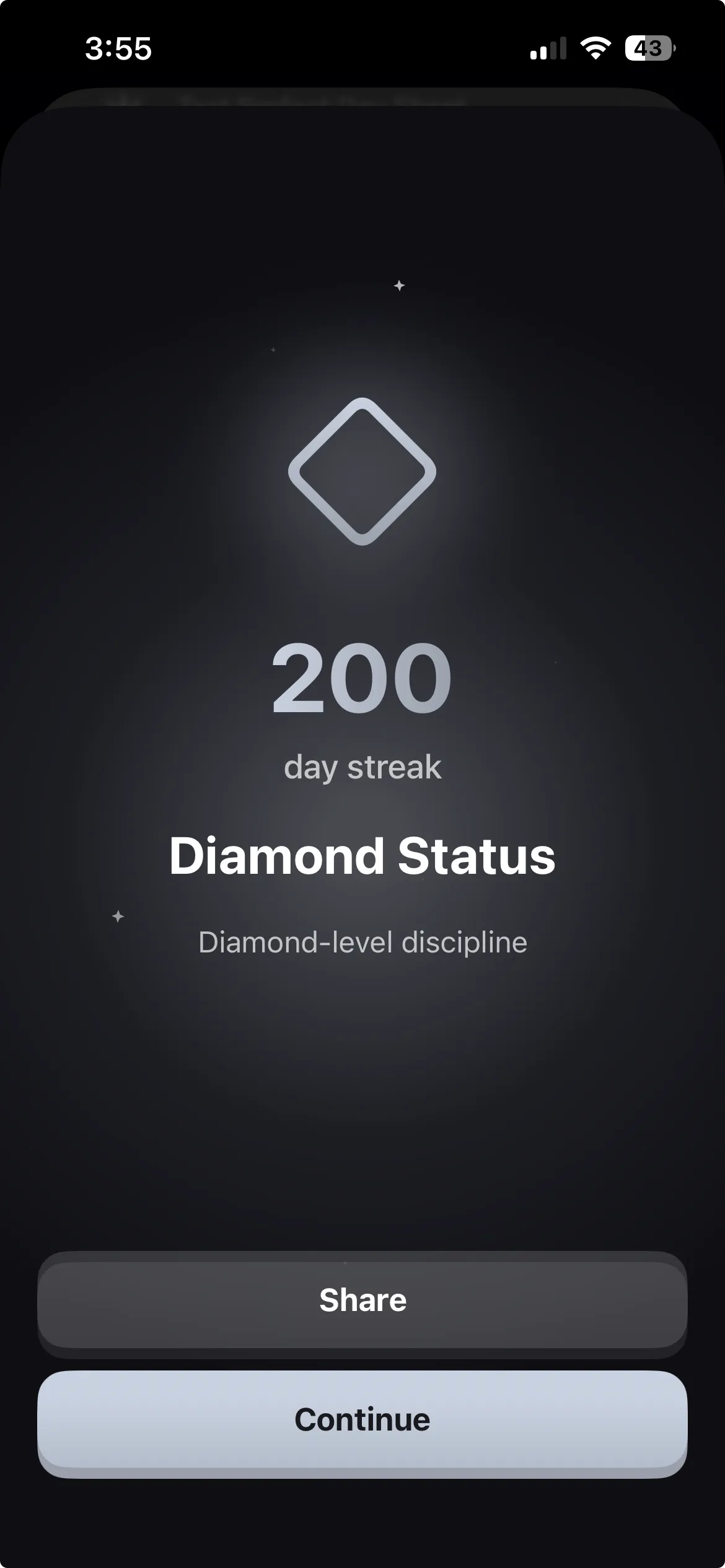
The numbers reflected the shift: six out of seven days completed, over 100 check-ins, YouTube usage trending consistently downward. But honestly, I did not need the metrics to tell me things had changed. I felt it. I was more present in conversations. I was reading actual books — I finished Mythos by Stephen Fry and started The Elephant in the Brain. I was sleeping a bit better (still staying up too late reading, but that felt like a worthwhile trade).
"Almost everything will work again if you unplug it for a few minutes. Including you."
— Anne Lamott
The most surprising change was how I consumed information differently. I found myself internalizing what I read rather than just skimming it. When I did use social media, I was more aware of how it made me feel — and more skeptical of my own reactions. I started questioning my biases more. Not in a dramatic, life-changing way. Just a quiet shift toward processing information more carefully instead of consuming it reactively.
What I would do differently
Start with fewer habits. I had the right number, but if I were advising someone else, I would say start with one or two. Drink water and one other thing. Add more after the first week when the routine feels stable.
Be honest about the anxiety. The urge to cheat does not go away. It gets quieter, but it is always there. Acknowledge it instead of pretending you are above it. The system is there precisely because willpower alone is not enough — and that includes your willpower at 11pm when you have had a long day.
Do not aim for zero screen time. The goal was never to stop using social media. It was to stop using it unconsciously. Earned screen time feels completely different from stolen screen time. You scroll after your habits and it feels fine — guilt-free, intentional. That distinction matters more than the total number of minutes.
The honest takeaway
Blocking social media for 30 days did not transform my life. I am not going to claim I found enlightenment or that my productivity tripled. What happened was quieter than that.
I read three books. My mornings improved. My screen time went down. I felt less impulsive and more deliberate about how I spend my attention. I started questioning information instead of just absorbing it. None of these are dramatic. All of them are real.
The system — blocking by default, earning through habits — is what made it sustainable. I have tried cold turkey before. I have tried Screen Time limits. I have tried "just using my phone less." None of them lasted more than a week. This is still going after 30 days because it does not ask me to be disciplined. It asks me to be honest with myself and check off my habits. That is a much lower bar to clear.
Try it yourself
Download Habit Doom, add two or three habits, block your most distracting apps, and run the experiment for 30 days. You do not need to quit social media. You just need to earn it.
The version of you on day 30 will not be radically different. But they will be a little more focused, a little less impulsive, and probably a few books ahead of where you are now. That is worth the experiment.
Frequently Asked Questions
Keep Reading
Try Habit Doom
Lock your distracting apps. Complete your habits. Earn your screen time. It takes 30 seconds to set up.
 Download Free