How to stop doomscrolling: 7 proven methods that actually work in 2026
 X
X LinkedIn
What Is Doomscrolling?
Doomscrolling is the compulsive habit of continuously scrolling through social media feeds, news apps, or short-form video platforms despite the content making you feel anxious, angry, or emotionally drained. The term gained mainstream recognition during 2020, but the behavior has only intensified since then. In 2026, with algorithmic feeds more personalized and attention-capturing than ever, doomscrolling has become one of the most common digital wellness challenges facing smartphone users worldwide.
What separates doomscrolling from normal phone use is the loss of intentionality. You pick up your phone to check one notification and surface 45 minutes later having watched dozens of videos, read inflammatory comment threads, and absorbed content you never actively chose to consume. The experience often leaves you feeling worse than before you started, yet you find yourself doing it again within hours. That cycle of compulsive engagement followed by regret is the signature pattern of doomscrolling.
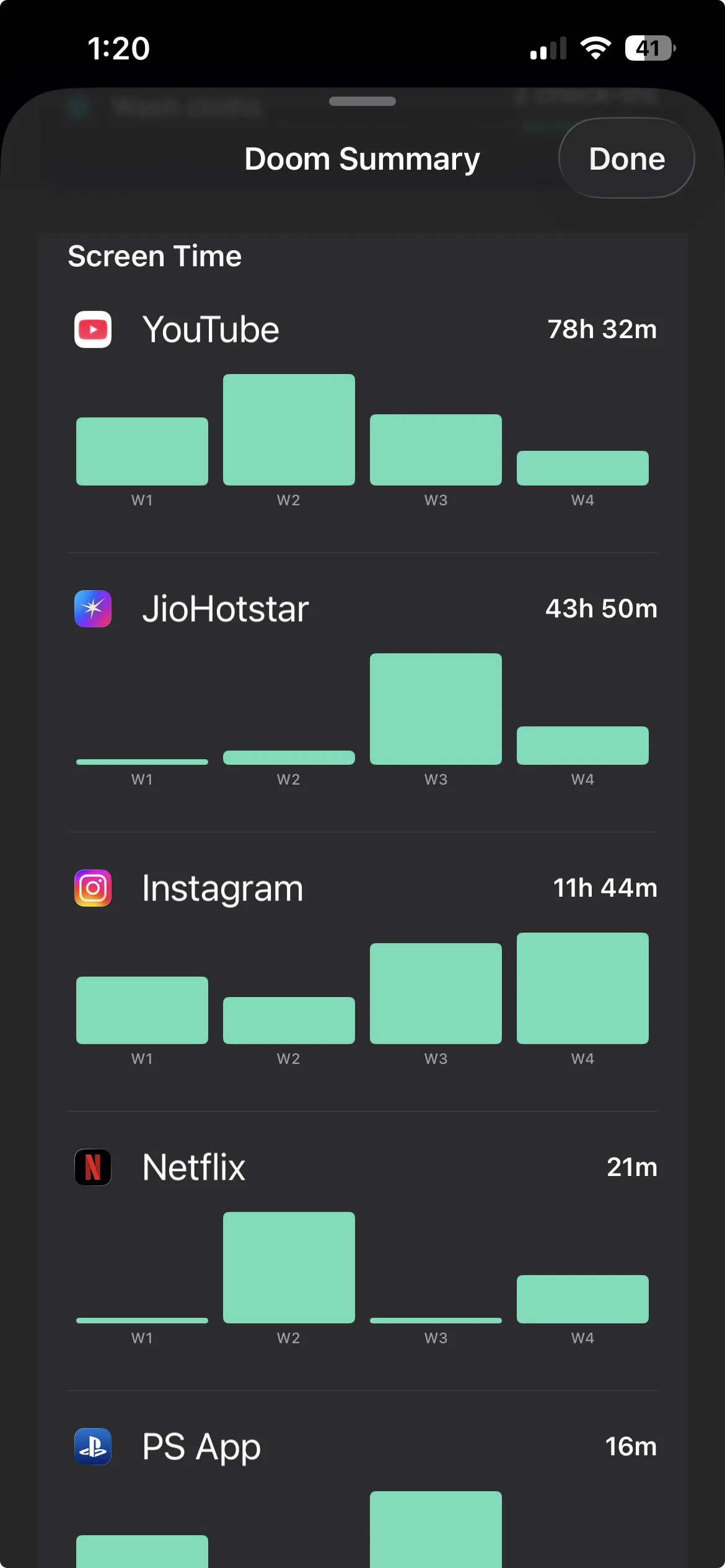
The behavior is not limited to any single app. TikTok, Instagram Reels, X (formerly Twitter), Reddit, YouTube Shorts, and even LinkedIn can all become doomscrolling traps. Any platform with an infinite scroll feed and an algorithmic content engine is engineered, whether intentionally or as a byproduct of engagement optimization, to keep you scrolling longer than you planned.
Why We Doomscroll: The Science Behind the Compulsion
Doomscrolling is not a character flaw or a sign of laziness. It is a predictable response to technology specifically designed to exploit how your brain processes reward. Understanding the neuroscience behind the compulsion is the first step toward breaking free from it.
The Dopamine Loop
Every time you encounter a new piece of content while scrolling, your brain releases a small burst of dopamine, the neurotransmitter associated with anticipation and reward-seeking. Critically, dopamine is not about pleasure itself but about the prediction of pleasure. Your brain learns that the next swipe might reveal something interesting, funny, or emotionally engaging. This uncertainty is what makes infinite scroll feeds so powerful. They operate on the same psychological principle as slot machines: variable ratio reinforcement, where rewards arrive at unpredictable intervals.
A 2023 study published in Nature Communications found that social media feeds activate the same reward-prediction circuits in the brain as gambling tasks. Participants who showed stronger neural responses to variable social media rewards also reported greater difficulty controlling their screen time. In other words, the platforms are not just passively engaging; they are actively training your brain to seek the next scroll.
Infinite Scroll: Designed to Eliminate Stopping Cues
Traditional media had natural stopping points. A newspaper has a last page. A TV show has credits. A book has a chapter break. Infinite scroll deliberately removes all stopping cues, creating what UX researchers call a "bottomless bowl" effect. Without a clear endpoint, your brain never receives the signal that the experience is complete, so you keep going.
Aza Raskin, the designer who originally invented infinite scroll, has spoken publicly about regretting its creation, estimating that it causes users to spend roughly 200,000 additional lifetimes per day on their phones collectively. The design is not an accident. It is engagement engineering at a massive scale.
Negative Emotional States Fuel the Cycle
Doomscrolling is particularly difficult to resist when you are already stressed, bored, lonely, or anxious. These negative emotional states lower your prefrontal cortex activity, which is responsible for impulse control and long-term decision-making, while simultaneously increasing your brain's appetite for quick dopamine hits. You scroll to escape a bad feeling, the scrolling creates more bad feelings, and the cycle reinforces itself. Psychologists call this a "mood repair" behavior that paradoxically worsens mood over time.
The Real Cost of Doomscrolling
The consequences of doomscrolling extend far beyond "wasted time," although the time cost alone is staggering. Understanding the full impact can provide the motivation needed to make a change.
Mental Health
Excessive social media scrolling is strongly associated with increased rates of anxiety and depression. A meta-analysis published in the Journal of Social and Clinical Psychology found that limiting social media use to 30 minutes per day led to significant reductions in loneliness and depression. The causal mechanism works in both directions: people with anxiety doomscroll more, and doomscrolling increases anxiety. It is a feedback loop that can be genuinely difficult to interrupt without external intervention.
Sleep Disruption
The average American checks their phone 96 times per day, according to Asurion research, and a significant portion of that use happens in bed. Blue light from screens suppresses melatonin production, but the problem goes deeper than light exposure. The cognitive arousal from consuming stimulating content, especially news, arguments, and emotionally charged videos, keeps your brain in a heightened state that makes falling asleep significantly harder. Studies have shown that phone use within 30 minutes of bedtime is associated with shorter sleep duration, poorer sleep quality, and greater daytime fatigue.
Productivity and Focus
Even brief doomscrolling sessions fragment your attention in ways that persist after you put the phone down. Research from the University of California, Irvine found that it takes an average of 23 minutes and 15 seconds to fully regain focus after an interruption. If you check social media three times during a work session, you may lose over an hour of productive capacity without realizing it. The compounding effect over weeks and months is enormous. Many people who feel chronically unproductive discover that doomscrolling is quietly consuming their best cognitive hours.
Physical Health
Extended scrolling sessions contribute to sedentary behavior, poor posture, eye strain, and reduced physical activity. When doomscrolling replaces exercise, outdoor time, or even basic movement, the long-term health effects include increased risk of cardiovascular disease, metabolic issues, and chronic pain. These consequences develop slowly enough that most people do not connect them to their phone habits until the pattern is well-established.
7 Proven Ways to Stop Doomscrolling
Knowing that doomscrolling is harmful is rarely enough to stop it. You need specific, actionable strategies that account for the fact that your brain is working against you. These seven methods range from simple behavioral adjustments to more robust systemic solutions. For best results, combine multiple approaches rather than relying on any single technique.
1. Set App Time Limits
Both iOS and Android offer built-in screen time controls that let you set daily time limits for specific apps or categories. On iPhone, this is found under Settings > Screen Time > App Limits. You can allocate, say, 30 minutes per day to social media and receive a notification when your time is up.
The problem? These limits are extraordinarily easy to bypass. When the "Time Limit Reached" screen appears, all it takes is a single tap on "Ignore Limit" to continue scrolling. Apple essentially put a locked door in front of your apps and then handed you the key. For people with strong willpower, this gentle nudge might be enough. For chronic doomscrollers, it is barely a speed bump. If iOS Screen Time worked for everyone, phone addiction would not be a growing problem in 2026. That said, setting limits is still a useful first step because it makes your usage patterns visible and conscious, even when you override them.
2. Use an App Blocker That Ties to Habits
Standard app blockers restrict access based on time of day or total minutes used. They work by adding friction, but they lack a critical element: a reason to stay off your phone that feels productive rather than punitive. This is where habit-based app blockers fundamentally change the equation.
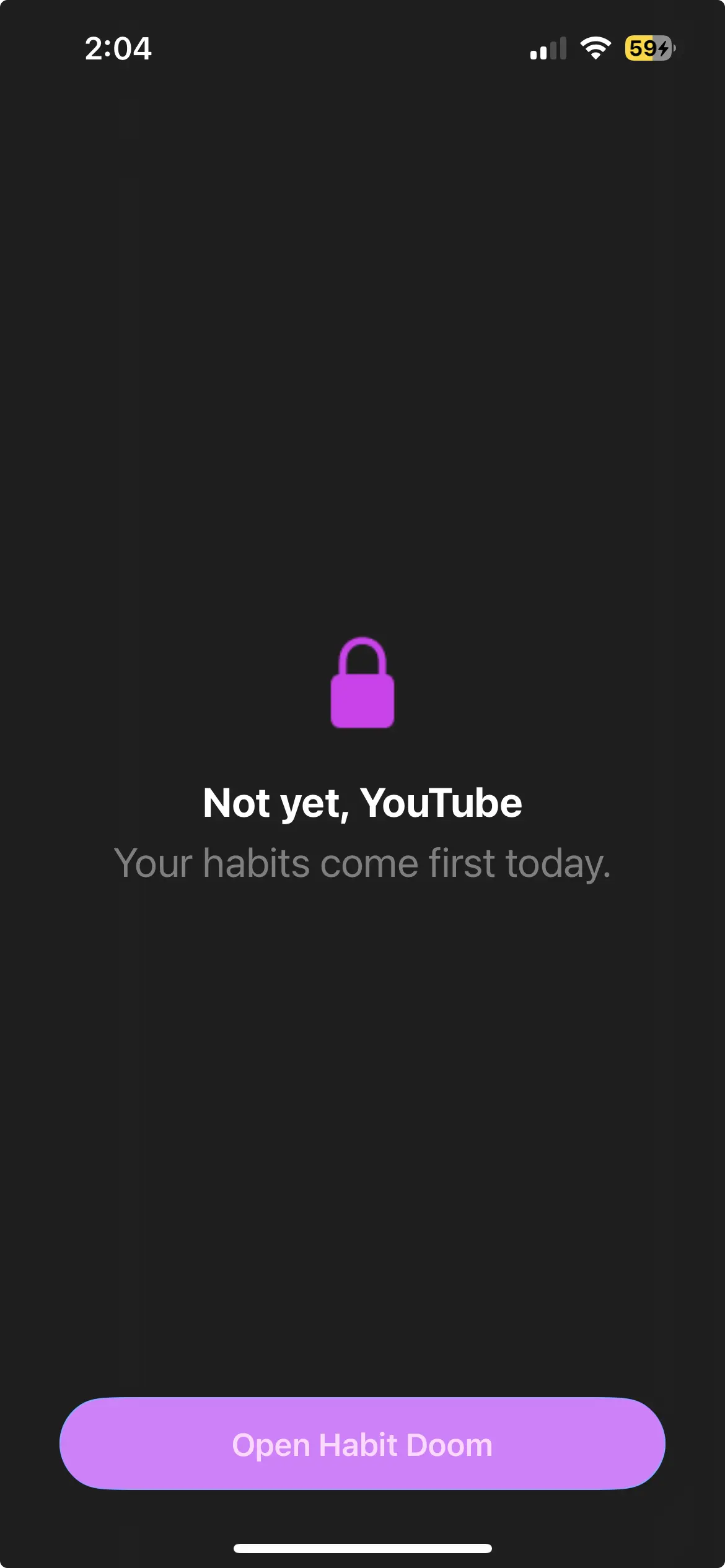
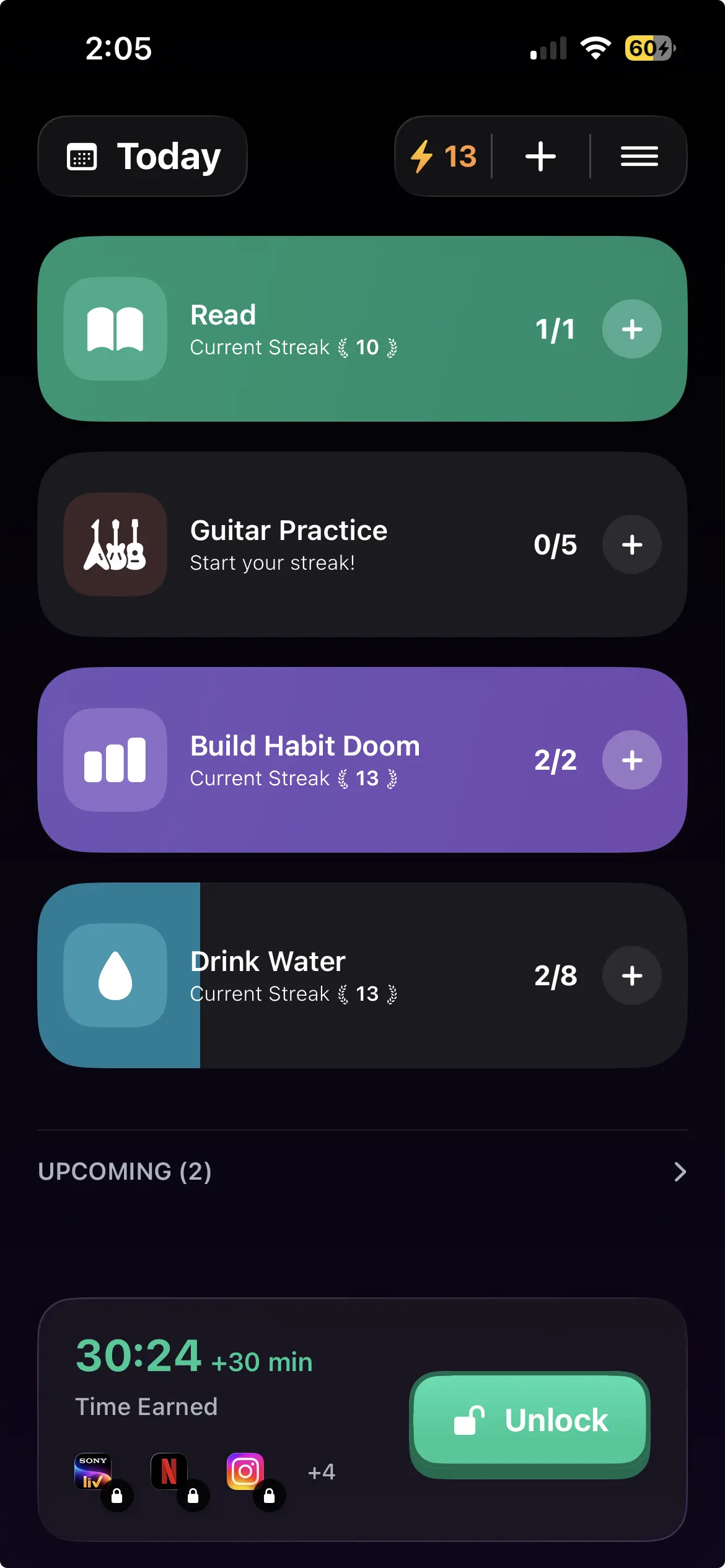
Habit Doom takes a different approach than traditional app blockers. Instead of simply restricting screen time, Habit Doom locks your distracting apps until you complete your daily habits. You choose which apps to block and which habits must be completed to unlock them. Did your morning reading? Finished your workout? Meditated for ten minutes? Once your habits are checked off, your apps unlock for the rest of the day. If you skip your habits, the apps stay locked.
This approach works because it replaces the negative framing of "you cannot use your phone" with a positive framing of "earn your screen time by investing in yourself first." You are not punishing yourself for doomscrolling; you are building a system where your most important daily habits happen before distractions have a chance to derail you. It is the difference between deprivation and discipline.
3. Replace the Scroll Habit with a Micro-Habit
Habits are not eliminated in a vacuum. They are replaced. Every habit follows the same neurological loop: cue, routine, reward. With doomscrolling, the cue is often boredom or a moment of downtime, the routine is opening an app and scrolling, and the reward is dopamine stimulation. To break the cycle, you need to insert a different routine that responds to the same cue and delivers a comparable (or better) reward.
Effective micro-habit replacements include:
- Open a reading app instead. Keep a book or article queued up in Kindle, Pocket, or Apple Books so that when the urge strikes, you redirect to something intentional.
- Do a 60-second stretch or breathing exercise. Physical movement disrupts the passive posture that enables scrolling and gives your brain a different kind of stimulation.
- Write one sentence in a journal. Even a single sentence engages your creative faculties and shifts your brain from consumption mode to creation mode.
- Step outside for two minutes. Natural light, fresh air, and a change of environment reset your attentional state far more effectively than another round of scrolling.
The micro-habit does not need to be profound. It just needs to be easy enough that you will actually do it and rewarding enough that your brain registers it as a viable alternative. Over time, the new routine becomes automatic, and the pull toward scrolling weakens.
4. Turn Off Notifications for Social Apps
Notifications are the single most effective cue for triggering a doomscrolling session. Each buzz or banner is an invitation to pick up your phone, and once the phone is in your hand, the scrolling begins. Turning off all non-essential notifications removes the most common trigger from your environment entirely.
Go to your phone's notification settings and disable notifications for every social media app, every news app, and every entertainment app. Keep notifications enabled only for communication you actually need (calls, texts from specific people, calendar alerts, work messaging). This one change can reduce your daily phone pickups by 30 to 50 percent, according to multiple behavioral studies on notification management.
Be ruthless. If an app's notification has ever led you into a 20-minute scrolling session, that notification is not serving you. It is serving the app's engagement metrics.
5. Use Grayscale Mode
Color is a surprisingly powerful driver of engagement. Social media apps are designed with vibrant colors, red notification badges, and high-contrast visuals specifically because color captures attention and triggers emotional responses. Switching your phone to grayscale mode strips away this layer of stimulation and makes the experience of scrolling noticeably less appealing.
On iPhone, you can enable grayscale under Settings > Accessibility > Display & Text Size > Color Filters > Grayscale. For convenience, set up an Accessibility Shortcut so you can toggle it with a triple-click of the side button. Many people who try grayscale mode report being shocked by how much less compelling their phone becomes. The apps still function identically, but the psychological pull is dramatically reduced. Instagram in grayscale is a fundamentally different experience than Instagram in full color.
6. Create Phone-Free Zones
Environmental design is more powerful than willpower. Instead of relying on your ability to resist the phone in the moment, remove the phone from specific spaces and time periods entirely. The two most impactful phone-free zones are:
- The bedroom. Buy a physical alarm clock and charge your phone in another room overnight. This eliminates both the late-night scrolling that destroys sleep quality and the first-thing-in-the-morning scroll that sets a reactive, unfocused tone for the entire day.
- The dining table. Whether eating alone or with others, keeping the phone away during meals creates a natural pocket of presence and reduces total daily screen time without any feeling of restriction.
You can extend this to other contexts: no phone during the first hour after waking, no phone during exercise, no phone in meetings. Each phone-free zone you establish creates a space where doomscrolling simply cannot happen, which reduces the total number of decisions you need to make about whether to pick up the phone.
7. Practice the 5-Second Rule Before Opening Apps
Most doomscrolling sessions begin on autopilot. You pick up the phone and open an app before your conscious mind has even registered the decision. The 5-second rule introduces a brief moment of intentionality into this automatic process: before opening any social media or news app, pause for five seconds and ask yourself, "What am I looking for? Do I have a specific reason to open this?"
If you have a specific purpose (checking a message from a friend, looking up an event time, posting something you planned), proceed. If the honest answer is "I am bored and looking for stimulation," that is your cue to do something else. This technique does not require you to never use social media. It just breaks the autopilot loop and gives your prefrontal cortex a chance to participate in the decision. Over time, you will find that a surprising number of app-opening impulses evaporate once you pause long enough to notice them.

 Download Free
Why Most Approaches Fail
If you have tried to stop doomscrolling before and failed, you are in the majority. Most people attempt to curb their phone habits using one or more of the strategies above, see initial improvement, and then gradually slide back into the same patterns within a few weeks. Understanding why this happens is critical to finding an approach that actually sticks.
Willpower Is a Depletable Resource
The core problem with most anti-doomscrolling strategies is that they rely on willpower, and willpower is not a reliable long-term resource. Research on ego depletion suggests that your capacity for self-control diminishes throughout the day as you make decisions, resist temptations, and manage stress. By evening, when doomscrolling is most likely to occur, your willpower reserves are at their lowest. Asking yourself to resist a dopamine-optimized infinite scroll feed after a long day is like asking a sprinter to race after running a marathon.
Easy Bypasses Undermine Commitment
iOS Screen Time limits can be dismissed with a single tap. Grayscale mode can be toggled off in seconds. App timers can be reset. Self-imposed phone-free zones have no enforcement mechanism. Every approach that relies on your future self to maintain the restrictions your current self put in place is vulnerable to the simple reality that your future self will be tired, stressed, or bored, and will take the path of least resistance. The bypass is always easier than the commitment.
Restriction Without Replacement Creates a Vacuum
Simply blocking apps or limiting screen time without providing an alternative activity creates an uncomfortable void. Your brain craves stimulation, and if you remove the primary source of stimulation without offering something in its place, the craving intensifies until you give in. This is why pure restriction-based approaches frequently lead to a binge-restrict cycle that mirrors disordered eating patterns: you white-knuckle through a period of abstinence, then overcompensate with an extended scrolling binge that leaves you feeling worse than before.
The most effective approach combines restriction with replacement, removing the unwanted behavior while simultaneously building a positive alternative. That is exactly the principle behind Habit Doom.
The Nuclear Option: Lock Your Apps Until Habits Are Done
Habit Doom was built for people who have tried everything else. It is not another gentle nudge or well-meaning timer. It is a system that fundamentally restructures the relationship between your habits and your screen time by making one conditional on the other.
How Habit Doom Works
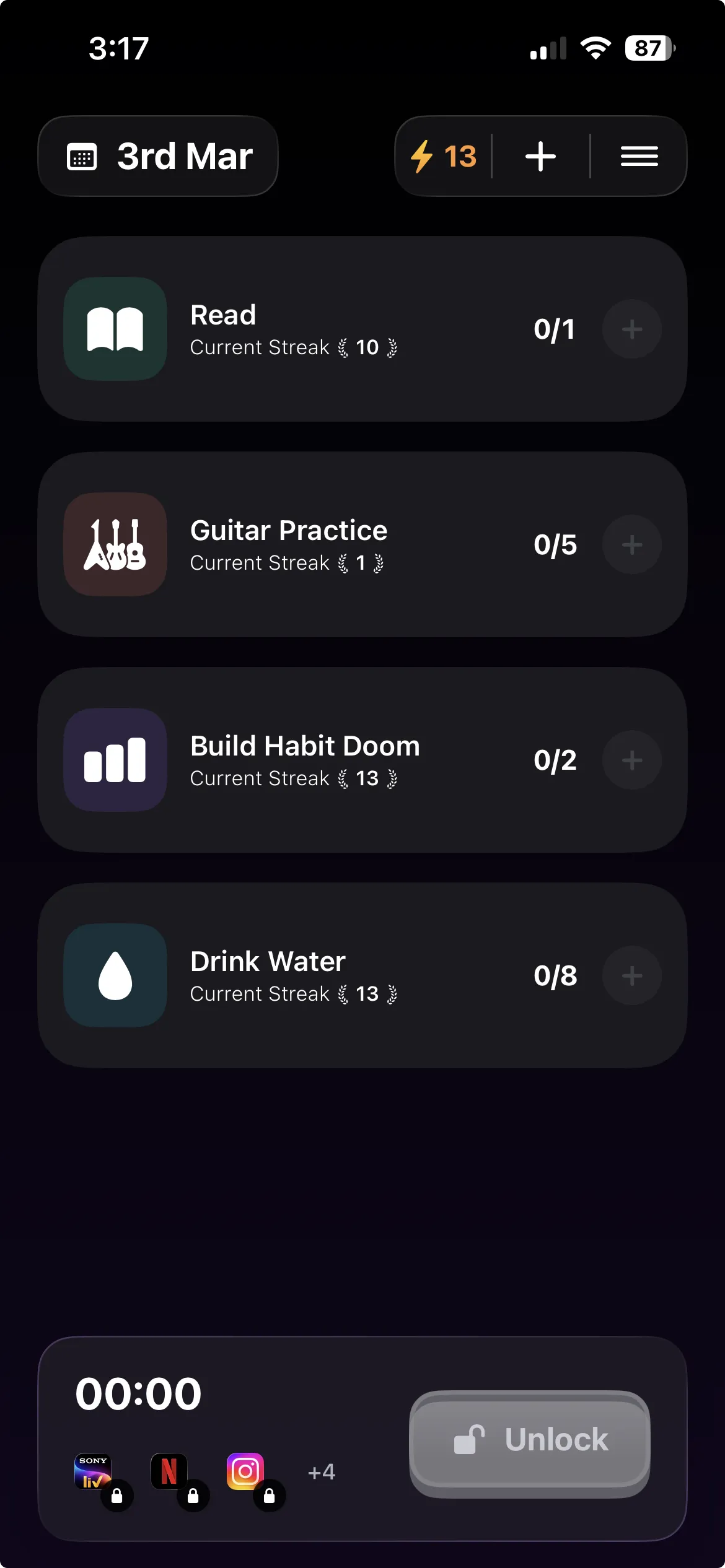
The concept is simple and the execution is deliberate. You set up Habit Doom with two lists: the habits you want to complete each day and the apps you want blocked until those habits are done. When you wake up in the morning, the apps on your block list are locked. They stay locked until you check off your daily habits. Once your habits are completed, everything unlocks and you can use your phone normally for the rest of the day.
There is no time limit to negotiate with. There is no "ignore" button. Habit Doom is free to download on the App Store, with $2.99/month for all features and works immediately after setup.
Why This Approach Succeeds Where Others Fail
Habit Doom solves the three problems that defeat most anti-doomscrolling strategies:
- It does not rely on willpower. The apps are locked at the system level. You do not need to resist the urge to open them; the option simply is not available until your habits are done. Willpower is removed from the equation entirely.
- It is not easy to bypass. Unlike Screen Time limits that can be dismissed with a tap, Habit Doom creates real friction. You have to actually complete your habits to unlock your apps. The barrier is meaningful enough that it disrupts the autopilot scrolling loop.
- It replaces restriction with productive action. You are not just blocking apps; you are channeling the time and energy you would have spent scrolling into habits that improve your life. Morning meditation, exercise, reading, journaling, language study, whatever matters to you gets done before the distractions have a chance to consume your day.
The psychological reframe is powerful. Instead of feeling deprived ("I cannot use my apps"), you feel accomplished ("I earned my screen time by doing the things that matter to me"). Over time, the habits themselves become rewarding, and many Habit Doom users find that they naturally spend less time on their previously blocked apps even after unlocking them, because the compulsive urgency has been replaced by intentional choice.
Who Habit Doom Is For
Habit Doom is designed for people who are serious about stopping doomscrolling and building real habits but who have found that softer approaches do not hold up against the pull of algorithmic feeds. If you have tried Screen Time limits and bypassed them, if you have deleted apps only to reinstall them the same day, if you know what you should be doing but cannot seem to start your day without first losing an hour to your phone, Habit Doom gives you the structural support that willpower alone cannot provide.
You can learn more about how Habit Doom compares to other app blockers in our detailed Habit Doom vs. Opal vs. One Sec comparison, or browse our full list of best app blockers for iPhone in 2026.
Getting Started Takes Two Minutes
Download Habit Doom from the App Store, add the habits you want to build, select the apps you want locked, and you are done. Tomorrow morning, when you reach for your phone to start scrolling, you will find your distracting apps locked and a clear list of habits waiting to be completed. It is a small setup for a significant change in how your days begin.
The best time to stop doomscrolling was a year ago. The second best time is today. And the easiest way to start is with a system that does the hard part for you.
If you are ready to take back your mornings, your focus, and your time, visit the Habit Doom homepage to learn more, or head straight to the App Store and download it today. For more tips on digital wellness and building better habits, explore the Habit Doom blog.
Frequently Asked Questions
Keep Reading
Ready to Stop Doomscrolling?
Habit Doom locks your distracting apps until you complete your daily habits. Available on iOS.
Download