
Habit Doom vs Opal vs One Sec: which app blocker actually works?
 X
X LinkedIn
Why This Comparison Matters
Habit Doom, Opal, and One Sec are three of the most popular app blockers on iOS in 2026, but they take fundamentally different approaches to the same problem: you keep opening apps you know are wasting your time. If you have ever searched for "best app blocker" and landed on conflicting recommendations, this guide will cut through the noise.
The average smartphone user picks up their phone 96 times per day and spends over four hours on apps that provide little real value. App blockers exist to break that cycle, but not all blockers are created equal. Some use scheduled time limits. Others add friction to slow you down. And one — Habit Doom — takes an entirely different approach by tying app access to your real-world habits.
This comparison is honest. We built Habit Doom, so we obviously believe in our approach, but we will acknowledge where Opal and One Sec genuinely excel. The goal is to help you pick the tool that matches your specific problem, whether that is chronic doomscrolling, unfocused work sessions, or simply wanting to build better daily habits.
Quick Comparison Table
Before diving into the details, here is a side-by-side overview of the three apps across the features that matter most when choosing an app blocker for iPhone.
| Feature | Habit Doom | Opal | One Sec |
|---|---|---|---|
| Price | Free / $2.99/mo | $8/mo or $80/yr | Free tier + $5/mo premium |
| Blocking Method | Screen Time API — locks apps until habits are done | VPN-based scheduled blocking sessions | Friction-based breathing exercise before opening |
| Actually Blocks Apps? | Yes — full lock | Yes — during sessions | No — adds delay only |
| Habit Tracking | Built-in — core feature | None | None |
| Bypass Difficulty | Cannot bypass | Can delete VPN profile to bypass | Can skip breathing exercise |
| Privacy | No data leaves device | Collects usage data | Minimal data collection |
| Platforms | iOS | iOS, macOS | iOS, Android |
| Best For | Building habits while blocking apps | Scheduled focus sessions with analytics | Adding mindful pauses before app usage |
Habit Doom: Deep Dive
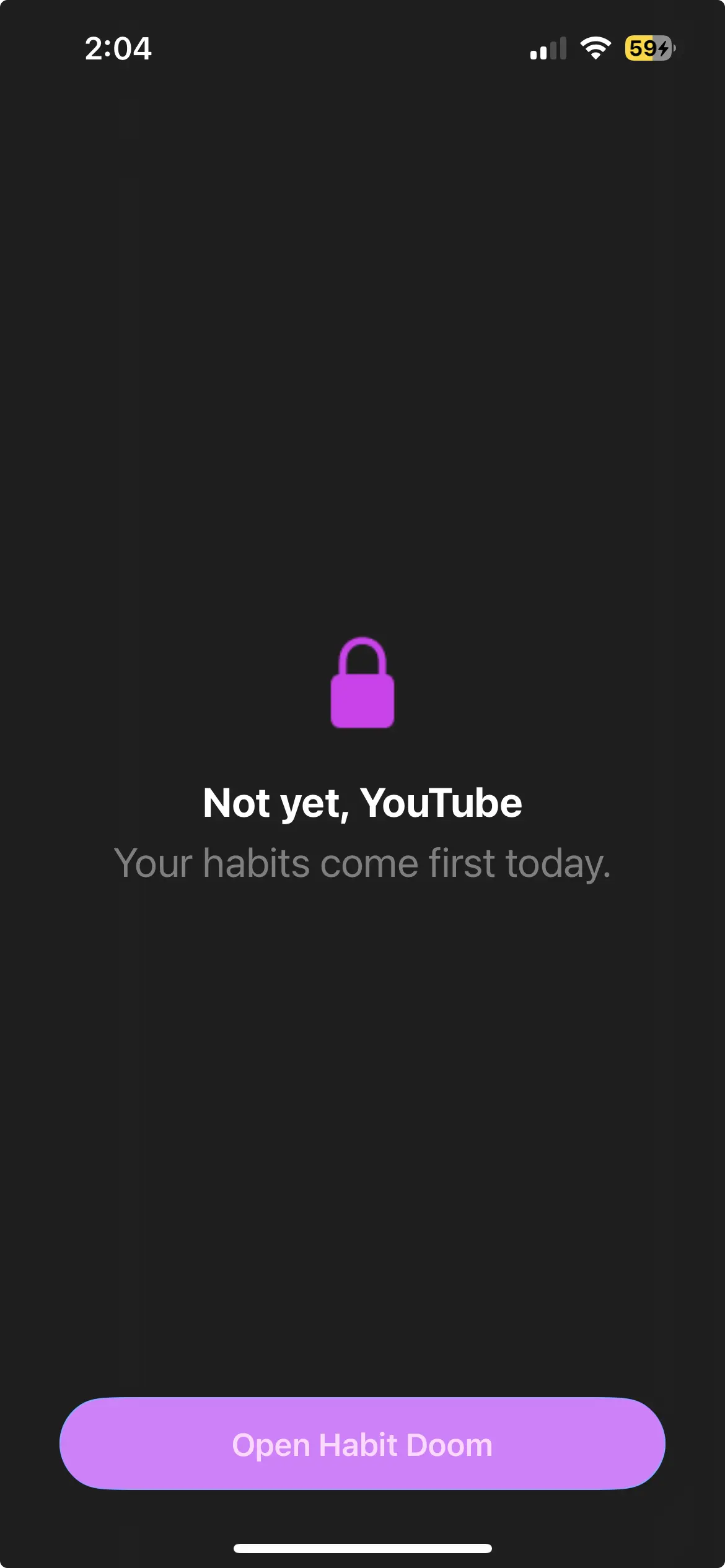
Habit Doom is an iOS app that locks distracting apps until you complete your daily habits. Unlike traditional app blockers that rely on timers or willpower, Habit Doom creates a direct exchange: finish your habits, earn your screen time. It uses Apple's Screen Time API for device-level blocking that cannot be bypassed, swiped away, or worked around.
How Habit Doom Works
The setup takes about two minutes. You choose which apps to lock — Instagram, TikTok, X (Twitter), Reddit, YouTube, or any other app on your phone — and then define the habits you want to complete each day. Those could be anything: meditate for ten minutes, go for a run, drink eight glasses of water, read for twenty minutes. When you wake up each morning, your selected apps are locked. The only way to unlock them is to check off your habits. There is no timer to wait out, no override button, and no way to delete the restriction without completing your tasks. For a full walkthrough, see our guide on how Habit Doom works.
Key Features
- Habit-based unlocking — apps stay locked until every habit on your daily list is checked off
- Screen Time API integration — uses the same system-level API as Apple's built-in Screen Time, making blocks impossible to bypass
- Privacy-first architecture — all data stays on your device; nothing is uploaded to external servers
- Customizable habit lists — track any habit you want, from exercise to journaling to language practice
- Streak tracking — see how many consecutive days you have completed your habits
Pricing
Habit Doom is free to download and use, with $2.99/month for all features. There is no premium tier beyond that, no ads, and no hidden upsells.
Pros and Cons
| Pros | Cons |
|---|---|
| Free / $2.99/mo — all features | iOS only (no Android or macOS) |
| Unbypassable Screen Time API blocking | No scheduled focus sessions |
| Built-in habit tracking ties blocking to real behavior | No detailed screen time analytics |
| Privacy-first — no data leaves the device | No social or team features |
| 4.86-star App Store rating |
Opal: Deep Dive
Opal is a premium app blocker for iOS and macOS that focuses on scheduled focus sessions, screen time analytics, and social accountability. It has a polished, well-designed interface and offers granular control over when and how your apps are blocked. Opal is aimed at professionals and students who want to schedule distraction-free work periods throughout the day.
How Opal Works
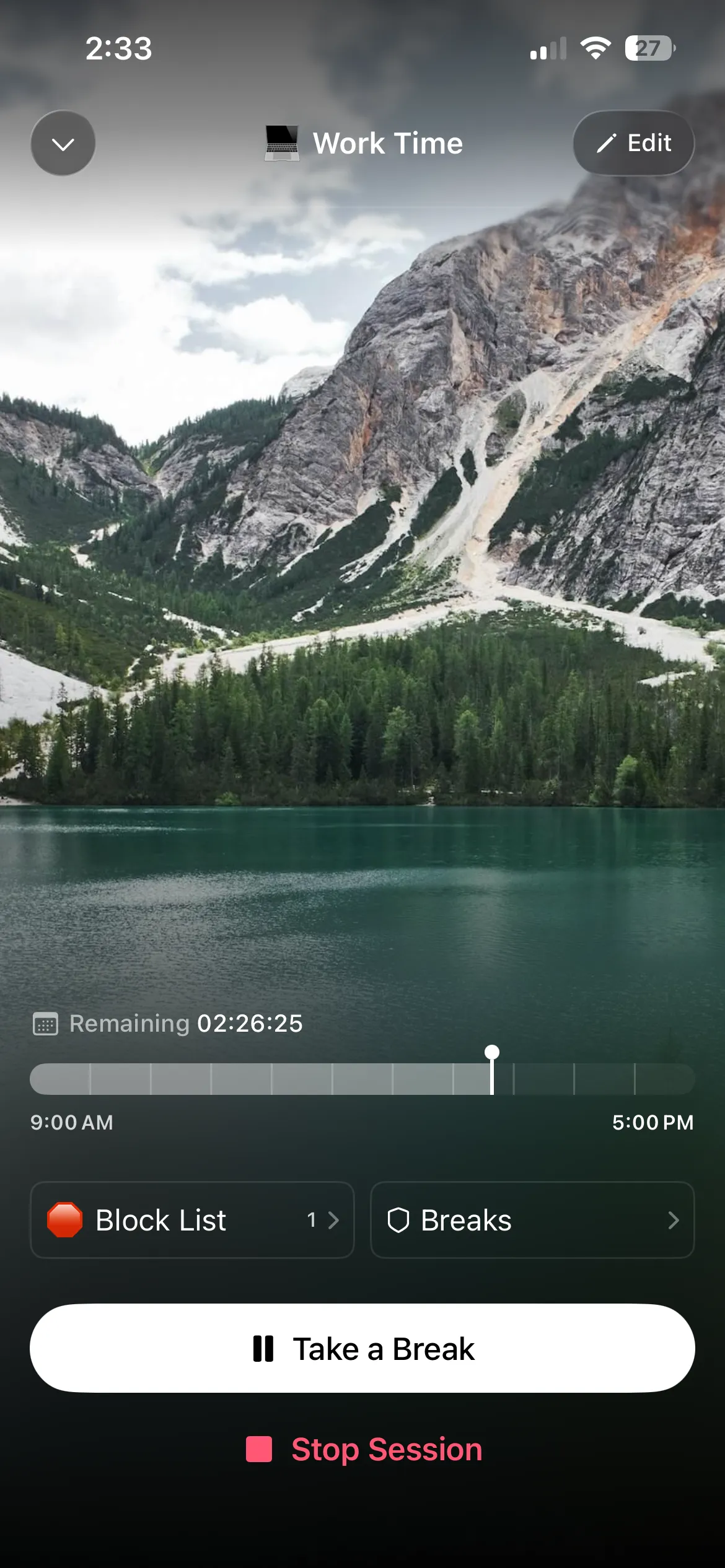
Opal uses a combination of VPN-based blocking and Screen Time restrictions to prevent you from opening selected apps during scheduled focus sessions. You create "sessions" that define which apps to block and for how long — for example, block social media from 9am to noon every weekday. During a session, attempting to open a blocked app shows you an Opal interstitial screen. You can also start one-off sessions manually for ad hoc focus time.
Key Features
- Scheduled focus sessions — set recurring blocks for specific times and days
- Screen time analytics — detailed breakdowns of how much time you spend on each app
- App groups — create categories like "Social Media" or "News" for batch blocking
- Social features — share focus sessions with friends or teams
- Deep focus mode — stricter blocking that is harder (but not impossible) to bypass
- macOS support — block websites and apps on your Mac too
Pricing
Opal offers a limited free tier, but most useful features require a premium subscription at $19.99 per month or $99.99 per year. That makes it one of the most expensive app blockers on the market — you would spend nearly $240 per year on the monthly plan just to block apps on your phone. Opal also requires you to create an account before you can use the app — unlike Habit Doom, which works instantly with no sign-in.
Pros and Cons
| Pros | Cons |
|---|---|
| Beautiful, polished UI | Expensive at $19.99/mo or $99.99/yr |
| Flexible scheduled focus sessions | VPN blocking can be bypassed by deleting the profile |
| Detailed screen time analytics | No habit tracking whatsoever |
| Social and team accountability features | Collects user data for analytics |
| Cross-platform (iOS + macOS) | Free tier is very limited |
One Sec: Deep Dive
One Sec is a friction-based app blocker available on iOS and Android that forces you to take a deep breath before opening distracting apps. Rather than fully blocking app access, One Sec inserts a mandatory pause — typically a breathing exercise lasting a few seconds — between your impulse to open an app and actually using it. The idea is grounded in behavioral psychology: by creating a gap between stimulus and response, you give your rational brain time to override the habitual impulse.
How One Sec Works
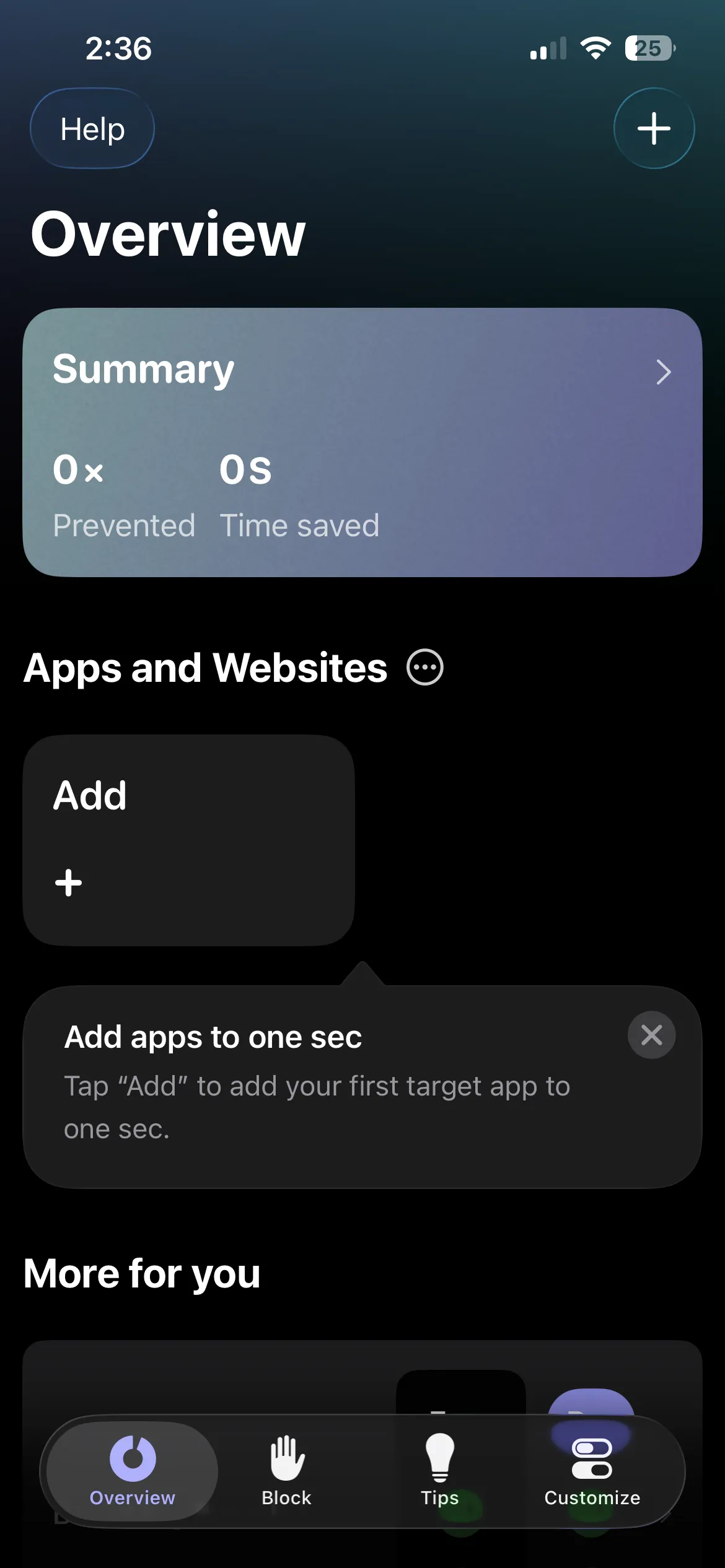
One Sec uses iOS Shortcuts automation to intercept app launches. When you try to open a configured app (say, Instagram), the Shortcuts automation triggers first and presents a breathing exercise. After completing the exercise, you are asked whether you still want to open the app. Many users find that the pause alone is enough to make them reconsider. One Sec tracks how many times you were "nudged" and how often you chose not to open the app after the pause.
Key Features
- Breathing exercise intervention — a forced pause before opening any configured app
- Impulse tracking — see how many times you tried to open apps and how often you followed through
- Intent journaling — optionally write why you want to open the app (premium)
- Customizable delay duration — adjust how long the breathing exercise lasts (premium)
- Cross-platform — available on both iOS and Android
Pricing
One Sec has a free tier that covers a breathing intervention for one app. The premium tier at $3.99 per month ($14.99/year) unlocks unlimited app configurations, intent journaling, custom delay durations, and detailed analytics.
Pros and Cons
| Pros | Cons |
|---|---|
| Clever friction-based approach grounded in psychology | Does not actually block apps — you can still open them |
| Free tier available | Breathing exercise can be skipped or dismissed |
| Useful impulse-tracking data | No habit tracking |
| Available on iOS and Android | Best features require $3.99/mo premium |
| Lightweight — does not drain battery | Relies on Shortcuts automation, which can be unreliable |
 Download Free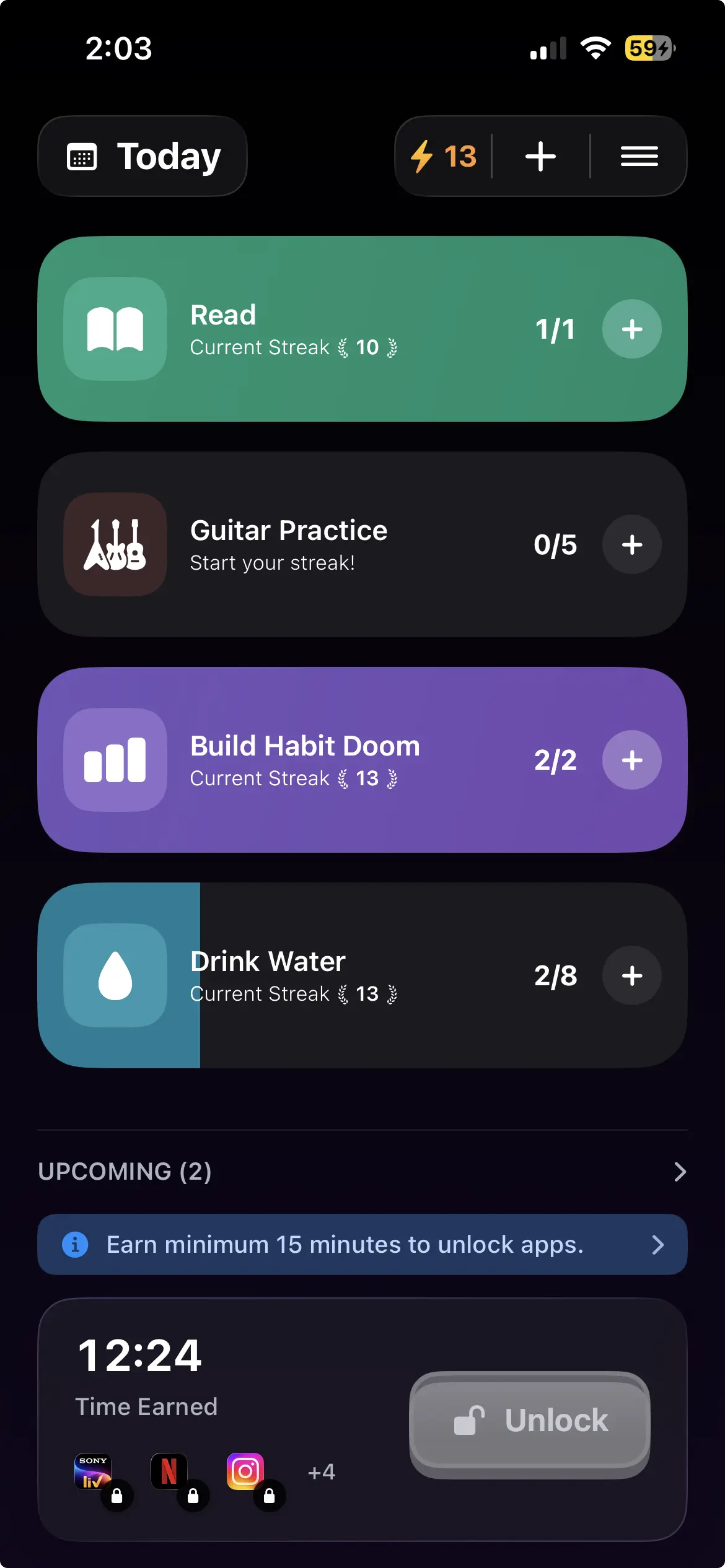
Head-to-Head Comparisons
Habit Doom vs Opal
Habit Doom and Opal represent two different philosophies of app blocking. Opal is built around the concept of time-based focus sessions: you schedule blocks of time during which certain apps are unavailable, similar to putting your phone in a timed safe. Habit Doom is built around behavior-based unlocking: your apps are locked by default every day, and you earn access by completing real-world habits.
The practical difference is significant. With Opal, once your scheduled session ends, your apps are fully accessible again regardless of whether you accomplished anything productive. With Habit Doom, you cannot access your apps until you have actually done something meaningful. This creates a much stronger feedback loop between productive behavior and screen time.
| Category | Habit Doom | Opal |
|---|---|---|
| Price | Free / $2.99/mo | $19.99/mo ($99.99/yr) |
| Blocking Approach | Habit-based — unlock by completing habits | Time-based — unlock when session ends |
| Can You Bypass? | No | Yes — delete VPN profile |
| Habit Tracking | Yes — core feature | No |
| Usage Analytics | Basic | Detailed |
| macOS Support | No | Yes |
| Best For | People who want to build habits AND reduce screen time | People who need scheduled focus windows for work |
Bottom line: Choose Opal if you specifically need time-scheduled focus sessions during your workday and are willing to pay $99.99+ per year for it. Choose Habit Doom if you want an affordable, unbypassable blocker that is free to download ($2.99/month for all features) and also helps you build daily habits. For most people trying to stop doomscrolling, Habit Doom is the stronger choice because it addresses the root cause — what you do with your time instead of scrolling — rather than just setting a timer.
Habit Doom vs One Sec
Habit Doom and One Sec solve the same problem but sit at opposite ends of the enforcement spectrum. One Sec uses a "soft" approach: it adds friction by making you breathe before opening an app, hoping that the pause is enough to change your mind. Habit Doom uses a "hard" approach: it locks the app entirely until you have completed your habits for the day. There is no breathing exercise, no question asking if you are sure — the app simply does not open.
One Sec's approach is psychologically interesting and works well for people with moderate phone habits. The data it collects on impulse openings is genuinely insightful. But for anyone who has tried and failed to reduce screen time through willpower alone, One Sec's lack of actual blocking is its critical weakness. You can always tap through the breathing exercise and open the app anyway.
| Category | Habit Doom | One Sec |
|---|---|---|
| Price | Free / $2.99/mo | Free tier / $3.99/mo premium |
| Blocking Approach | Full lock until habits are completed | Breathing pause before opening |
| Actually Prevents Access? | Yes | No — you can still open the app |
| Habit Tracking | Yes | No |
| Impulse Tracking | No | Yes — logs every attempt |
| Android Support | No | Yes |
| Best For | People who need a hard lock they cannot bypass | People who want a gentle nudge before opening apps |
Bottom line: If you have the self-discipline to reconsider after a breathing exercise, One Sec is a clever and lightweight tool. If you know from experience that you will tap through any pause, warning, or speed bump, Habit Doom is the only option that actually prevents you from accessing the app. And unlike One Sec's premium tier, Habit Doom is free to download, with $2.99/month for all features.
Opal vs One Sec
Opal and One Sec are worth comparing directly because many users consider them as alternatives. Opal fully blocks apps during scheduled sessions, while One Sec adds a mindful pause before each opening. They work in complementary ways and some users actually run both.
Opal is better for structured productivity — block social media during your 9-to-5 workday and access it freely in the evening. One Sec is better for 24/7 mindfulness — adding a moment of awareness every time you reach for Instagram, regardless of the time of day. However, Opal costs significantly more and its VPN-based blocking can be bypassed, while One Sec never truly blocks anything at all.
| Category | Opal | One Sec |
|---|---|---|
| Price | $19.99/mo ($99.99/yr) | Free / $3.99/mo |
| Blocking Approach | Scheduled session blocks | Breathing exercise pause |
| Enforcement Level | Medium — blocks but bypassable | Low — does not block |
| Analytics | Detailed screen time breakdowns | Impulse tracking data |
| Social Features | Yes — share sessions with friends | No |
| Best For | Scheduled focus blocks with analytics | Mindful awareness before every app opening |
The Verdict: Which Should You Choose?
All three apps tackle digital distraction, but they are fundamentally different tools for different problems. Here is our honest recommendation based on your specific situation:
Choose Habit Doom if you want to build better daily habits AND reduce screen time at the same time. It is the only app that connects the two problems into a single solution. It is also free to download ($2.99/month for all features) with no bypass possible. If you have tried setting screen time limits and failed, Habit Doom's hard lock is the enforcer you need. Download Habit Doom from the App Store.
Choose Opal if you specifically need time-based focus sessions for work or study. If your problem is "I get distracted during working hours" rather than "I can't build habits," Opal's scheduled blocking approach might suit your workflow. Just be prepared to pay $80+ per year for it, and know that its blocks can technically be bypassed.
Choose One Sec if you want a lightweight, gentle approach to increasing mindfulness around phone usage. If you do not need hard blocking and just want a moment to reconsider before opening social media, One Sec's breathing exercise is a clever psychological tool. It works best for people with mild to moderate phone habits.
Our overall recommendation: For most people searching for the best app blocker in 2026, Habit Doom offers the most compelling value. It is free to download ($2.99/month for all features), it actually works (no bypassing), and it solves two problems at once by turning your bad scrolling habit into a trigger for good habits. No other app blocker on the market combines real blocking with real habit tracking.
Still researching? Check out our complete roundup of the best app blockers for iPhone in 2026 for a wider comparison, or learn more about how Habit Doom works under the hood.
Frequently Asked Questions
Habit Doom is the best app blocker for building habits because it is the only one that ties app access directly to habit completion. Opal focuses on scheduled focus sessions with no habit tracking, and One Sec uses friction-based delays without any habit system. Habit Doom locks your distracting apps until you finish your daily habits, creating a direct cause-and-effect loop that reinforces behavior change. It is free to download, with $2.99/month for all features, making it one of the most affordable options available.
Opal can be worth the price if you specifically need scheduled focus sessions, detailed screen time analytics, and social accountability features. Its interface is polished and the usage data is genuinely useful. However, at $96 per year on the monthly plan, it is one of the most expensive app blockers available. Many users find that more affordable alternatives like Habit Doom (free to download, $2.99/mo for all features) provide stronger blocking with additional habit-tracking benefits. Opal's blocks can also be bypassed by deleting the VPN profile, which undermines its effectiveness for users who struggle with self-control.
Yes, you can combine app blockers for a layered approach. A popular combination is Habit Doom plus One Sec: Habit Doom locks your apps until habits are done each day, and One Sec adds a breathing pause for any moments of weakness after you unlock. However, only one app can use the Screen Time API at a time on iOS, so you cannot run Habit Doom and Opal simultaneously since both use device-level blocking. Most users find that Habit Doom alone is sufficient because its blocks cannot be bypassed.