


No Homework, No TikTok: A Parental Control That Works

 X
X LinkedIn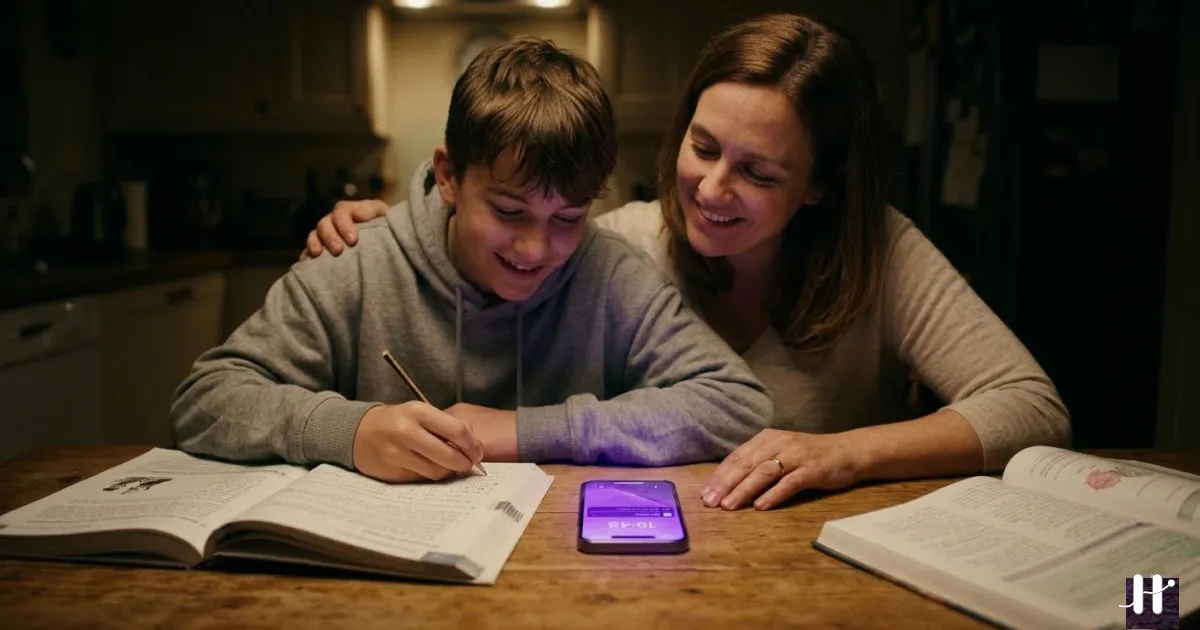
The nightly screen time battle
You have had this conversation a hundred times. "Put the phone down." "Just five more minutes." "You have not even started your homework." Your child is glued to TikTok, their assignment is sitting untouched, and every attempt to set limits turns into an argument.
You are not imagining this. TikTok is specifically designed to hold attention. The algorithm learns what your child watches and serves an infinite feed of exactly that. A teenager's developing brain is especially susceptible to this. The short dopamine hits from each video make homework feel unbearable by comparison. The latest screen time statistics show just how much time teens are losing to social media each day.
You have probably tried the obvious fixes. Screen Time limits get dismissed with a single tap. Take the phone away and you get resentment and sneaking. Rules like "no phone until homework is done" require you to monitor and enforce, every day. It is exhausting, and it strains the relationship.
There is a better approach. One that does the enforcing for you, so you do not have to be the bad guy.
Let the system be the parent
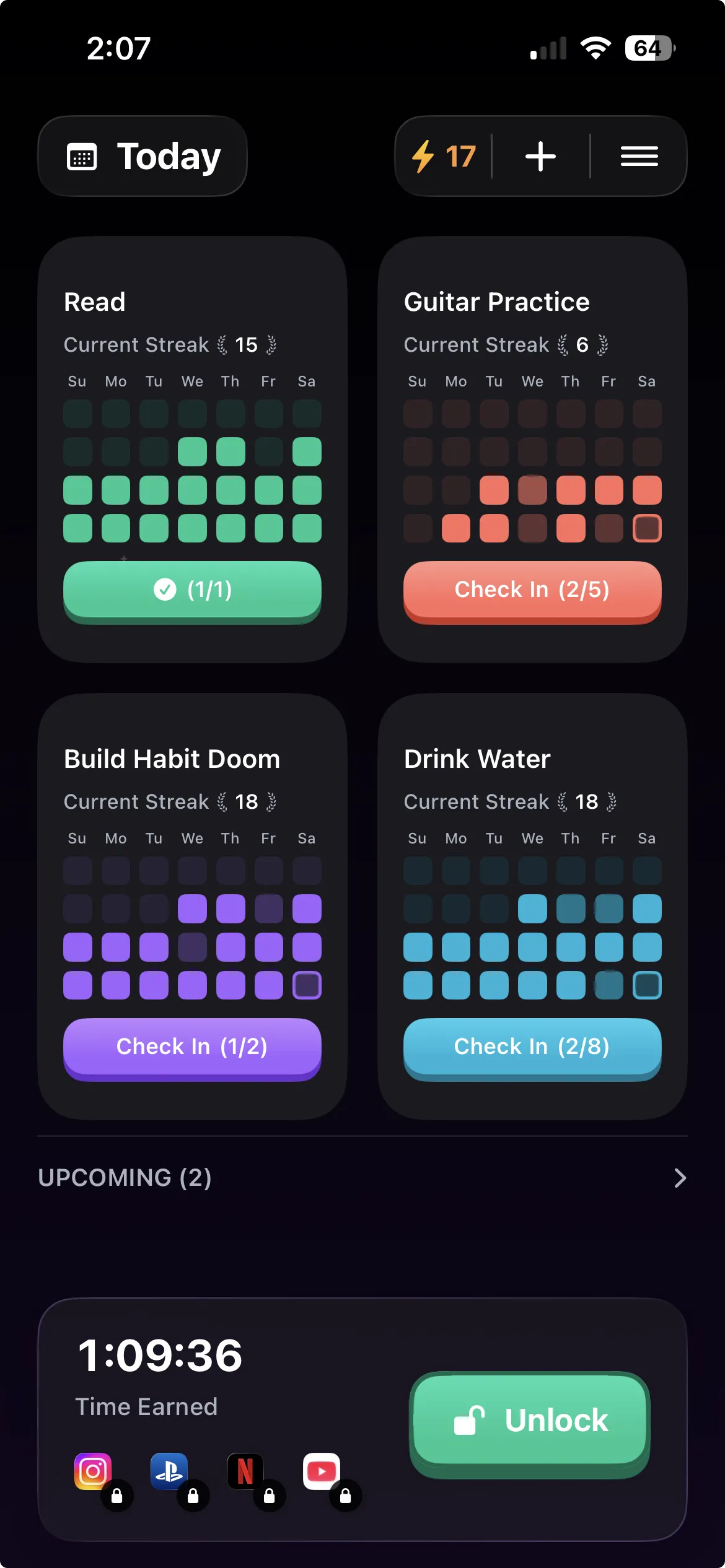
Habit Doom is an app that locks distracting apps until daily habits are completed. Install it on your child's phone, set up their habits (homework, reading, chores, whatever matters to your family), and add TikTok to the block list. Now when they try to open TikTok, they see a lock screen. The only way through is to complete their habits first.
This is not another timer they can dismiss. The app is physically locked. It does not open. There is no "Ignore Limit" button, no five-minute extension. The habit gets done, or the app stays locked.
The key difference from other approaches: you are not taking anything away. TikTok is still there. They still get to use it. They just have to earn it first. This reframes the entire dynamic. Screen time becomes a reward for responsibility, not a privilege you are constantly threatening to revoke.
This approach works across a wide age range, though you will want to adapt it. An 8-year-old might have one simple habit before they can play Roblox. A 15-year-old might have three daily responsibilities gating TikTok, Instagram, and YouTube. The mechanics are the same, but the conversation you have with your child and the habits you choose are what make it age-appropriate.
How to set it up on their phone
Setting this up is straightforward, but how you introduce it matters as much as the technical steps. Springing a new restriction on a kid without context will feel like punishment. Having a conversation first makes it feel like a family decision. If that conversation is the part you are dreading, how to talk to your teen about phone addiction covers what the Pew data says about opening it well.
Before you touch the phone: Sit down with your child and explain what you are doing and why. You might say something like, "I am not taking TikTok away. I am setting up a system where you do your responsibilities first, and then TikTok unlocks automatically. No more arguments about screen time." For younger children (under 12), keep it simple: "This app helps you earn your fun time." For teenagers, be honest about the why. They are more likely to cooperate if they feel respected rather than controlled.
Step 1: Download Habit Doom on your child's phone from the App Store. It is free to download. Do this together if possible. Having them see the setup process reduces the feeling that something is being done to them.
Step 2: Choose age-appropriate habits. This is where most parents overthink it. Start with 1-2 habits, not five. You can always add more later.
For younger children (ages 8-12): - "Read for 15 minutes" - "Practice spelling words" - "Tidy your room"
For teens (ages 13-17): - "Study for 30 minutes" - "Finish homework assignments" - "30 minutes of physical activity"
The key is making each habit specific enough that there is no ambiguity about whether it is done. "Be responsible" is not a habit. "Show me your finished math worksheet" is.
Step 3: Block the distracting apps. Add TikTok to the block list. For younger kids, you might also add YouTube and gaming apps. For teens, consider adding Instagram, Snapchat, and anything else that pulls them into a scroll hole. These apps will be inaccessible until all habits are checked off.
Step 4: Prevent app deletion. This is the critical step most parents skip. Without it, your child can simply delete Habit Doom and the block disappears.
On iPhone, open Settings, then tap Screen Time. If you have not set up Screen Time yet, tap "Turn On Screen Time" and choose "This is My Child's iPhone." Then go to Content & Privacy Restrictions and toggle it on. Navigate to iTunes & App Store Purchases, tap Deleting Apps, and select Don't Allow. Make sure you set a Screen Time passcode your child does not know.
This means they cannot remove Habit Doom (or any other app) without your passcode. For a full walkthrough of how the app works under the hood, see how Habit Doom works.
Step 5: Do a test run together. Open TikTok and show your child the lock screen. Then have them complete their habits and watch the app unlock. Seeing the full cycle once removes the mystery and shows them this is not arbitrary. There is a clear, consistent path to their screen time.
Handling the things parents worry about
A few concerns tend to come up with a setup like this. Here is how Habit Doom addresses the common ones.
"What if my child tries to cheat the system?"
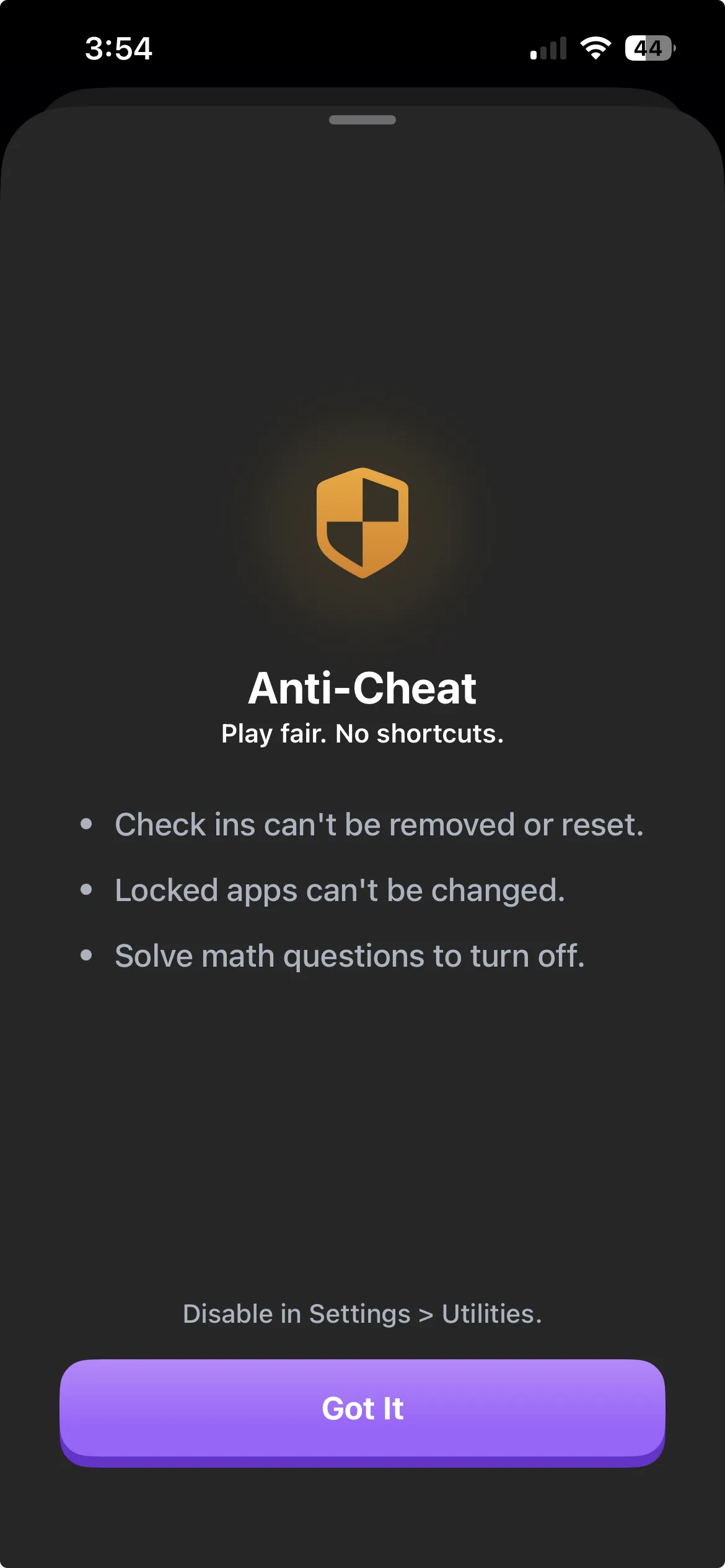
They will try. Expect it. Habit Doom has a built-in Anti-Cheat system that detects bypass attempts, whether that is force-closing the app, clearing app data, or other creative workarounds kids find on YouTube. The system is designed so that cheating is harder than just doing the habit. Paired with the deletion lock from Step 4, your child cannot simply remove the app to get around it. Most kids test the boundaries once or twice, realize the effort is not worth it, and start doing their habits instead.
"What about exam weeks or times when they need extra focus?"
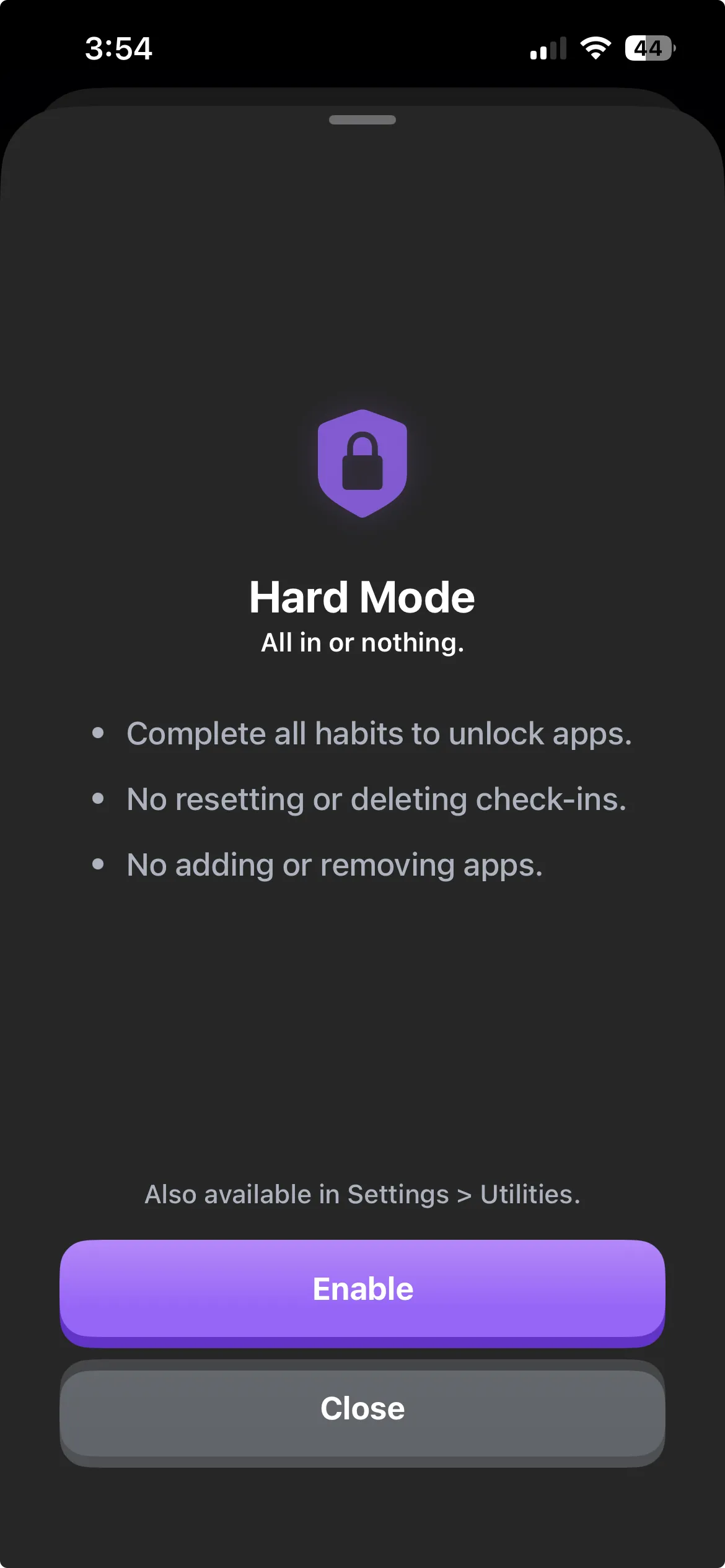
For the stretches when focus matters most (finals, midterms, a big project), Habit Doom has a Hard Mode setting. Turn it on, and every single habit must be completed before any blocked app unlocks. No partial credit. It is useful as a temporary escalation for high-stakes weeks, and your child can see the logic in it: "Big test next week, so we are going Hard Mode until Friday." Turn it off after and return to the normal routine.
"Will they resent me for this?"
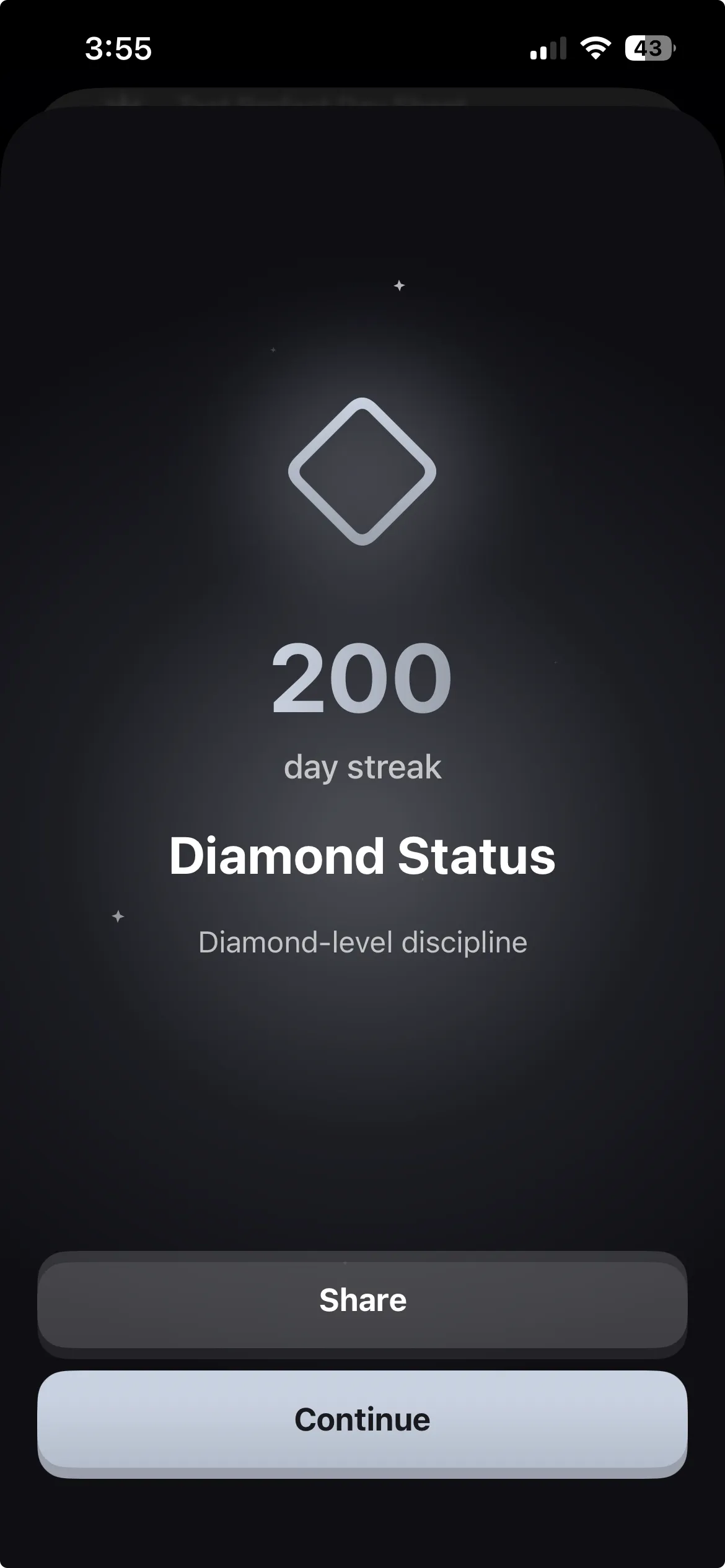
This is the concern that keeps parents from acting, and it is worth taking seriously. In the first few days, yes, there will probably be friction. But here is what tends to happen: the streak mechanic changes the dynamic. After a week of completing habits, your child has a streak going: 7 days, then 14, then 30. Habit Doom tracks this with visible milestones and status levels (hit 200 days and you reach Diamond Status). The streak becomes something they own and take pride in.
It is the same psychology that makes Snapchat streaks compelling, except now it is reinforcing homework, reading, and chores. Over time, many kids shift from "my parent made me do this" to "I do not want to break my streak." That is when resentment turns into buy-in.
What to expect in the first two weeks
Days 1-3: Resistance. Expect pushback. They will test the system, look for workarounds, and probably complain. This is normal. The app holds firm. Your job is to stay calm and not cave. When they push back, keep it simple: "I know it is frustrating. Finish your reading and TikTok opens right up." Do not over-explain or get drawn into a debate. The system speaks for itself.
Days 4-7: Adjustment. The new routine starts to feel less foreign. They begin doing their habits earlier because they want their apps sooner. You will notice the homework getting done without being asked. During this phase, acknowledge the effort: "I noticed you did your homework right after school today. That is solid." Small recognition goes a long way toward making this feel collaborative instead of punitive.
Days 7-14: Habit formation. This is where it gets interesting. The streak counter is climbing and they start taking a quiet pride in the number. The arguments about screen time have mostly stopped because the system handles it. You are no longer the enforcer. The app is. Resist the urge to add more habits during this phase. Let the routine solidify first.
After 2 weeks: For many families, this is when the dynamic shifts permanently. The habit of doing homework before TikTok becomes automatic. Some kids start adding their own habits to the app without being asked. The screen time battle is replaced by a system both of you can live with. If things are going well, this is a good time to have a check-in conversation: "How is this feeling? Anything you want to adjust?"
Why environment design beats punishment
"Children don't need more willpower. They need environments designed to support good choices."
BJ Fogg, Tiny Habits
There are three ways parents typically handle screen time, and two of them backfire.
Confiscation (taking the phone away) is punishment. It creates resentment, sneaking, and a power struggle. Worse, it does not teach anything. The moment the phone comes back, the behavior resumes because your child never learned to manage the temptation. They just learned to resent you for removing it.
Rules without enforcement ("no phone until homework is done") puts all the burden on you. You have to monitor, nag, and follow through every single day. Screen Time limits fall in this category too. They ask your child to make the right choice, then offer a one-tap bypass.
Environment design is the third option, and it is the one that actually works long-term. Instead of relying on your child's willpower or your constant vigilance, you change the environment so the desired behavior is the path of least resistance. TikTok is still there. The phone is still there. They are just locked behind a reasonable condition: do your responsibilities first.
This is more than a screen time hack. You are teaching delayed gratification: the ability to sit with short-term discomfort for a longer-term reward. Research consistently ties that skill to academic success, emotional regulation, and long-term well-being. Every time your child finishes their habits before opening TikTok, they are practicing something that will serve them long after they have left your house.
It also removes you from the equation. You are not monitoring, nagging, or confiscating. The app is the gatekeeper. If your child complains, you can honestly say, "It is not me. Finish your homework and TikTok opens right up." That changes the dynamic from parent-vs-child to child-vs-their-own-habits. If your child is old enough to set things up themselves, share our student's guide to the best app blockers with them.
Setting this up for multiple children
If you have more than one child, each phone gets its own Habit Doom setup with its own habits and block list. There is no family plan or shared account. Each installation is independent, which is actually what you want. Your 9-year-old's habits ("Read for 15 minutes," "Practice math facts") should look nothing like your 15-year-old's ("Study for 30 minutes," "Go for a run"). The apps you block might differ too. Your younger child might not even have TikTok, but you might want to gate YouTube and Roblox instead.
Set up each phone separately using the same steps above. The deletion lock step is especially important for younger children who might not fully understand why the app is there. For older teens, you might even let them choose their own habits. Giving them that autonomy increases the chance they stick with it.
Set it up tonight
Download Habit Doom on your child's phone, have the conversation, choose 1-2 habits together, block TikTok, and lock down deletion. Do the test run so they see how the unlock works. Tomorrow after school, when they reach for TikTok on autopilot, they will find a lock screen instead. And for the first time, the homework will get done without you having to ask.
The screen time argument ends when screen time has to be earned.
Frequently Asked Questions
Keep Reading
Try Habit Doom
Lock your distracting apps. Complete your habits. Earn your screen time. It takes 30 seconds to set up.
Download Free