


97 Downloads. $0 Revenue.

 X
X LinkedIn
I am going to share every number. No spin. No "we are seeing great traction" corporate speak. Just the raw data from Habit Doom's first month on the App Store.
Habit Doom is an iOS app I built solo that locks your distracting apps (Instagram, TikTok, YouTube) until you complete your daily habits. No timer. No gentle reminder. A real lock at the operating system level.
This is either inspiring transparency or embarrassing public self-exposure, depending on how you look at it. Either way, it is real.
The Top-Line Numbers
Here is the dashboard as of mid-March 2026, roughly one month after launch:
| Metric | Number |
|---|---|
| Total downloads | 97 |
| First-time downloads | 83 |
| Impressions | 1,910 |
| Product page views | 319 |
| Conversion rate | 7.94% |
| Revenue | $0 |
| Crashes | 2 |
| Sessions per active device | 21.8 |
Let me break down what each of these numbers actually means.
Where Downloads Come From
90.6% of downloads came from App Store Search. People searched for something (habit tracker, app blocker, screen time) and found Habit Doom. 4.2% came from App Store Browse (being featured in categories). 3.1% from App Referrer, and a trickle from Web Referrer.
This tells me two things:
- My App Store listing is working. An 7.94% conversion rate from product page view to download is solid for a new app. People who find it are interested enough to download.
- Nobody knows this app exists. 90.6% organic search means I have done essentially zero marketing. The downloads I have are from people actively searching for this type of app.
By country: United States (22), Canada (10), India (10), United Kingdom (7), Saudi Arabia (5). The app is resonating in English-speaking markets, which makes sense given the listing is only in English.
By device: iPhone 83 (86.5%), iPad 13 (13.5%). I did not expect iPad to be 13% but I am glad I added iPad support.
The Onboarding Funnel
This is where it gets interesting. I track every step of onboarding with PostHog:
- 40 people started onboarding
- 36 completed it (90% completion rate)
- Average time: 1 minute 19 seconds
90% onboarding completion is genuinely good. The onboarding flow I rebuilt three times is working. People understand what the app does and how to set it up.
But then comes the critical drop-off:
- 36 completed onboarding
- 19 created their first habit (52.78%)
- 17 dropped off (47.22%)
Almost half of the people who successfully complete onboarding never create a single habit. They understand the app. They set it up. Then they leave. This is the biggest problem in my funnel right now, and the number one thing I need to fix.
There is also a Screen Time permission challenge. The app needs access to Apple's Screen Time API to lock apps, that is the core feature. Roughly a third of users deny this permission during onboarding. Without it, the app is just a habit tracker with no locking. I need to do a better job explaining why this permission matters before asking for it.
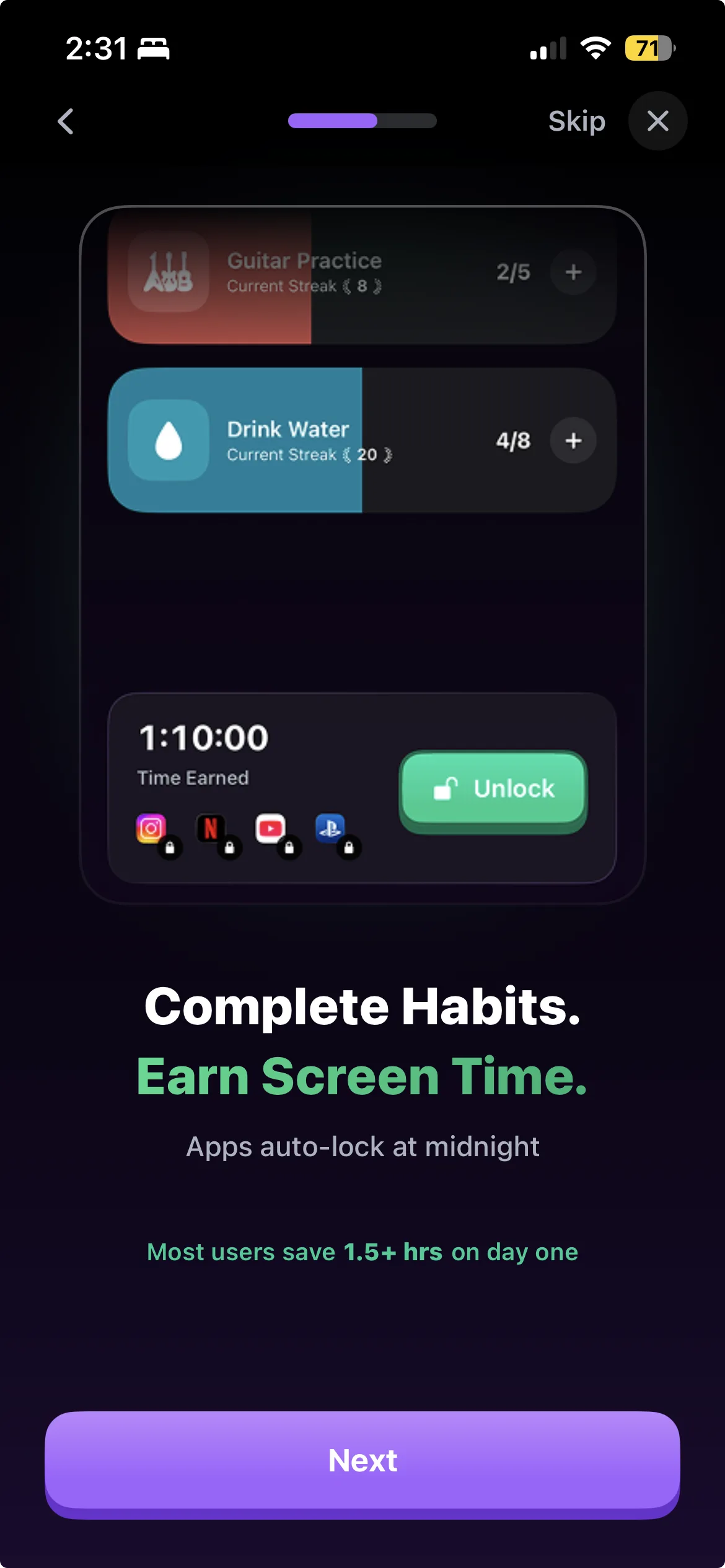
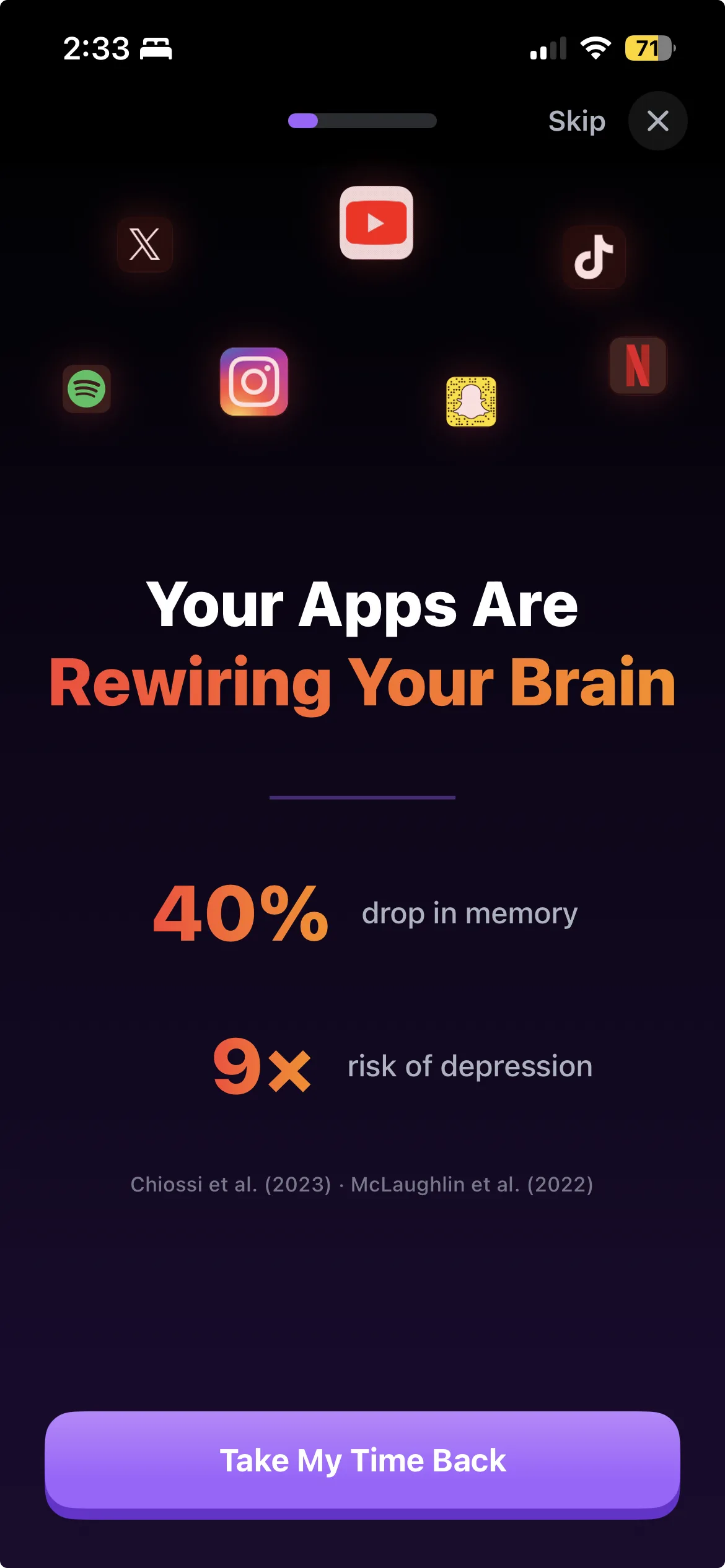
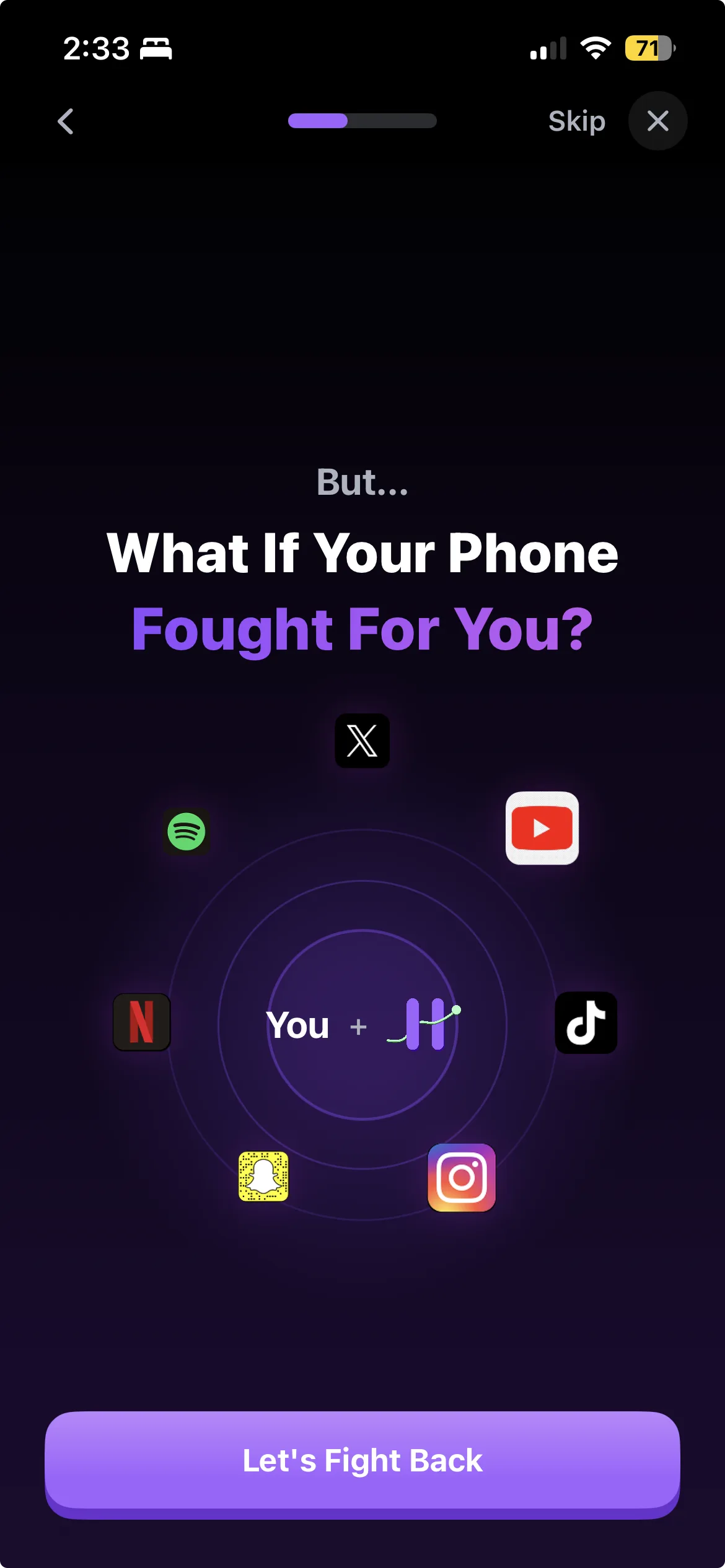
Here is the onboarding flow I rebuilt three times to get to 90% completion:
Engagement: The Bright Spot
The people who stick around are using the app a lot:
- 21.8 sessions per active device (people open the app over 20 times per day on average)
- 13 daily active users (last 7 days)
- ~150 daily check-ins across all users
- 46.5% daily habit completion rate
- 2,766 total check-ins completed (all time)
- 408 total habits created (all time)
21.8 sessions per active device is a big number. Honestly, higher than I expected. It means the people who use Habit Doom are checking in throughout the day: completing habits, checking their progress, unlocking their apps. This is not a "download and forget" app for active users. It is part of their daily routine.
The most popular habits people create: Read, Workout, Drink Water, Meditate, Go on a Walk. These are exactly the habits I was hoping people would track. The app is being used the way I intended.
One metric I find fascinating: the reward usage split. About 55% of lock events are manual (users choosing to lock their apps early) versus 45% from the timer expiring automatically. This means more than half the time, users are voluntarily locking their apps before their time runs out. They are actively choosing to use less screen time than they earned. That is the behavior change I was hoping for.
The Retention Problem
Here is the hard part.
Weekly stickiness drops from about 55% on day 0 to 7.5% by day 7. That means of the people who use the app on any given day, only 7.5% are still using it a week later.
DAU/MAU ratio sits around 10%. Industry benchmarks for habit and productivity apps are typically 15-25%. I am below where I need to be.
22 people have deleted the app. That is 27% of total downloads. Some of those are people who denied the Screen Time permission and could not use the core feature. Some are people who tried it and decided it was not for them. Some are probably people I lost at the "create your first habit" step.
What the Numbers Are Telling Me
Looking at the full funnel, the story is clear:
What is working: - App Store listing and conversion (7.94% is healthy) - Onboarding flow (90% completion) - Core engagement for retained users (21.8 sessions/day, 150+ daily check-ins) - The right habits being created (Read, Workout, Meditate) - Users voluntarily locking apps early (the behavior change is real)
What is broken: - Onboarding-to-first-habit drop-off (47% never create a habit) - Screen Time permission denial rate (roughly a third) - Week 1 retention (55% → 7.5%) - Zero marketing or distribution (90.6% is organic search)
The app works. The people who use it, love it. But too many people drop off between "I downloaded this" and "I created my first habit," and too many people leave in the first week.
What I Am Doing Next
Based on these numbers, here is my plan:
1. Fix the onboarding-to-habit gap. 47% of people who complete onboarding never create a habit. I need to either include habit creation as part of onboarding (suggest common habits, let them tap to add) or make the first-habit-creation screen impossible to miss.
2. Better Screen Time permission explanation. Before asking for the permission, I need to show users exactly what they get: a 5-second demo of apps being locked and unlocked. Make the value undeniable before the system popup appears.
3. First-week retention push. The biggest drop happens between day 1 and day 7. I need better notifications, not "reminder to check in" spam, but meaningful nudges tied to streaks and progress. "You completed 3 habits yesterday. Keep the streak alive."
4. Start marketing. 97 downloads from organic search alone is a signal that demand exists. People are searching for this. I need to start writing content, posting on social media, and getting the word out. This blog is part of that strategy.
5. Fix the IAP flow. ~~I still have $0 revenue because of the App Store Connect bug that blocked my subscriptions. The Lifetime purchase is now live, but monthly and yearly are still stuck. Revenue starts when subscriptions work.~~ Update (March 21, 2026): All three IAPs, Monthly ($4.99/mo), Yearly ($19.99/yr with 7-day trial), and Lifetime ($29.99), are now approved and live on the App Store. It took two weeks of fighting App Store Connect bugs, recreating products from scratch due to a product ID mismatch, and eventually bypassing Apple's broken web UI with their REST API. The full story is in this post.
The Honest Version
97 downloads in a month is not a success story. It is a starting point.
But looking at these numbers, I am not discouraged. 21.8 sessions per active device tells me the core product works. 2,766 check-ins tells me people are building habits. Users voluntarily locking their apps early tells me the behavior change is real.
The problem is not the product. The problem is that not enough people know about it, too many people drop off before they experience the value, and I have not started charging money yet.
Every one of those is fixable. None of them require me to rebuild the app. They require better onboarding, better marketing, and a working payment flow.
I shipped 4 failed apps before this one. I fought 21 bugs to get the core technology working. I am not going to stop at 97 downloads.
Next month I will share these numbers again. They will either be higher or I will tell you exactly why they are not.
Where it stands now (May 2026): Habit Doom is at 726 installs through May, and D7 retention has climbed to 26.5%. The fixes that came out of these first-month numbers (better onboarding-to-habit flow, a clearer Screen Time permission ask, first-week retention nudges) compounded. The starting point turned into a trajectory.
Habit Doom is free on the App Store. If you have read this far, you might as well be download number 98.
Frequently Asked Questions
Keep Reading
Try Habit Doom
Lock your distracting apps. Complete your habits. Earn your screen time. It takes 30 seconds to set up.
Download Free