
I wasted 132 hours on my phone in one month. Here’s how I got my life back.
 X
X LinkedIn
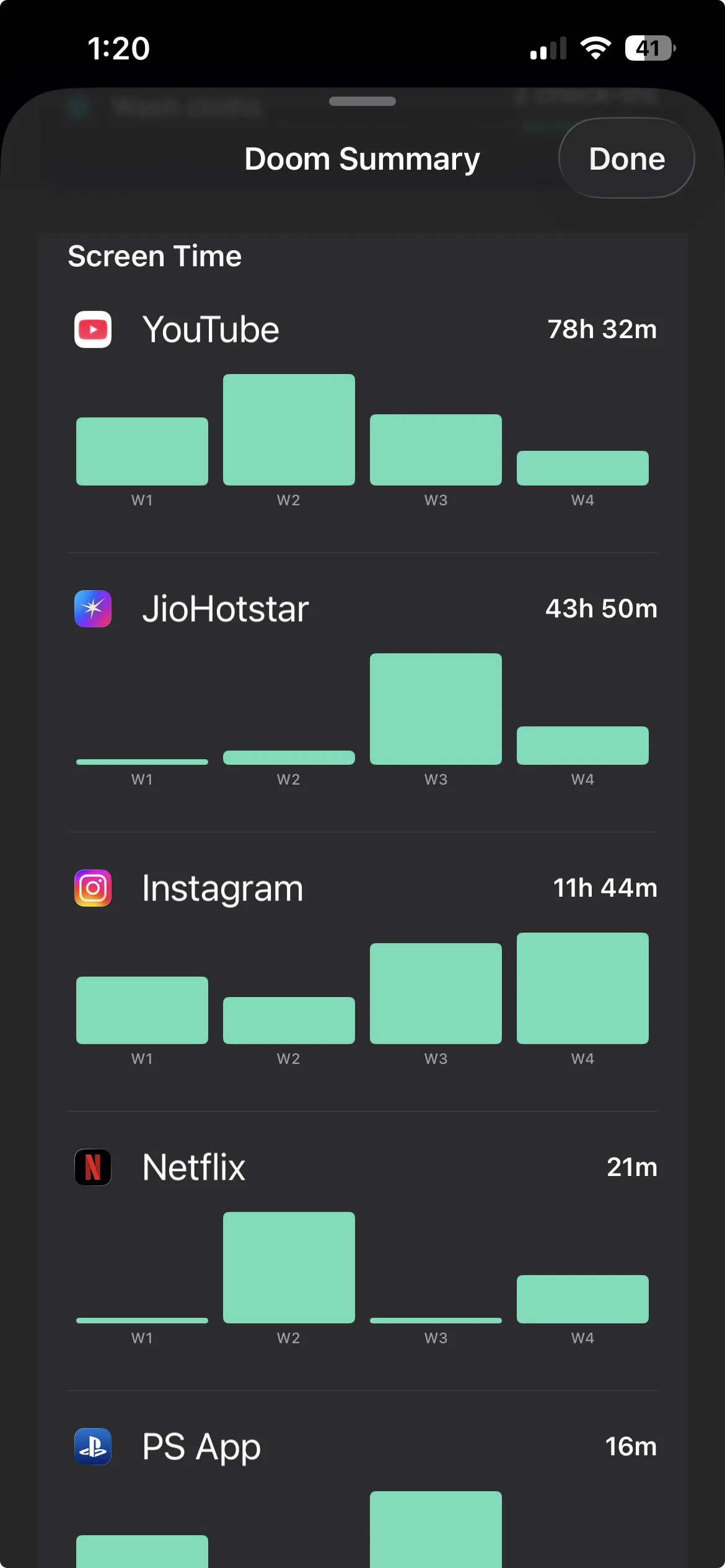
Last year I opened my iPhone's Screen Time report and stared at it for a long time. 78 hours of YouTube. 43 hours of JioHotstar. 11 hours of Instagram. In a single month. That is 132 hours — more than five full days — spent watching other people live their lives while I put mine on pause.
If you are reading this, you probably know the feeling. The guilt that hits every night when you realize the day is gone and you have done nothing meaningful. The gap between who you want to be and what your Screen Time report says you actually are. That gap was eating me alive.
This is the story of how I went from wasting 132 hours a month on my phone to completing 85% of my daily habits, building a 14-day streak, and finally breaking the shame cycle that had controlled my life for years. The solution was not willpower. It was not discipline. It was one simple principle that anyone can apply — and it changed everything.
132 Hours Gone: The Wake-Up Call
I am not going to sugarcoat this. I was addicted to my phone. Not in the casual "I scroll a bit before bed" way. In the "I wake up, immediately open YouTube, and suddenly it is 2 PM" way. The numbers do not lie:
- 78 hours on YouTube — that is nearly 2.5 hours every single day, watching videos I would not remember an hour later
- 43 hours on JioHotstar — entire seasons of shows consumed in weekend binges that left me feeling empty
- 11 hours on Instagram — reels, stories, explore page, repeat. The same loop, hundreds of times
I tried Apple's Screen Time limits. You know what happened? I tapped "Ignore Limit" within seconds. Every single time. It is the most useless button in iOS — a speed bump on a highway. I tried setting a passcode I would not remember. I memorized it within a day. I tried deleting apps. I reinstalled them within hours.
I tried willpower. I told myself I would not open YouTube until after lunch. I lasted two days. I tried app timers. I swiped past every notification. I tried the "put your phone in another room" trick. I just walked to the other room. Every strategy assumed I had discipline. I did not. That was the entire problem.
The worst part was the shame spiral. You know the one. You waste three hours scrolling, then you feel guilty about wasting three hours, and then the guilt makes you feel terrible, and then you scroll more to escape the feeling of feeling terrible. It is a loop, and nothing I tried could break it.
The One Principle That Changed Everything
The idea came to me on a random Tuesday afternoon. I was staring at my phone, Instagram open, knowing I should be reading the book that had been sitting on my nightstand for three weeks. And a thought hit me:
What if my phone would not let me open Instagram until I had read for 30 minutes?
Not a reminder. Not a timer. Not a popup I could dismiss. An actual lock. A real barrier between me and the app, and the only key is doing the thing I actually want to do with my life.
That was the insight that changed everything: willpower does not work, but barriers do. Think about it. You do not eat junk food if there is no junk food in the house. You do not skip the gym if your friend is waiting for you there. The most effective behavior change systems do not rely on motivation — they change the environment so that the desired behavior is the path of least resistance.
I wanted to apply that same principle to screen time. Instead of trying to restrict phone use (which feels like punishment), I wanted to flip the relationship entirely. Earn your screen time. Do the habits you care about, and your apps unlock as a reward. The screen time is not the enemy — it is the incentive.
I searched the App Store for something like this. I found app blockers that work on timers. I found friction-based tools that add a pause before opening apps. I found habit trackers with streaks and reminders. But nothing that combined all three into a single system: lock the apps, tie the unlock to habits, and make the lock unbypassable.
So I decided to build it myself.
From Idea to App Store in Under 3 Months
Some context: I am a product manager by day, but I have software development experience from earlier in my career. I had built side projects before, but never a full iOS app that shipped to the App Store. Habit Doom would be my first.
I started building in late 2025. My goal was simple: get a working app into the App Store as fast as possible, validate whether the concept actually works, and iterate from there. No elaborate roadmap. No six-month timeline. Just build the core loop and ship it.
The core loop was straightforward: lock apps, set habits, check off habits, unlock apps. The architecture was not complicated. But the Screen Time API nearly killed the project.
The Screen Time API Fight
Apple's Screen Time API (FamilyControls framework) is the only way to enforce real app locks on iOS without jailbreaking. It is also one of the most poorly documented APIs Apple has ever shipped. The official docs are sparse. Stack Overflow threads are full of developers hitting the same walls. The error messages are cryptic.
Here is what made it hard:
- Authorization is fragile. The FamilyControls authorization can silently fail, revoke itself, or behave differently between iOS versions. Debugging why a lock stopped working at 2 AM is not fun.
- Apple's review process is strict. Apps using the Screen Time API get extra scrutiny during App Store review. My first submission was rejected. I had to rewrite parts of the onboarding flow to satisfy their guidelines around user consent and transparency.
- Limited community knowledge. Because so few apps use this API (it was originally designed for parental controls), there is almost no community support. Most problems I hit, I had to solve from scratch.
But the upside of building on the Screen Time API is massive: the lock is real. It is enforced at the operating system level. You cannot bypass it by force-quitting the app, restarting your phone, or switching accounts. When Habit Doom locks Instagram, Instagram is locked. Period. That was the whole point, and it was worth every hour of debugging.
From first line of code to App Store approval, the entire process took under three months. I built it solo, mostly during nights and weekends. And yes — one of my daily habits in the app was "Build Habit Doom." More on that later.
Why Gamification Beats Willpower
Here is a truth most self-improvement advice ignores: you cannot hate yourself into better habits. Restriction without reward does not work. If the system feels like punishment, you will abandon it — the same way you abandon every diet that makes you miserable. The key is making good behavior feel like winning, not suffering.
I spent a lot of time studying what actually makes people stick with behavior change. The answer was not discipline. It was gamification — but the right kind. Not fake badges and confetti. Real rewards tied to real desires. Here is the playbook:
Streaks and Loss Aversion
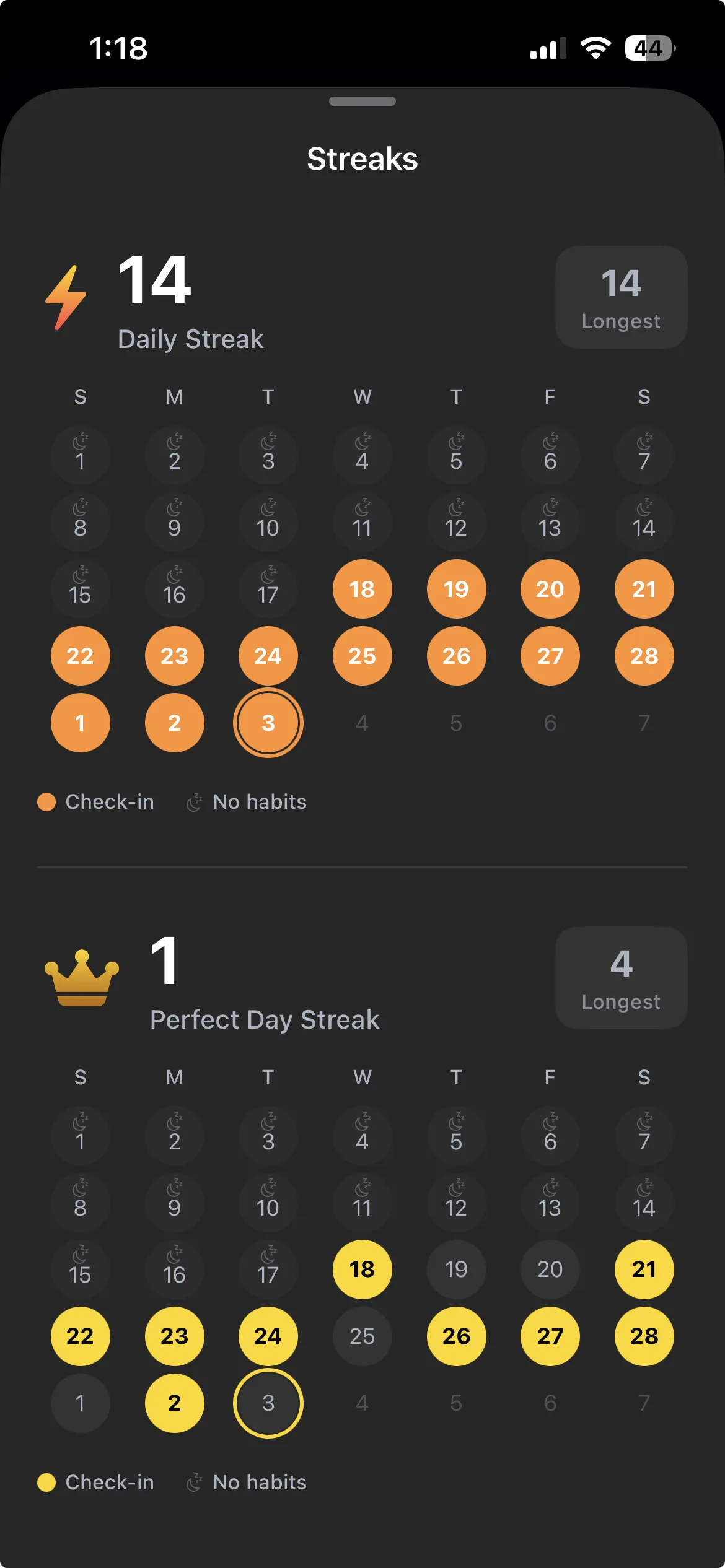
Habit Doom tracks two types of streaks: individual habit streaks and Perfect Day streaks (where you complete every habit on your list). Streaks work because of loss aversion — the psychological principle that losing something hurts roughly twice as much as gaining it feels good. Losing a 14-day streak hurts more than gaining day 15 feels rewarding. That asymmetry is the engine.
I did not invent this. Duolingo, Snapchat, and every fitness app on the planet uses streaks. But in Habit Doom, the streak is backed by a real consequence: if you break it, your apps are still locked tomorrow and you have to start from scratch. The streak is not just a number — it is tied to your daily experience of using your phone.
Earned Screen Time
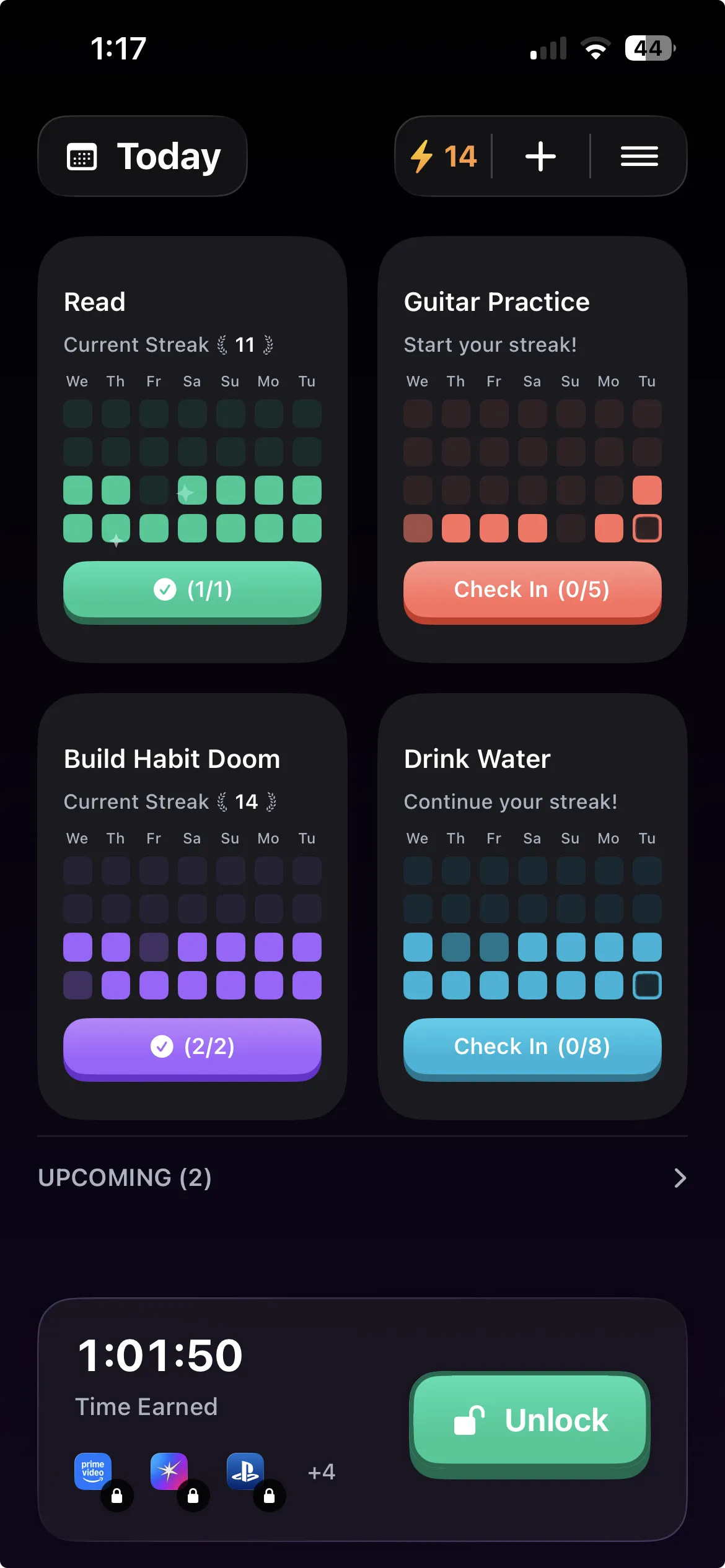
Every time you complete your habits and unlock your apps, Habit Doom tracks how much screen time you have earned. You can see a running total: "Time Earned: 1:01:50." This reframes your relationship with screen time entirely. Instead of feeling guilty about scrolling, you see it as something you legitimately earned by doing the work first. That psychological shift is huge. Screen time stops being a vice and starts being a reward.
Visual Habit Cards
Each habit in Habit Doom gets its own card with a color-coded calendar grid. Completed days show as green squares. Missed days are gaps. Over time, you build a wall of green — and the visual pattern is deeply satisfying. It is the same mechanic behind GitHub's contribution graph. You do not want to break the grid. The gaps sting, and the filled squares feel earned.
The Lock Screen
When your apps are locked, Habit Doom displays them with padlock icons. This is a deliberate design choice. The lock screen creates urgency — you see the apps you want, you see the padlocks, and you feel motivated to go do your habits so you can unlock them. It is motivation through visibility, not punishment. The locked apps are not hidden. They are right there, waiting for you to earn them.
The Doom Summary
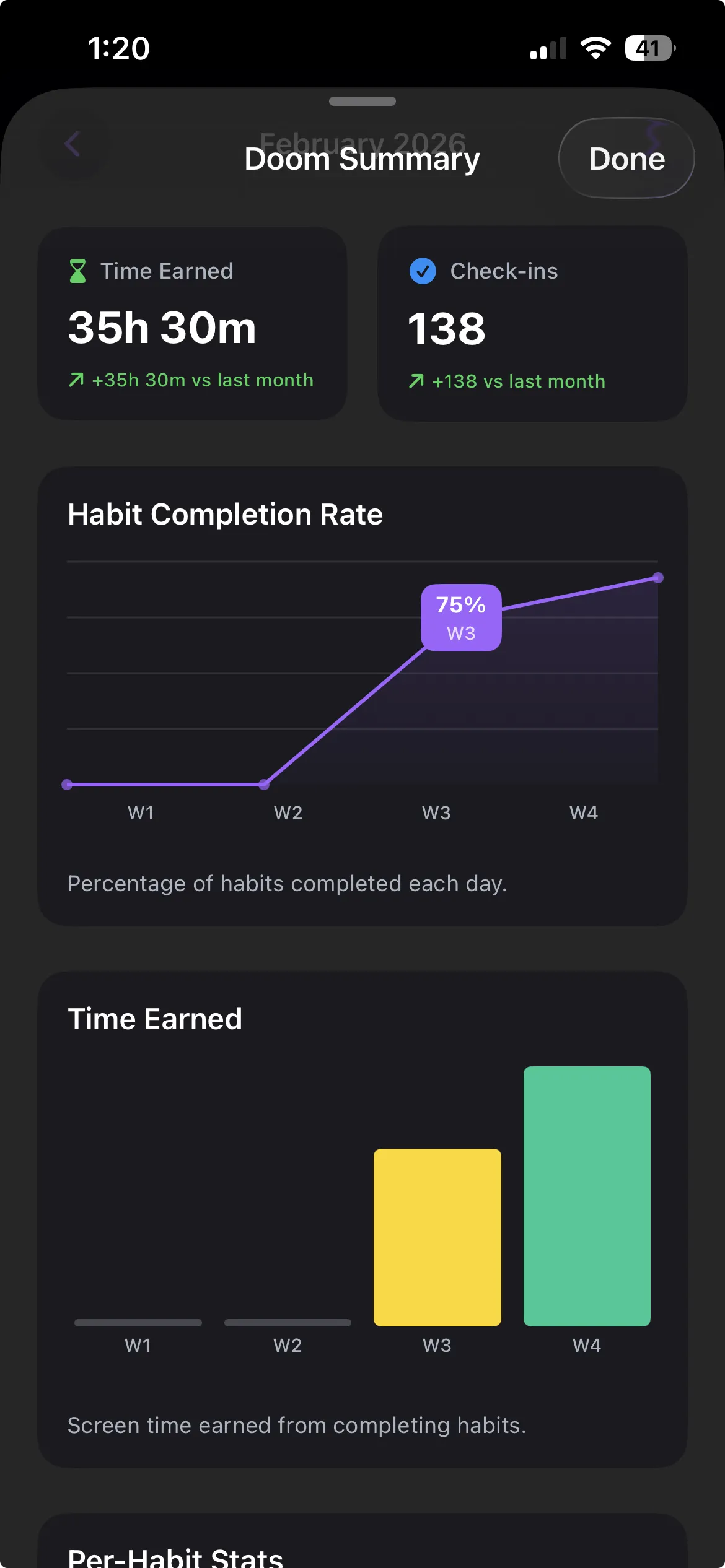
Habit Doom includes an analytics screen — the Doom Summary — that shows your screen time data alongside your habit completion data. Seeing "78 hours of YouTube" next to "3 habits completed this week" is confronting. But that confrontation is the point. Data changes behavior when it is impossible to ignore, and putting the numbers side by side makes the tradeoff visceral.
The Results: 10% to 85% in 4 Weeks
Numbers do not lie. I tracked everything from day one because I wanted to know — objectively — whether this approach actually works or whether I was fooling myself. Here are the results after four weeks:
- Habit completion rate: 10% → 85% — before Habit Doom, I completed maybe one out of ten habits I set for myself. After four weeks, I was hitting 85% consistently. The lock mechanic eliminated the option to skip.
- Longest daily streak: 14 days — fourteen consecutive days of completing every single habit on my list. That is the longest streak I have ever maintained on any habit system, ever.
- 138 total check-ins — across all my habits, 138 individual completions in four weeks. That is not aspirational. That is data.
- 35 hours 30 minutes of earned screen time — that is how much screen time I unlocked by doing my habits first. Every minute of it was guilt-free.
Here is what I was tracking:
- Read — 11-day streak, my most consistent habit. The lock mechanic turned "I should read more" into "I read every day."
- Guitar Practice — 23 check-ins. I went from picking up my guitar once a month to playing almost daily.
- Drink Water — 79 check-ins. The simplest habit on my list, but the one that made me feel the best physically.
- Build Habit Doom — 20 check-ins. Yes, one of my habits was literally building the app. It is the most meta thing I have ever done, and it worked. I shipped the app partly because the app itself held me accountable to building it.
The biggest change was not in the numbers. It was in how my days felt. Before Habit Doom, I would wake up, scroll for an hour, feel guilty, and then try to be productive through a fog of shame. After Habit Doom, I wake up, do my habits (because my apps are locked anyway), and then open my phone feeling like I earned it. The guilt is gone. The shame spiral is broken. The screen time is the same — but the experience of it is completely different.
4 Lessons That Apply to Any Habit
This journey taught me things that go way beyond one app. These are principles anyone can use to change their behavior — whether your struggle is screen time, fitness, diet, or anything else.
1. Stop relying on reminders. Start building barriers.
Every habit app I tried before sent me notifications. "Time to meditate!" "Do not forget to journal!" I ignored every single one. Reminders assume you have willpower in the moment. You do not. That is the entire problem.
Barriers are different. A barrier does not ask you to make a choice. It removes the bad option entirely. When Instagram is locked, there is no decision to make. The decision is already made. If you want to change your behavior, stop trying to motivate yourself and start redesigning your environment. Remove the junk food from the house. Put your running shoes by the door. Make the bad choice harder than the good one. That is where real change happens.
2. You do not need to quit the things you love. You need to earn them.
When I told friends about this concept, they assumed it was about quitting social media. It is not. I like Instagram. I like YouTube. The goal was never to stop using them — it was to stop using them compulsively. The difference between scrolling with guilt and scrolling after you have earned it is the difference between a vice and a reward. You do not have to give up the things you enjoy. You just have to do the things that matter first.
3. Real rewards beat fake rewards. Every time.
Most habit systems reward you with badges, streaks, confetti. These feel good for a week, then you stop caring. The rewards that actually sustain behavior change are the ones tied to something you genuinely want. The best motivation is not artificial — it is connecting the habit you need to build with the reward you already desire. When the reward is real, the motivation is self-sustaining.
4. Accountability works best when you cannot negotiate with it.
One of my daily habits was "Build Habit Doom." The app was holding me accountable to building the app. If I did not work on it, my other apps stayed locked. I shipped a complete iOS app in under three months while working a full-time job — largely because I could not negotiate my way out of it. The most powerful accountability systems are the ones that do not give you an out. Not an accountability partner you can text excuses to. Not a reminder you can snooze. A real, non-negotiable barrier between you and the easy path.
Your Turn
If you have read this far, you already know you have a problem. You have felt the guilt. You have seen the Screen Time numbers. You have told yourself "tomorrow will be different" and watched tomorrow turn into the same scroll-guilt-scroll loop.
Here is what I want you to take from this story: you are not broken. Your environment is. You do not lack discipline. You lack a system that makes good behavior easier than bad behavior. The moment I stopped blaming myself and started restructuring my environment, everything changed. 10% to 85%. A 14-day streak. 138 check-ins. Not because I suddenly became disciplined — but because I removed the option to fail.
I built Habit Doom to be that system. It is live on the App Store, free to download, and it takes 30 seconds to set up. An optional $2.99/month subscription unlocks everything. No ads. But whether you use my app or build your own barriers, the principle is the same: stop trying harder and start making the bad choice impossible.
My current read streak is 11 days and counting. The shame spiral is gone. The 78-hour YouTube months are behind me. And every time I unlock my phone after checking off my habits, it feels like a small win — because it is one.
You already know what you need to do. The only question is whether you will keep scrolling or finally do something about it.
Frequently Asked Questions
Keep Reading
Try Habit Doom
Lock your distracting apps. Complete your habits. Earn your screen time. It takes 30 seconds to set up.
 Download Free