


Digital Detox: Why Most People Fail

 X
X LinkedIn
What a Digital Detox Actually Is (And What It Isn't)
A digital detox is a deliberate stretch of reduced or eliminated recreational screen use, designed to reset your relationship with technology. It is not about hating your phone or rejecting modern life. It is about recalibrating. Restoring intention to how you use tech instead of running on autopilot: reaching for the phone without thinking, opening apps without a reason, scrolling without a destination.
In 2026, a digital detox is understood as a spectrum of practices, from a full 48-hour phone-free reset to daily micro-detoxes like keeping your phone out of the bedroom or not checking it during the first hour after waking. The goal is not to become a luddite. It is to build a relationship with technology where you are the one making the choices, not the algorithms.
Algorithmic feeds tuned by increasingly sophisticated AI. Short-form video built for maximum watch time. Notification systems designed by teams of behavioral psychologists. Together they have made smartphones more attention-capturing than at any point in history. The average person now spends over four hours a day on their phone, and much of that time is not deliberate.
It is reactive, automatic, and often leaves them feeling worse than before they picked up the device. A digital detox is the practice of interrupting that pattern long enough to remember what intentional technology use feels like.
The Science of Overstimulation
"We are not designed to handle the amount of stimulation that we are exposed to on a daily basis. Our brains are essentially running software from 50,000 years ago on hardware that hasn't been updated."
Dr. Anna Lembke, Dopamine Nation
Your brain has a finite capacity for processing stimulation. Modern smartphones deliver more novel information per hour than humans encountered in entire weeks throughout most of history. Every swipe on TikTok, every new post on Instagram, every notification badge creates a micro-moment of novelty that your brain must process, evaluate, and respond to.
Dopamine and the Reward System
Dopamine is commonly described as the "pleasure chemical," but that framing is misleading. Dopamine is primarily about anticipation, motivation, and novelty-seeking. It is the chemical that makes you want to check your phone, not the one that makes you feel good after you do. When you open an infinite scroll feed, your brain releases dopamine not because the content is satisfying but because the next piece of content might be. This is the same mechanism that drives gambling behavior: the unpredictable reward schedule keeps you pulling the lever.
Over a 30-minute scrolling session, your brain may process hundreds of micro-decisions, each one accompanied by a tiny dopamine spike. The cumulative effect is sustained, low-grade neurological arousal that feels engaging in the moment but leaves you depleted afterward.
Tolerance and Receptor Downregulation
Just like substance tolerance, your brain adapts to high levels of dopamine stimulation by downregulating its dopamine receptors. This means that over time, the same amount of stimulation produces less of a response. Activities that once felt engaging, such as reading a book, having a conversation, taking a walk, or sitting quietly with your thoughts, start to feel intolerably boring by comparison. You need the phone. You need the scroll. You need the constant stream of novelty just to feel normal, not because there is anything wrong with you, but because your brain has recalibrated its baseline to match the intensity of the stimulation you have been providing it.
This is the core problem that a digital detox is designed to address. By reducing the intensity and frequency of dopamine-spiking activities for a sustained period, you give your brain the opportunity to upregulate its receptors and restore sensitivity to lower-intensity experiences. The walks become interesting again. The books become absorbing again. The conversations feel rich again. You are not broken. Your calibration is just off.
Attention Residue and the Default Mode Network
Switching between apps and content fragments creates what researchers call "attention residue," a lingering cognitive load that impairs performance on whatever you do next. Studies show this residue can impair cognitive performance for minutes after the switching stops.
Constant phone use also prevents your brain's default mode network (DMN) from activating. The DMN is responsible for creativity, self-reflection, and problem-solving (the "shower thought" phenomenon). When you fill every idle moment with phone stimulation, the DMN never gets to do its work. You lose not just time but the quiet mental space where your most original thinking happens.
Signs You Need a Digital Detox
Most people significantly underestimate how much their phone habits affect their daily experience. These signs are not character flaws. They are predictable responses of a normal brain subjected to abnormal levels of stimulation.
- You pick up your phone without consciously deciding to. The behavior is reflexive, not intentional.
- You feel anxious when your phone is in another room. A low-level unease creeps in when you are separated from your device, even briefly.
- You open the same apps in a loop without finding anything new. Close Instagram, open TikTok, close TikTok, open X, repeat. The loop is about seeking stimulation, not content.
- You scroll past your intended stop time regularly. "Just five more minutes" becomes 30 or 45.
- You feel worse after using your phone than before.
- Real-life conversations feel less engaging than online content.
- You struggle to read more than a few paragraphs without reaching for your phone.
- Your sleep has deteriorated and you use your phone in bed.
If you recognize three or more of these patterns, a digital detox is worth trying. Your brain has adapted to a level of stimulation that is making other parts of your life less enjoyable. A detox gives it the space to readjust.
Types of Digital Detox
There is no single correct way to do a digital detox. The right approach depends on your current level of phone dependency, your work and personal obligations, and what you are hoping to achieve. Here are the four main types, along with their strengths and limitations.
Full Digital Detox (48-72 Hours)
A full detox means complete elimination of recreational screen use for two to three days. You keep your phone for calls and essential texts but delete or log out of all social media, news, and entertainment apps. No TikTok, no Instagram, no YouTube, no Reddit, no X, no Netflix on your phone.
This approach is best for people who have never done a detox before, because the contrast between your stimulated state and a low-stimulation environment is dramatic enough to create a genuine "aha" moment. Most people who complete a 48-hour detox report feeling noticeably calmer, more present, and more interested in their surroundings by the second day. For a firsthand account of what a longer experiment looks like, read about what happened when I blocked social media for 30 days. The boredom of the first 12 to 24 hours gives way to a surprising sense of spaciousness.
Preparation is important. Inform your close contacts that you will be less reachable. Prep any work obligations in advance. Buy a physical alarm clock so your phone does not need to be your first and last interaction of the day. Most importantly, have analog activities planned: books, puzzles, hikes, cooking projects, conversations. The void left by the phone needs to be filled with something, or the pull back to the screen will be overwhelming.
Partial Detox (1-2 Weeks)
A partial detox targets your most problematic apps while leaving the rest of your phone functional. If TikTok and Instagram are your biggest time sinks, delete them for two weeks while keeping messaging, maps, email, and everything else. This approach is more sustainable than a full detox and allows you to observe which apps specifically drive your compulsive behavior.
The advantage of a partial detox is precision. Most people do not have a problem with their phone in general; they have a problem with two or three specific apps that are engineered to maximize engagement. By removing only those apps, you can isolate their impact on your mood, productivity, and attention span without disrupting your entire digital life. The disadvantage is that other apps can fill the vacuum. People who delete TikTok sometimes find themselves spending the same amount of time on YouTube or Reddit. Be honest with yourself about whether you are actually reducing stimulation or just shifting it.
Daily Micro-Detox (Ongoing)
Micro-detoxes are small, phone-free periods built into your daily routine. They are not dramatic, but they are the most sustainable form of digital detox and the one most likely to produce lasting change. Examples include keeping your phone out of the bedroom entirely, not checking it during the first hour after waking, putting it away during all meals, taking walks without headphones, and establishing a no-screens cutoff time each evening.
The power of micro-detoxes lies in consistency rather than intensity. A daily 60-minute phone-free morning ritual will, over the course of a year, create far more cumulative benefit than a single 72-hour detox followed by a return to old patterns. A great place to start is your morning routine. Keeping your phone locked until your morning habits are done is one of the highest-impact micro-detoxes you can implement. Micro-detoxes also build the muscle of intentional phone use. Each time you successfully navigate a phone-free period, you strengthen the neural pathways associated with impulse control and delayed gratification.
App-Blocked Detox (Structured)
An app-blocked detox uses technology to enforce your own rules, so willpower is not the thing holding the line. Instead of deleting apps or leaning on discipline, you use an app blocker to restrict access to specific apps during certain times, or until certain conditions are met. This is where tools like Habit Doom fit in.
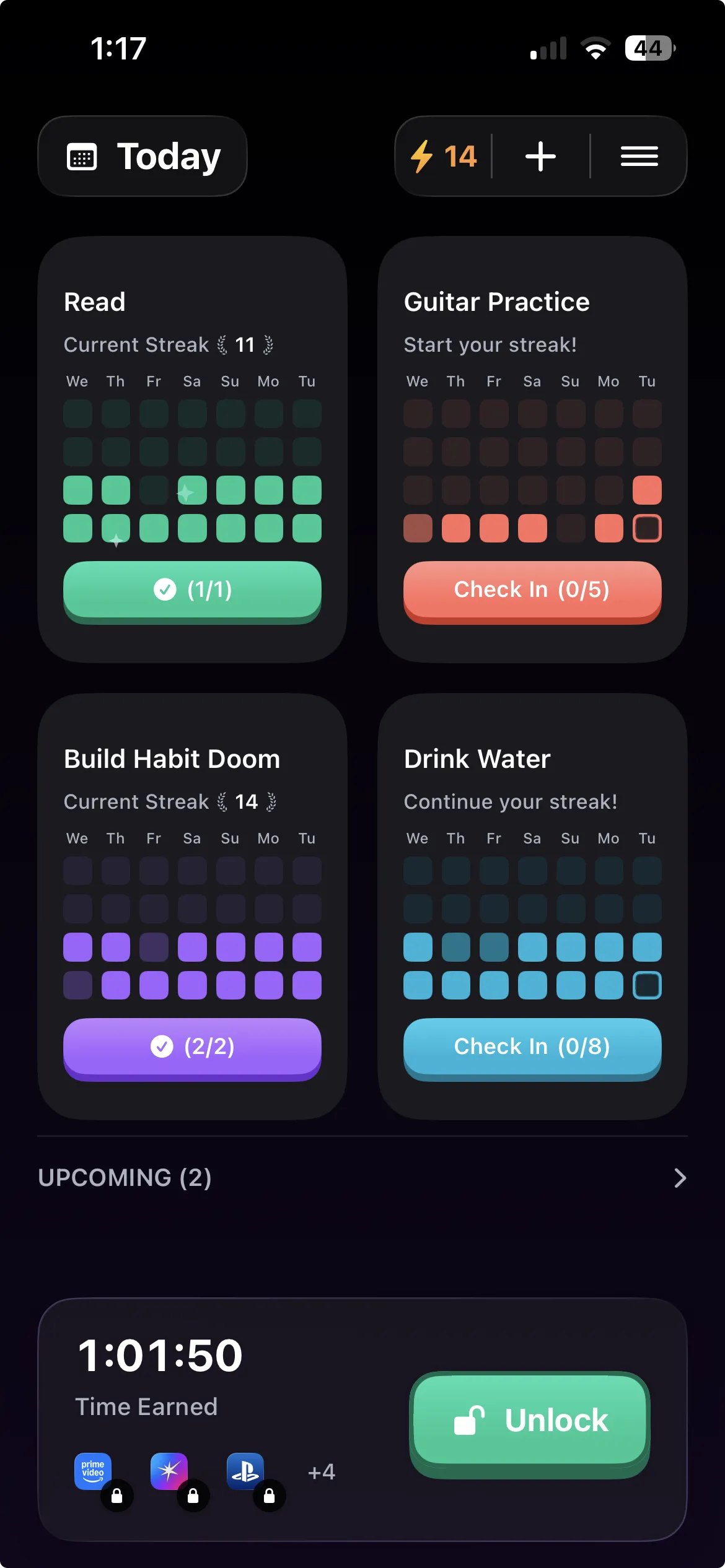
The advantage of this approach is that it works even when your motivation is low. On a bad day, when stress or boredom is high and your willpower is depleted, the blocker does the hard work for you. Habit Doom takes this a step further by locking distracting apps until you complete your daily habits, combining the detox effect with productive habit-building. You are not just restricting screen time; you are replacing it with activities that improve your life.
The potential downside is dependency on the tool itself. The ideal trajectory is to use an app blocker as training wheels while you build the internal habits and self-awareness to manage your phone use independently. That said, there is nothing wrong with using a tool long-term if it is working for you. People wear seatbelts every day without considering it a failure of their driving ability.
Your Step-by-Step Digital Detox Plan
Knowing about digital detoxes and actually doing one are entirely different things. This five-week plan takes you from awareness to action to sustainable change, with each phase building on the previous one.
Days 1-2: Audit Your Usage
Before changing anything, you need to know where you stand. Open Screen Time on iPhone or Digital Wellbeing on Android and look at your daily averages for the past week. Note your total screen time, your most-used apps, your number of daily pickups, and the times of day when usage peaks. Do not change your behavior during this phase. Just observe and record.
Most people are genuinely shocked by what they find. The gap between perceived screen time and actual screen time is typically 50 to 100 percent: people who estimate they use their phone for two hours per day are often closer to four. This is not because they are lying to themselves. It is because much of their phone use happens in tiny, fragmented sessions that do not register as significant individually but accumulate into hours over the course of a day.
Days 3-4: Identify Your Triggers
Now that you know how much you are using your phone, the next step is understanding why. For two days, write down every time you pick up your phone and the reason (or feeling) that prompted it. Common triggers include boredom, anxiety, transitions between tasks, waiting in line, lying in bed, loneliness, stress, and the desire to avoid a difficult task.
You will likely notice patterns. Maybe you always reach for your phone during the first ten minutes of a work session as a way of delaying the hard task ahead. Maybe bedtime scrolling is driven by anxiety about the next day. Maybe lunchtime scrolling is about loneliness. Identifying these triggers is essential because it tells you what needs the phone is fulfilling and what alternative behaviors might serve those same needs without the negative side effects.
Days 5-7: Environmental Design
Now you start making changes, but instead of relying on willpower, you redesign your environment to make the desired behavior easier and the unwanted behavior harder. Specific actions to take:
- Remove social media and entertainment apps from your home screen. Bury them in folders or move them to the last page so they require deliberate effort to find.
- Turn off all non-essential notifications. Keep calls, texts from important contacts, and calendar alerts. Disable everything else, especially social media notifications.
- Enable grayscale mode on your phone. The absence of color makes the screen dramatically less appealing.
- Charge your phone outside the bedroom. Buy a physical alarm clock if needed.
These changes are small individually but create meaningful cumulative friction. You are not banning yourself from using your phone. You are making it slightly harder to use it unconsciously, which is where most of the problematic usage happens.
Week 2: Introduce Friction with an App Blocker
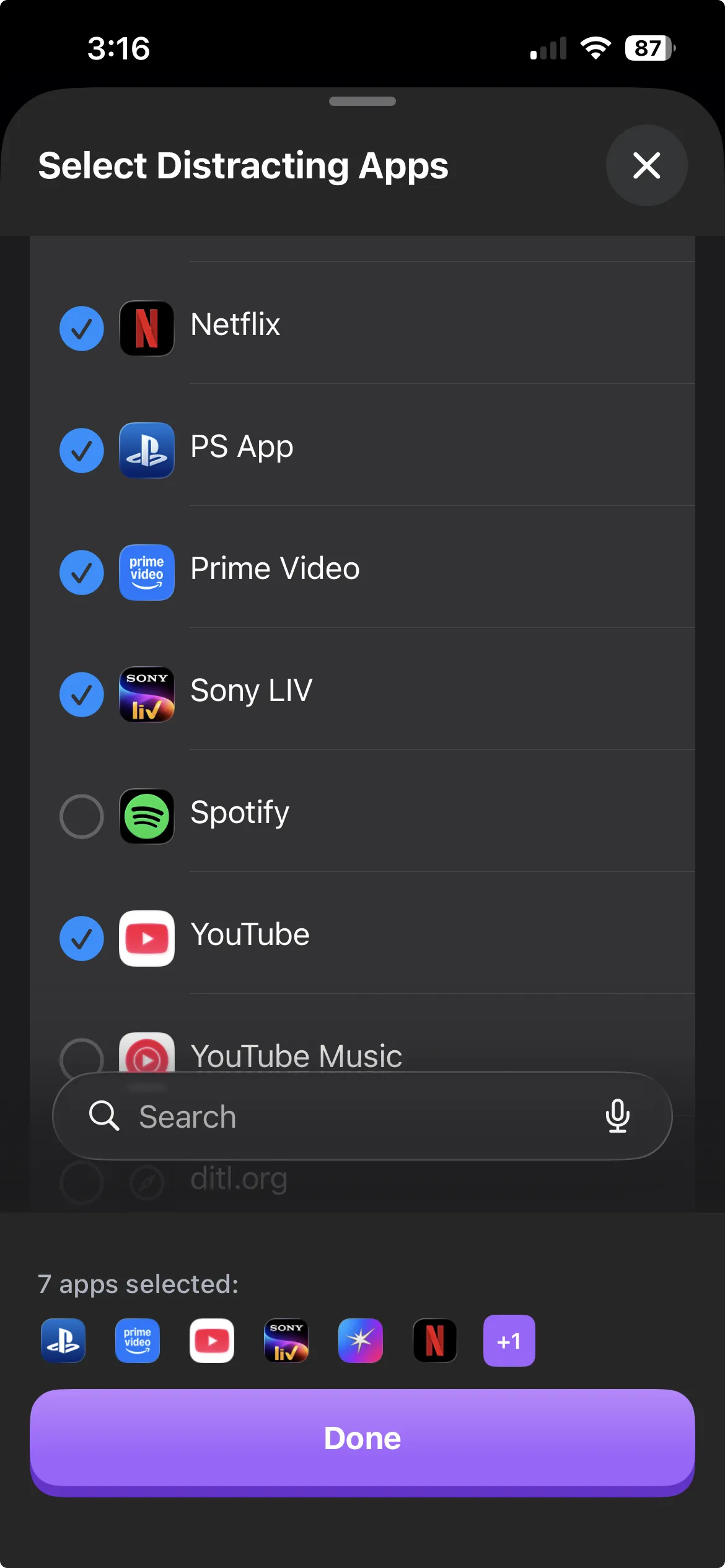
This is the week you bring in structural support. Install an app blocker like Habit Doom and configure it to lock your worst apps until your daily habits are completed. Choose two to three habits that you genuinely want to build, such as a morning workout, ten minutes of reading, or a five-minute meditation. Select the apps that consume the most of your unintentional screen time and add them to the block list.
Simultaneously, develop a micro-habit replacement for the phone-checking urge. When you feel the impulse to pick up your phone, do a 60-second stretch, take three deep breaths, or drink a glass of water instead. The replacement does not need to be elaborate. It just needs to be immediate and easy enough that you will actually do it. Over time, the new response becomes automatic and the phone-checking impulse weakens.
Weeks 3-4: Build Phone-Free Zones
With friction in place and a replacement habit developing, commit to specific phone-free contexts. Start with two: no phone during the first hour after waking, and no phone during meals. Once these feel comfortable (typically after a week), add more: no phone during in-person conversations, no phone during exercise, no phone for the last hour before bed.
Each phone-free zone you establish creates a protected space where doomscrolling simply cannot happen. Over time, these zones expand to cover more of your day, and the periods of intentional phone use between them become shorter and more purposeful.
Week 5 and Beyond: Evaluate and Adjust
Return to your Screen Time or Digital Wellbeing data and compare your current usage to the baseline you recorded in the first two days. Most people who follow this plan see a 40 to 60 percent reduction in recreational screen time by the end of week four. More importantly, the time that remains tends to be more intentional and less compulsive.
Decide which changes to make permanent and which to loosen. The goal is not zero screen time. It is intentional screen time. You might decide that you want to use Instagram for 20 minutes a day to keep up with friends, and that is perfectly fine, as long as it is a conscious choice rather than a reflexive loop. The habits you built during the detox period, supported by tools like Habit Doom, provide the structure to maintain this balance long-term.
The Dopamine Detox: Separating Science from Hype
You have probably seen the "dopamine detox" trend on YouTube or TikTok, the idea that sitting in a room avoiding all pleasure will reset your brain. The core claim gets the science wrong. You cannot "detox" from dopamine. It is an essential neurotransmitter involved in everything from movement to motivation to memory.
What you can do is reduce the intensity and frequency of dopamine-spiking activities to allow your baseline sensitivity to recalibrate. Research on behavioral addictions, including compulsive social media use, shows that heavy users have reduced activation in reward-processing brain regions when exposed to non-digital stimuli. When they reduce social media use for sustained periods, previously "boring" activities become engaging again, consistent with receptor upregulation.
The practical approach is simple: shift from high-stimulation to moderate-stimulation activities for two to four weeks. Read books instead of scrolling TikTok. Take walks instead of watching YouTube Shorts. Have conversations instead of consuming content. The replacement activities do not need to be austere, just lower on the stimulation intensity scale. A hike does not deliver the rapid-fire novelty hits of an infinite scroll feed. A dinner conversation does not trigger the same compulsive "one more" loop as short-form video.
For a deeper look at the specific apps that drive overstimulation, read our comparison of Habit Doom, Opal, and One Sec. For concrete replacement activities, our guide to stopping doomscrolling covers practical micro-habits.
Long-Term Maintenance: Building a Sustainable Relationship with Technology
A digital detox is a reset, not a destination. The real work begins when the detox ends and you need to maintain intentional technology use long-term.
Establish a Personal Phone Policy
Create an explicit set of rules for your phone use and write them down. Vague intentions like "I should use my phone less" provide no clear standard. A specific policy gives you bright lines that are easy to follow.
A good phone policy might include: no phone during the first hour after waking, no phone at meals, no phone in bed, all distracting apps locked until daily habits are completed, one designated 20-minute social media session per day, and a 9pm screen cutoff.
Use Tools That Enforce Your Policy
Willpower is not enough to maintain a phone policy long-term. You need structural support. Habit Doom provides this by locking your distracting apps until your daily habits are done, ensuring that the most important part of your phone policy, doing productive things before consuming content, happens automatically every day. Screen Time on iOS provides additional support through daily time limits for specific apps, though its easy bypass option makes it less reliable as a standalone tool.
The combination of habit-based app blocking (Habit Doom) and time-based limits (Screen Time) covers both ends of the equation: your mornings are protected by the habit requirement, and your total daily usage is capped by the time limit. Together, they create a framework that holds up even on bad days when your motivation is low.
Regular Check-Ins and Course Correction
Review your screen time data at least once per month. This takes less than five minutes and provides an objective measure of whether your phone habits are trending in the right direction or creeping back toward old patterns. If your screen time is rising, it is a signal to tighten your phone policy or do a brief mini-detox to recalibrate.
Accept that you will slip sometimes. Everyone does. The difference between someone with a healthy phone relationship and an unhealthy one is not that they never scroll mindlessly. It is that they notice when they are sliding and take action before the pattern re-establishes itself. A monthly screen time review is the early warning system that makes this possible.
Once you have experienced the clarity, improved sleep, and longer attention span that come from reduced phone use, you have a reference point. You know what it feels like to be in control, and you have the tools and self-awareness to return to that state whenever you need to.
For more on building specific habits to replace unproductive screen time, explore the Habit Doom blog, check out our best app blockers for iPhone in 2026, or browse our roundup of the best apps to reduce screen time.
Frequently Asked Questions
Keep Reading
Try Habit Doom
Lock your distracting apps. Complete your habits. Earn your screen time. It takes 30 seconds to set up.
Download Free