


The Habit Tracker You Can't Lie To

 X
X LinkedIn
Every habit tracker on the App Store runs on the honor system. Tap the circle, get the streak. The app has no idea whether you read thirty pages or thirty tweets.
That worked fine until the tracker started controlling something you want. Habit Doom locks Instagram, TikTok, and YouTube until daily habits are done. The moment app access became the reward, the tap became a temptation. Users told us exactly what happened next: lying in bed, checking off "Workout", unlocking the phone. The system worked. The habit didn't.
They didn't just report the loophole, they asked us to close it. Some way to verify check-ins became the most requested feature in Habit Doom's history, in Reddit threads and even inside 5-star App Store reviews. This one, from May 2026, sat at five stars and still said:
"Only problem is you can skip it and not do anything if you aren't loyal. Hope it can be fixed somehow with a camera to watch you do it."
5-star App Store review, United Kingdom, May 2026
People who loved the app were asking to be policed by it. That request is rare enough to take seriously.
The most common suggestion was tying a habit to usage of another app: prove the "Study" habit by having a flashcard app open for an hour. It's a good idea that iOS makes impossible. Apps cannot see other apps' usage, and developers who find workarounds get banned. Whatever proof we collected had to come from something the app can observe itself. On an iPhone, that's the camera.
Anti-Cheat closes that gap. Check in a habit and the camera opens. Snap a photo, and an AI model running entirely on your iPhone confirms the habit is real, usually in under half a second. No photo ever leaves the device.
The problem with trusting the tap
Self-report is the quiet failure mode of every habit app. It is why habit trackers stop working after the first few weeks. The cost of a fake check-in is zero, so the streak slowly turns into fiction. A 90-day streak with ten quiet lies in it stops motivating you, because you know they're in there.
Most trackers can ignore this problem. Their streak is just a number. Habit Doom can't, because the check-in is the key that unlocks your blocked apps. A fake tap here isn't fudging a journal, it's bypassing the entire system you set up to protect yourself from your own phone.
Hard Mode made the lock unbypassable from the outside. Anti-Cheat makes it harder to bypass from the inside.
What checking in looks like now
With Anti-Cheat enabled on a habit, the flow changes in one place: the moment you tap to check in.
- The camera opens. Same-day check-ins require a live photo. No picking from your camera roll, no yesterday's gym selfie.
- You snap the proof. The open book. The running shoes on your feet. The journal page. Whatever the habit actually looks like.
- The AI judges it on the spot. A clear match verifies in well under a second, shows you a confidence score, and commits the check-in.
- Borderline photos get a choice. If the AI isn't sure, you see the photo, the score, and three options: stand by it, retake it, or cancel.
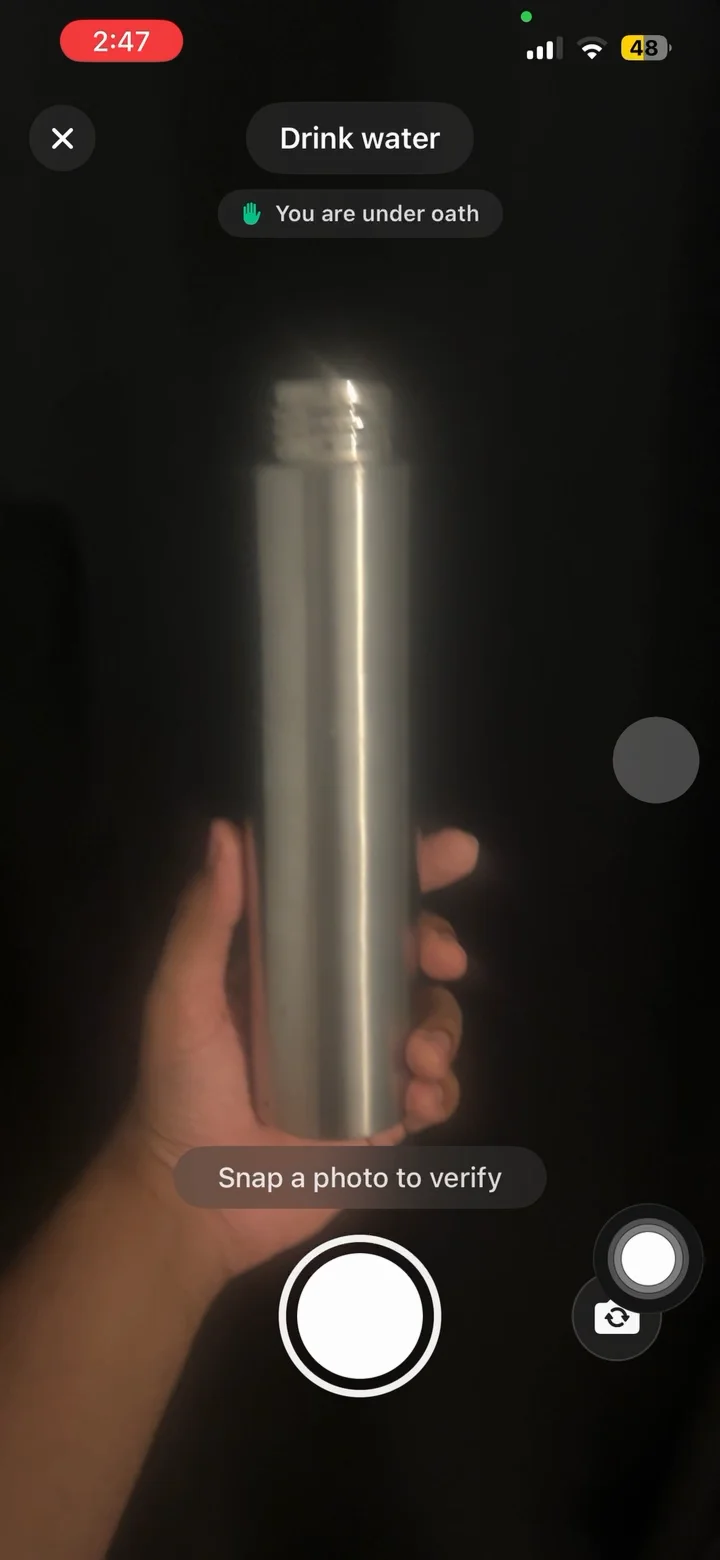
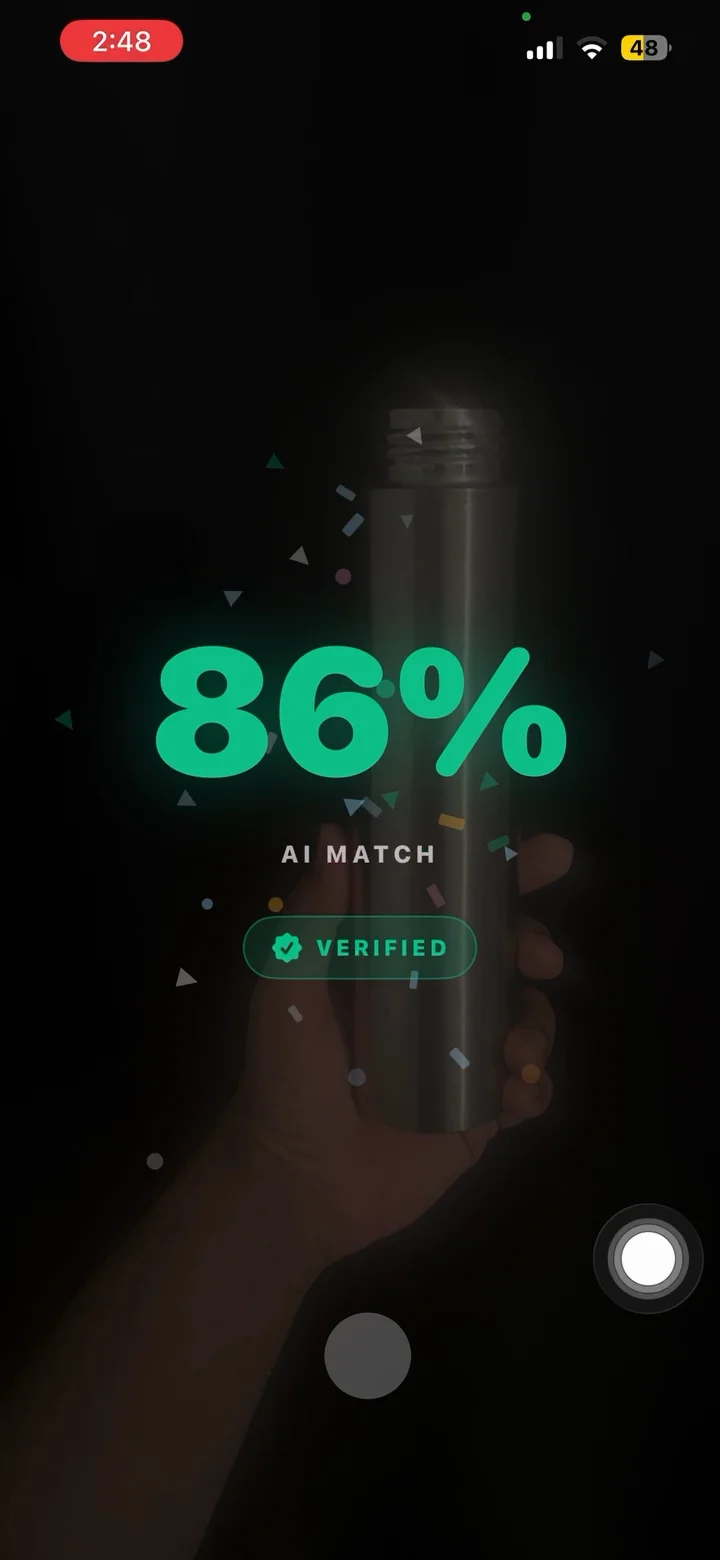
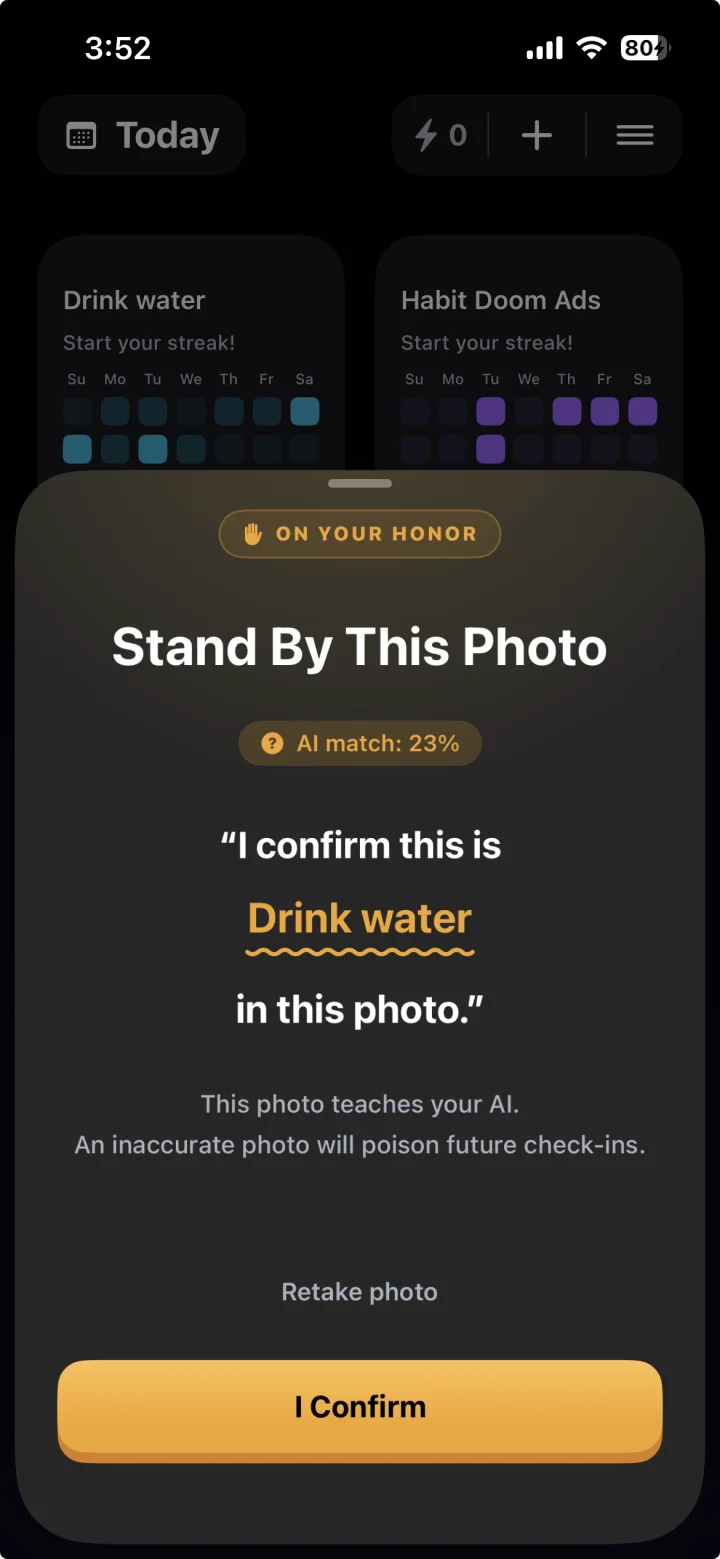
The "stand by it" option matters. We didn't build a system that calls you a liar when the lighting is bad. You can always override a borderline call. But you do it deliberately, looking at the photo, with the score on screen. Casual cheating dies right there. Tapping a button while half asleep is easy. Photographing your unused running shoes and swearing an oath over them is a different psychological event entirely.
It learns your version of the habit
A generic AI knows what "reading" looks like. It doesn't know what your reading looks like: your armchair, your e-reader, your terrible lamp.
Every time you stand by a borderline photo, Anti-Cheat remembers what your habit looks like, on your device. The next time you photograph the same setup, it scores higher. After a week or two the system has quietly calibrated to your real life, and verification becomes invisible for honest check-ins while staying suspicious of things that look nothing like your habit.
The override sheet warns you about this in plain words: "This photo teaches your AI. An inaccurate photo will poison future check-ins." Confirming a fake photo doesn't just cheat today's streak. It corrupts your own verifier going forward, which is a strangely effective reason not to.
Why on-device matters
A camera pointed at your bedroom, your desk, and your morning routine is exactly the kind of feature that should make you read the privacy section. Here it is, short:
- Photos never leave your iPhone. The AI runs locally. There is no upload, no server, no "anonymized cloud processing."
- No account, no sync, no photo storage by us. Habit Doom has no login. Verification data lives on your device and nowhere else.
- The App Store privacy label stays at zero collected data. On-device processing means there is nothing to collect.
The honest trade-off: running the AI locally costs about 145 MB of app size, and the first verification after a fresh launch takes a couple of seconds while the model warms up. We took that deal. The alternative was your bedroom on someone's server. If you want the full engineering story, the on-device ML deep-dive covers it.
What Anti-Cheat is not
Three honest limits, because every feature page should have this section.
It's opt-in. Anti-Cheat is one switch, not a mandate. Turn it on and check-ins need a photo; leave it off and they work as before. Some users don't want camera friction at all, and that's fine.
It can be overridden, on purpose. The override path exists because AI judgment isn't perfect and your habit photos shouldn't need to be. A determined cheater can stand by a photo of their ceiling. The design goal is removing casual cheating: the half-asleep tap, the autopilot check-in. Friction beats walls, and we wrote about why in the no-bypass blocker breakdown.
It's free for everyone. Anti-Cheat is included in Habit Doom's free tier, alongside core tracking and app blocking. There is no paywall on verifying your habits.
How other trackers handle proof
Short version: they don't.
| App | Tracks habits | Verifies completion | Method |
|---|---|---|---|
| Habit Doom | Yes | Yes | On-device AI photo verification |
| Streaks | Yes | No | Self-report tap |
| Habitica | Yes | No | Self-report tap |
| Loop Habit Tracker | Yes | No | Self-report tap |
| Way of Life | Yes | No | Self-report tap |
| Opal / One Sec / Freedom | No | n/a | Blockers, not trackers |
This isn't a knock on those apps. Streaks is a beautiful logbook, and self-report is fine when the streak is its own reward. Verification only matters once the check-in unlocks something, which is the category Habit Doom occupies: the tracker is also the gatekeeper. And a gatekeeper that believes anything isn't really one.
The system, complete
Habit Doom's pitch has always been one sentence: complete your habits, earn your screen time. Anti-Cheat completes the loop.
The apps lock automatically. Hard Mode keeps them locked until everything is done. And now the check-ins that unlock them are real. The only way out is through the habit, which was the point all along.
Anti-Cheat is live now in Habit Doom on the App Store, free to download, with Anti-Cheat free for everyone.
Frequently Asked Questions
Keep Reading
Try Habit Doom
Lock your distracting apps. Complete your habits. Earn your screen time. It takes 30 seconds to set up.
Download Free