


What to Do When You Break a Habit Streak (2026)

 X
X LinkedIn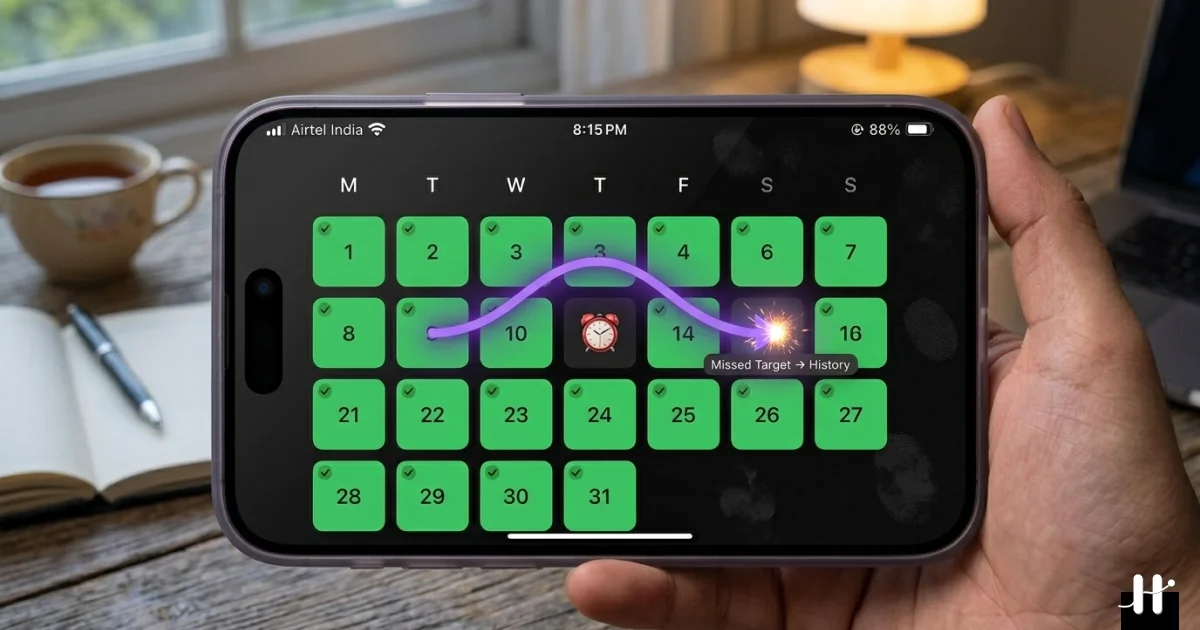
Breaking a habit streak is not a habit failure. It is a feature of how habits actually form. The research that the productivity app industry built itself on, Phillippa Lally's 2010 UCL study, found a median 66 days to habit automaticity with significant variance. The same study found that one or two missed days had no measurable effect on the trajectory. The damage from a missed day exists in the app's visualization, not in the actual behavioral progress.
The real risk after a broken streak is not the missed day. It is the abandonment that follows. The user looks at the reset counter, calculates that getting back to 47 days will take 47 days, and concludes that the entire effort was wasted. The app goes into a folder. Three weeks later it is uninstalled. The habit, which had been forming, stops forming.
This post is the honest recovery plan when a streak breaks.
Step 1: Do the habit tomorrow. Today is already over.
The first move is the most important. Do the habit tomorrow. Not in three weeks when motivation rebuilds. Not when conditions are perfect. Tomorrow.
The reason this matters is mechanical. Habits form through repetition. The longer the gap between repetitions, the less context-bound the behavior becomes. Wendy Wood's research at USC on habit automaticity shows that habit strength tracks with repetition under stable conditions. A 24-hour gap is recoverable. A 14-day gap is starting over.
The mental move is to separate the habit from the streak. The streak is a counter in an app. The habit is the actual behavior. Skipping a day reset the counter. It did not reset the months of pattern you have already built. The morning routine is still familiar. The body still knows what 7 AM feels like with the workout clothes on. The replacement habit is still installed. Returning to it tomorrow continues that work, and none of that showed up on the counter.
Step 2: Log the miss without weighting it
Most habit trackers reset the streak counter automatically when a day is skipped. A few (Way of Life, Habit Doom, Habitica, Done) handle missed days more gently. The action either way is the same. Open the app. Mark today as missed. Move on.
The reason to log it rather than ignore it is that the missed day is data. Patterns of missed days reveal which conditions actually predict habit failure. Is it Tuesdays specifically? Days after late nights? Travel days? Conditions where the morning routine is shifted? Logging the miss preserves the signal. Ignoring it loses the data and adds shame.
Logging without weighting is the key phrase. The user notes the miss. The user does not interpret it as a verdict on their character. The data is recorded. The recovery is the next day.
Step 3: Notice if the streak itself is the wrong tool
If the streak break feels disproportionately bad, that is a signal about the tool, not about the habit. A user who has built a 47-day streak on the Streaks app and feels the reset more than the underlying habit value is having an app problem, not a habit problem.
The streak mechanic works for the first 50 days. It works because the user does not yet have a complicated relationship with the chain. Around day 50 the user starts protecting the chain rather than the habit. The habit becomes the means to the chain rather than the chain being the means to the habit. When the chain breaks at day 51, the protected asset vanishes. The cost is asymmetric.
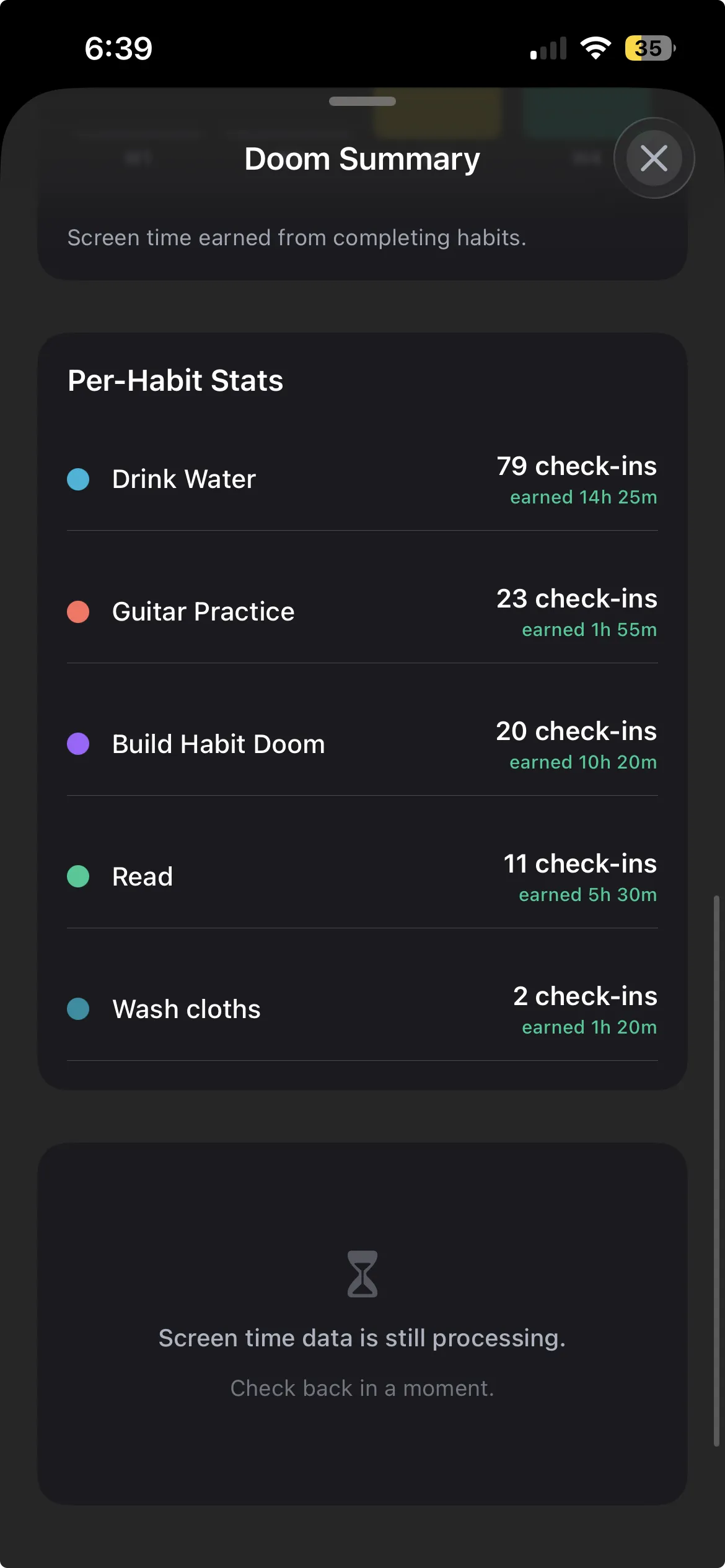
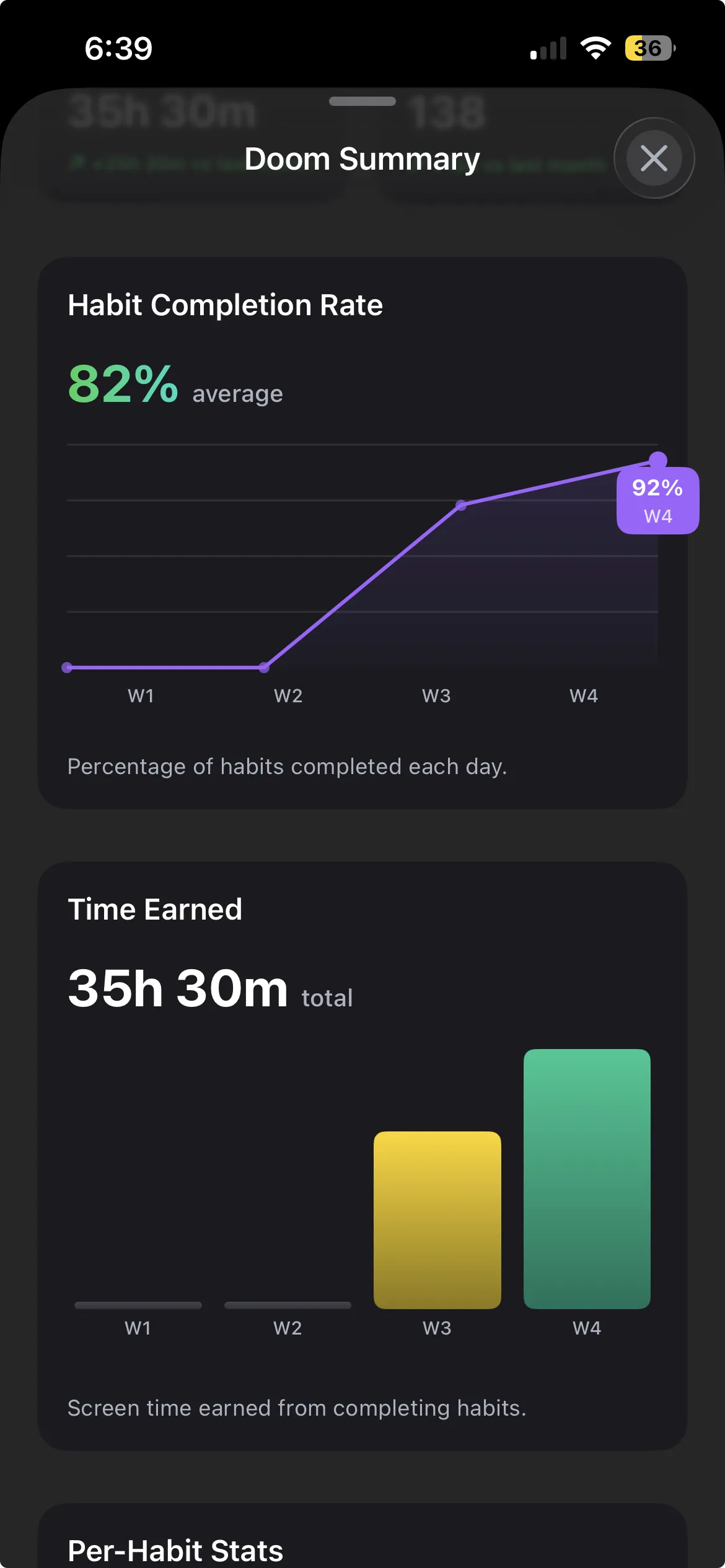
Switching to a tracker that handles missed days gently changes the math. Habit Doom resets habits daily, so a missed Tuesday does not compound. Habitica's RPG character takes HP damage and recovers. Way of Life logs in calendar form without a single streak metric. The same behavior can feel sustainable or fragile depending on the app visualizing it. For the full comparison see streak anxiety habit trackers.
Step 4: If this keeps happening, install a forcing function
A user who repeatedly breaks streaks on pure trackers is usually pursuing a habit that motivation alone cannot carry. The honest response is not to try harder. The honest response is to install a forcing function that does not rely on motivation.
Three categories of forcing function work. Each addresses a different underlying obstacle.
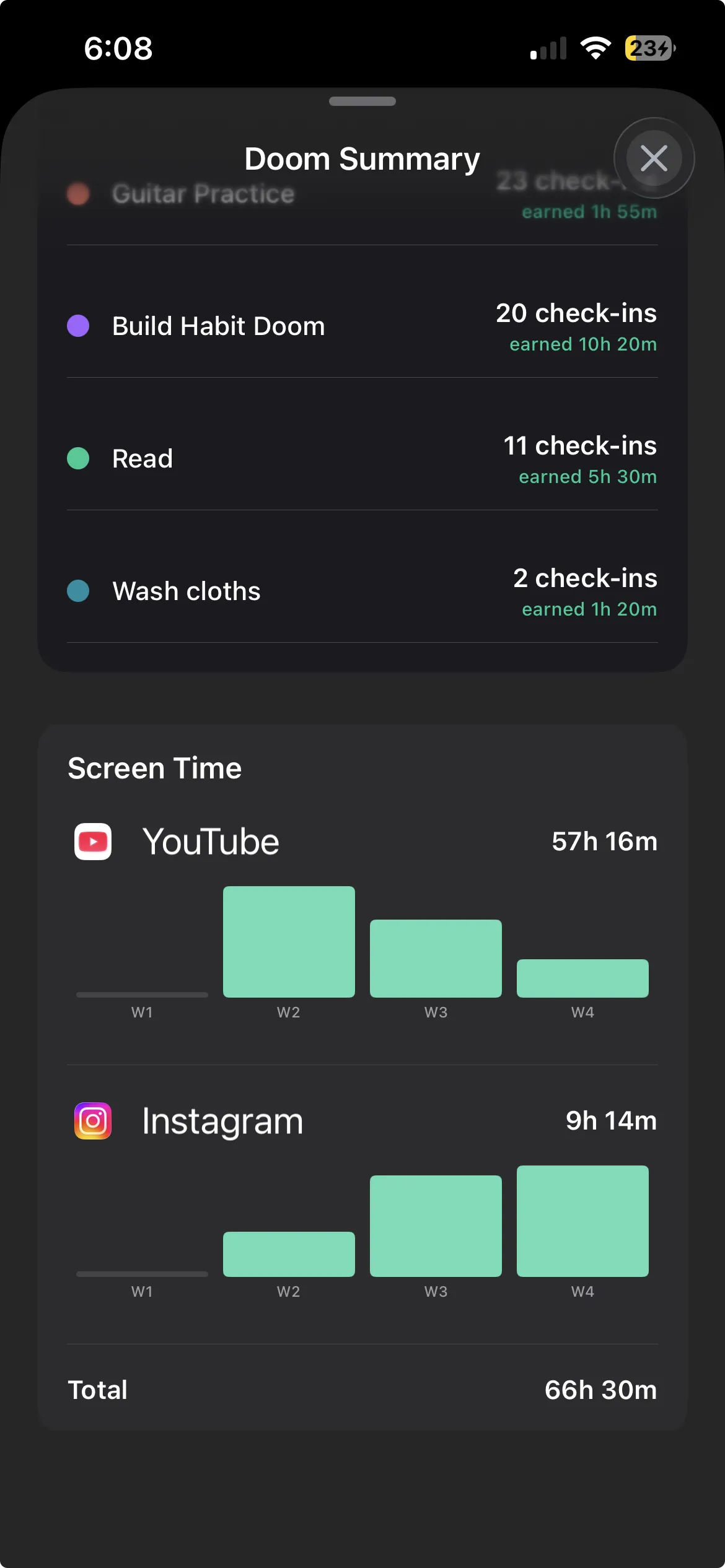
Phone distraction. If the habit failure mode is "I checked Instagram instead", the forcing function is to lock Instagram until the habit is done. Habit Doom does this at the iOS ManagedSettings layer. The lock is real. Force-quitting Habit Doom does not release it. See how Habit Doom works for the mechanic.
Social accountability. If the habit failure mode is "no one notices whether I do this or not", the forcing function is a peer. Habitica parties function as accountability groups. Flora's group focus sessions tie completion to friends. Beeminder charges real money to a friend or to a chosen recipient when habits are missed.
Real money. If the habit failure mode is "the consequence is too abstract", the forcing function is cash. Beeminder is the longest-running app in this category. The user pre-commits to a habit and pre-authorizes a payment that triggers on miss. The financial cost overrides the motivation gap.
The right forcing function depends on the specific obstacle. A user who keeps breaking streaks because their phone is more compelling than their habits gets the most leverage from system-level blocking. A user who breaks streaks because they have no peer accountability gets the most leverage from a social mechanic. The category that wins on the highest-upvoted Reddit threads is the one that matches the specific failure mode.
What not to do
The temptation after a broken streak is to compensate. Double the habit tomorrow. Add a new habit. Set a stricter rule. None of these work.
Doubling the habit ignores the research on small daily repetition. The same workout for two days is not equivalent to a single workout double-counted. The repetition has to occur on separate days for the habit to form.
Adding a new habit dilutes attention. The user already failed at one habit. Adding a second one increases the surface area where motivation can fail. The right move is to stabilize the existing habit before adding anything.
Setting a stricter rule makes the next break worse. If "miss a day means restart the count" was the rule, "miss a day means restart from negative" is the new rule. This intensifies streak anxiety and accelerates abandonment.
The correct response after a missed day is unglamorous. Do the habit tomorrow. Log the miss. If the pattern repeats, install a forcing function. The boring response is the one that works.
The framing shift that helps
The phrase that the most-upvoted Reddit threads on habit-tracking failure return to is "I wasn't lazy, I was just running on autopilot." A user on r/getdisciplined wrote that the streak-and-shame model "assumes you're lazy and need to be punished into compliance. But for me at least, I wasn't lazy, I was just running on autopilot."
The reframing is useful. A missed habit day is not a moral failure. It is a sign that the system needed an extra repetition under stable conditions and did not get one. The fix is to provide the next repetition under stable conditions. Not to punish the user for the gap.
The behavior change literature, from B.J. Fogg's Tiny Habits at Stanford to Wendy Wood's automaticity research at USC, is consistent on this point. Habits form through repetition. Punishment is not a meaningful variable. The structure of the environment, the size of the habit, and the prompt design are the actual levers.
For users at this point, the most honest move is to keep going. Do the habit tomorrow. Log the miss honestly. Notice if the tracker itself is making things worse. Install a forcing function if the pattern persists. The habit is on day 47 of formation regardless of what the streak counter says. The chain is the visualization. The habit is the actual thing.
Frequently Asked Questions
Keep Reading
Try Habit Doom
Lock your distracting apps. Complete your habits. Earn your screen time. It takes 30 seconds to set up.
Download Free