


How to Stop Doomscrolling at Night

 X
X LinkedIn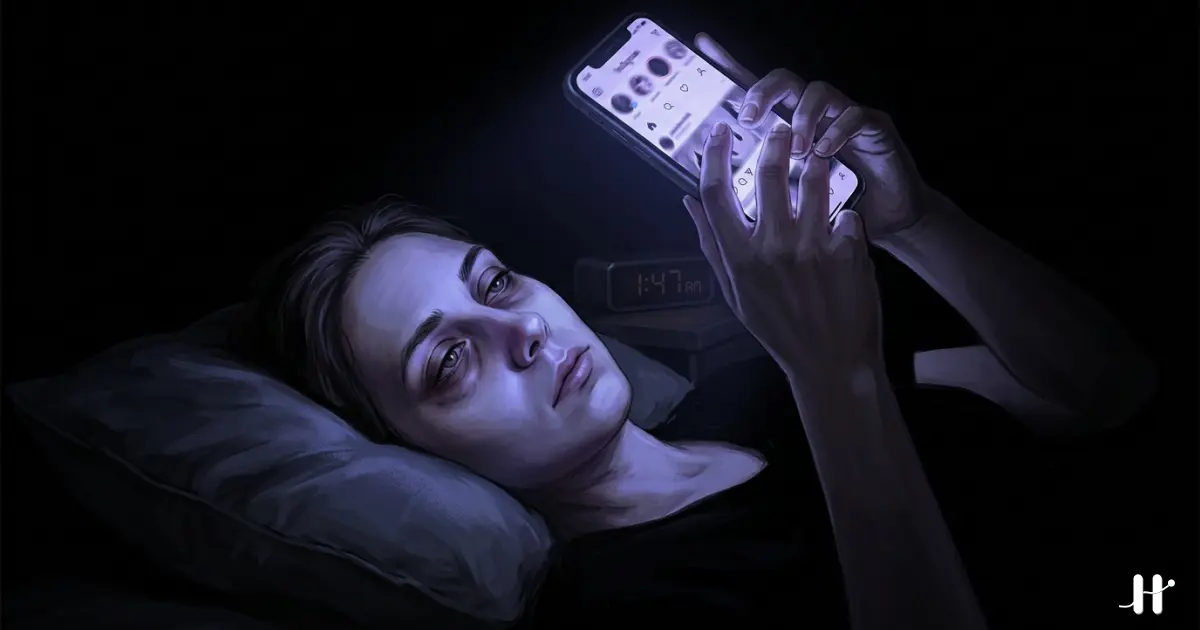
The 10-minute lie
You tell yourself you will scroll for 10 minutes. Just to wind down. Just to check a few things before sleep.
Two hours later you are deep in a thread about a celebrity you do not care about, watching a cooking video for a recipe you will never make, and reading comments under a political post that is raising your heart rate. It is 1:47 AM. You have to be up at 7.
You put the phone down. Close your eyes. Your brain is still buzzing with fragments of content. A news headline. A comparison to someone's vacation photos. A comment that annoyed you. Sleep does not come for another 30 minutes because your brain is still processing the scroll.
The next morning, you are tired. You reach for your phone. The cycle starts again.
This is not a discipline problem. Your willpower is at its lowest point of the entire day. You have been making decisions and resisting impulses since you woke up. By 10 PM, your prefrontal cortex (the part that controls impulse decisions) is running on fumes. And you are asking it to resist an app designed by thousands of engineers to keep you engaged.
The solution is not to try harder. The solution is to make it impossible.
How nighttime scrolling destroys sleep
The damage happens on two levels, and most people only know about one of them.
Level 1: Blue light. This is the one everyone talks about. Screens emit blue-spectrum light that suppresses melatonin production. One study found that two hours of screen exposure before bed reduced melatonin levels by 50%. Your body literally cannot produce the sleep hormone it needs because your phone is telling it that it is still daytime.
Night mode and blue light filters help but do not eliminate the problem. They reduce blue light by 20-40%, which still leaves significant melatonin suppression.
Level 2: Content arousal. Nobody talks about this one, and it is worse than the light. The content you consume before bed fires up your sympathetic nervous system. News raises anxiety. Social comparison triggers envy. Arguments in comment sections spike cortisol. Even "positive" content like funny videos keeps your brain engaged and stimulated, the exact opposite of what sleep requires.
Your brain does not have an off switch. The content you consume at 11 PM is still being processed at 11:30 PM when you are trying to sleep. The emotional residue of a doomscroll session lingers long after the screen goes dark.
The combination of suppressed melatonin and an overstimulated brain does not just make it harder to fall asleep. It reduces the quality of sleep you do get. Deep sleep stages are shorter. REM sleep is fragmented. You wake up feeling tired even after 7-8 hours because the sleep was shallow.
7 strategies to stop the nighttime scroll
1. Create a phone parking spot outside your bedroom
Buy a charging cable for a room that is not your bedroom. Plug your phone in there every night at the same time. Walk away.
This is the most effective strategy on this list and also the hardest to start because it feels extreme. But every person who has tried it reports the same thing: the first three nights are uncomfortable, and by night seven, they cannot imagine going back.
When your phone is physically in another room, the effort required to scroll (get out of bed, walk to the other room, pick it up) creates enough friction that your tired brain chooses sleep instead. You do not need willpower when the phone is 30 feet away.
If you use your phone as an alarm, buy a standalone alarm clock. This is the same advice from our morning doomscrolling guide because the same solution solves both problems.
2. Lock your apps on a schedule
If putting your phone in another room is not practical (you have children, you are on-call, you need the alarm), the next best option is to lock the distracting apps while keeping the phone accessible.
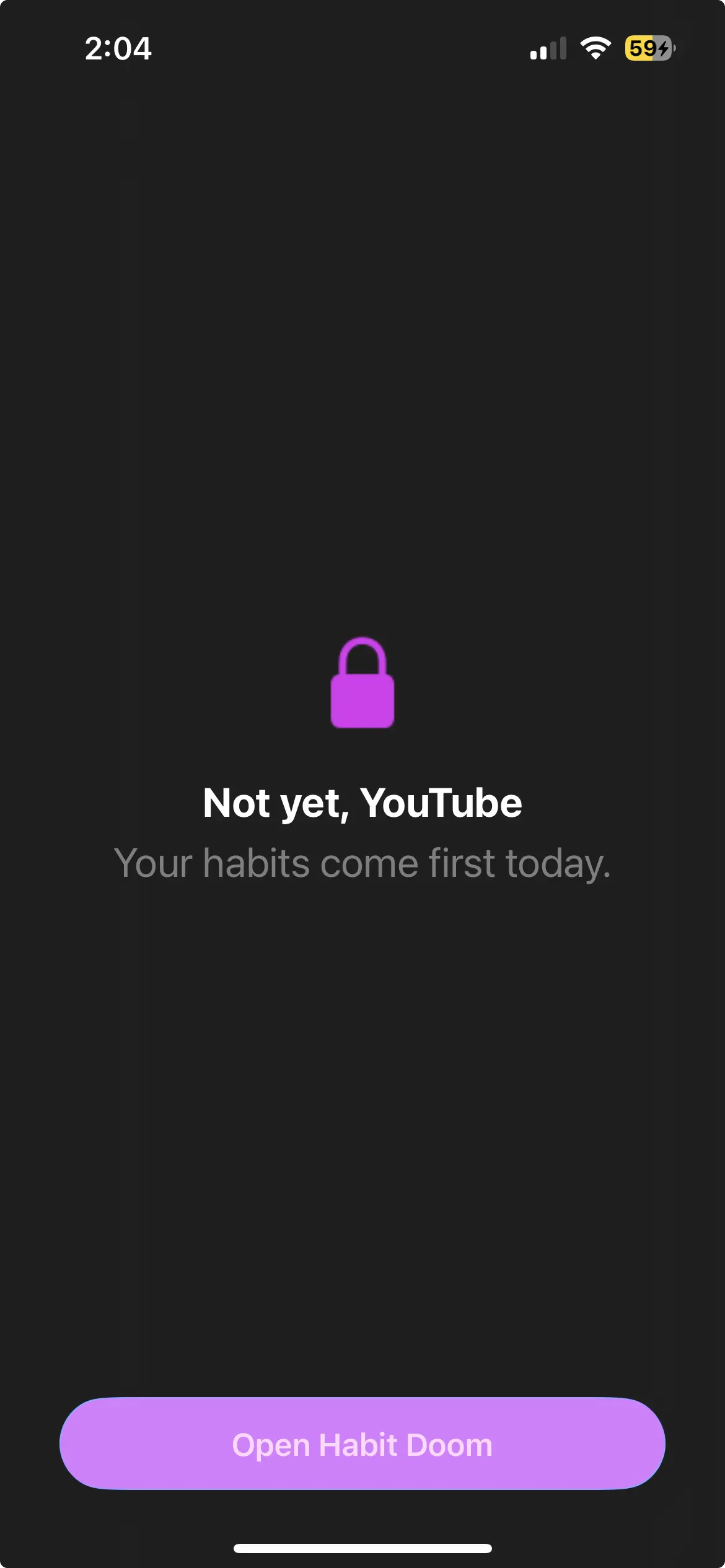
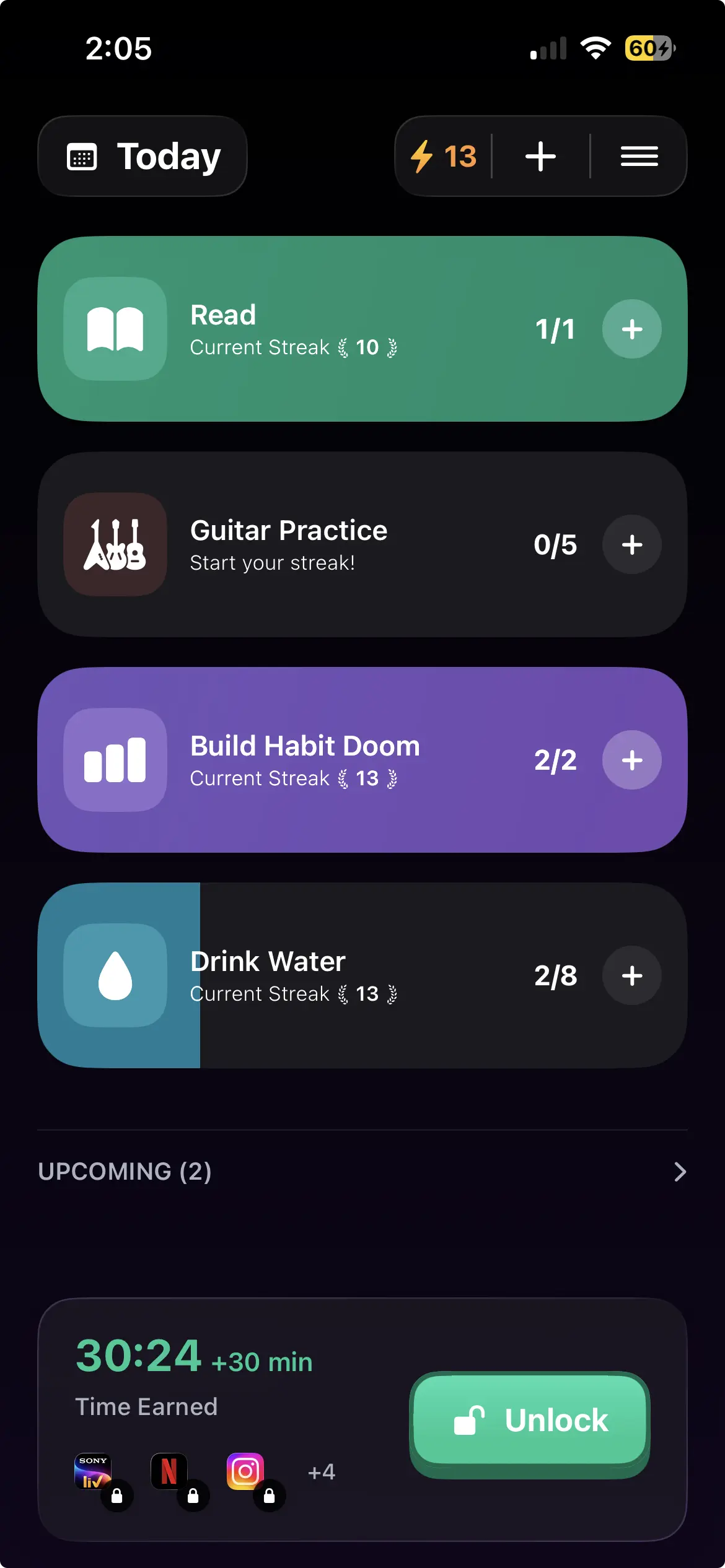
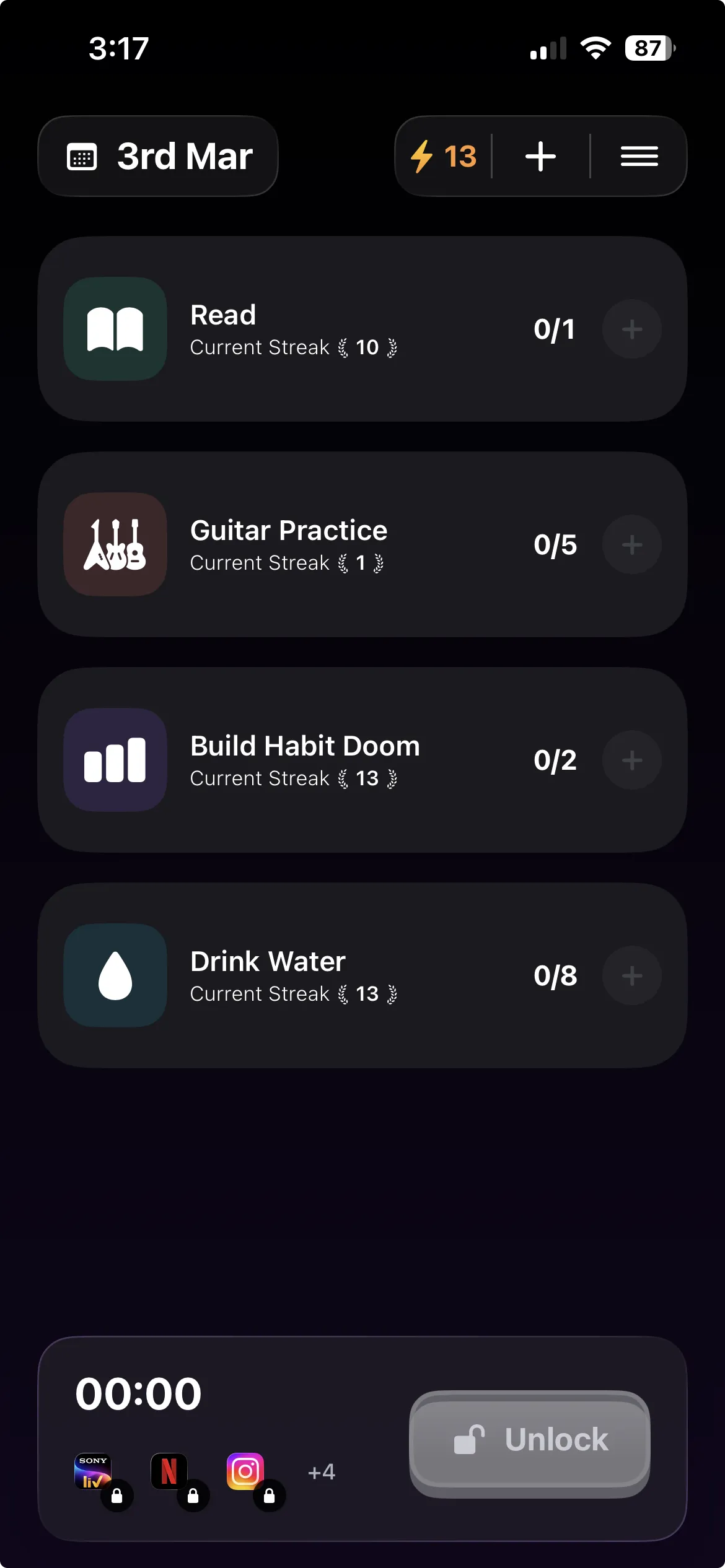
Tools like Habit Doom lock your social media apps by default. If your habits for the day are done, apps are unlocked during the day but lock again the following morning. You can browse freely in the evening knowing that by tomorrow morning, the cycle resets and everything locks until your habits are complete again. This structure naturally limits the "I will just check one more thing" spiral because you know access will be gone by morning.
For time-based locking, Opal and Freedom both support scheduled blocking sessions. Set a 10 PM to 7 AM block on Instagram, TikTok, YouTube, and Reddit. The apps become inaccessible during your wind-down window regardless of how much your brain wants them.
3. The swap: replace the scroll with something boring
Your brain reaches for the phone because it wants stimulation before sleep. The problem is that social media delivers too much stimulation. You need something that satisfies the craving for input without wiring your brain for alertness.
Effective replacements:
- Physical book. Not a Kindle or iPad. A physical book with pages. The absence of a backlit screen matters, and physical books have a natural stopping point (you get tired, the book is heavy, your eyes strain) that infinite scroll does not.
- Podcast with a sleep timer. Set a 15-minute sleep timer. Choose something calm and conversational, not true crime or political debate. Many people fall asleep before the timer runs out.
- Audiobook. Same principle. A narrator's voice is calming in a way that scrolling is not. Set a sleep timer.
- Journaling. Three sentences about your day. Not a novel. Just enough to process the day's events so they do not loop in your head when you are trying to sleep.
- Stretching. Five minutes of gentle stretching in dim light signals to your body that it is time to wind down. This is physical rather than cognitive, which is exactly what your brain needs after a day of screen-based work.
The replacement does not need to be productive. It just needs to be boring enough that your brain winds down instead of speeding up.
4. The 10 PM rule
Pick a time. Commit to it. Phone goes on the charger at that time every night, no exceptions.
The specific time matters less than the consistency. If 10 PM is too early, make it 10:30 or 11. The point is that the decision is made in advance, when your willpower is strong (during the day), rather than in the moment, when your willpower is depleted (at 11 PM in bed).
Some people put a sticky note on their phone charger: "You said 10 PM." The physical reminder catches you in the moment when you are about to rationalize "just 10 more minutes."
5. Make your bedroom a screen-free zone
This goes beyond just moving your phone. Remove every screen from the room where you sleep.
- No TV on the wall.
- No tablet on the nightstand.
- No laptop on the bed.
Your bedroom should be associated with two things: sleep and rest. When screens are present, your brain associates the bedroom with stimulation, entertainment, and content consumption. This association makes it harder to fall asleep even when you are tired because your brain expects stimulation in that environment.
Removing screens is a one-time environmental change that pays off every single night without requiring any daily willpower or decision-making.
6. Dim your environment after sunset
Bright overhead lights at 10 PM tell your brain it is the middle of the day. This suppresses melatonin production the same way screens do, just less aggressively.
After sunset (or after dinner, if you want a simple rule):
- Switch from overhead lights to lamps.
- Use warm-toned bulbs (2700K or lower) instead of cool white.
- Dim the lights progressively as bedtime approaches.
This primes your circadian rhythm for sleep so that when you do put the phone down, your body is already producing melatonin and ready to sleep. The transition from scrolling in a brightly lit room to trying to sleep in the dark is jarring. The transition from a dim room to sleep is natural.
7. Gradual reduction if cold turkey is too hard
If removing your phone from the bedroom tonight feels impossible, reduce gradually:
- Week 1: Set a phone curfew 15 minutes before your current average. If you normally scroll until midnight, curfew is 11:45.
- Week 2: Move it back another 15 minutes to 11:30.
- Week 3: Another 15 minutes to 11:15.
- Week 4: By now you are putting your phone down at 11 PM. Continue until you reach your target time.
Track your curfew time on paper (not on your phone). The visual record of progress is motivating, and keeping it analog avoids the irony of using your phone to track your phone usage.
This approach works for people who have tried cold turkey and failed. The small steps are less threatening to your brain's routine, and each step builds evidence that you can do it.
What happens when you stop
The first few nights without the bedtime scroll feel strange. You lie in the dark and your brain searches for stimulation that is not there. This is normal. It is the same discomfort that comes from breaking any habit. It passes.
By the end of the first week, most people report:
- Falling asleep 15-30 minutes faster
- Waking up feeling more rested
- Less morning grogginess
- A surprising amount of extra time (an hour or more per night that was previously lost to scrolling)
The sleep quality improvement is the most noticeable change. You do not realize how bad your sleep was until you feel what good sleep feels like. The gap between scrolling until midnight and reading a book until 10:30 isn't 90 minutes of time. It is a different quality of rest entirely.
Your phone will still be there in the morning. Your feed will still be there. Nothing urgent happened on Instagram at 11 PM that cannot wait until 7 AM. The world does not need your attention at midnight. But your body needs sleep.
Give it what it needs.
Frequently Asked Questions
Keep Reading
Try Habit Doom
Lock your distracting apps. Complete your habits. Earn your screen time. It takes 30 seconds to set up.
Download Free